Can You Hear Sound in Space?
The movie tagline says no one can hear you scream in space, and it is basically right. Then NASA released the sound of a black hole and muddied the whole thing. Here is what actually travels and what does not.
Space in the movies is loud. Explosions boom, engines roar, laser blasts crack past the camera. Real space is the opposite, and the famous line about no one hearing you scream is one of the more scientifically honest things Hollywood has ever put on a poster. Yet astronomers really did capture a sound from a black hole, which seems to contradict all of it. Both facts are true, and the gap between them is worth understanding.
In brief
You cannot hear sound in the open vacuum of space, because sound is a vibration that needs a medium like air or water to travel, and space has almost none. You can hear normally inside a spacecraft or suit, where there is air. And in the thin gas that fills galaxy clusters, real pressure waves do travel, which is where NASA’s famous black hole “sound” comes from, though that clip is data made audible, not a straight recording.
Why space is mostly silent
Sound is not a thing that flies on its own. It is a pressure wave, a pattern of molecules bumping into their neighbors, and it needs a crowd of molecules to pass the vibration along. In air, those molecules are packed tightly enough to carry your voice across a room.
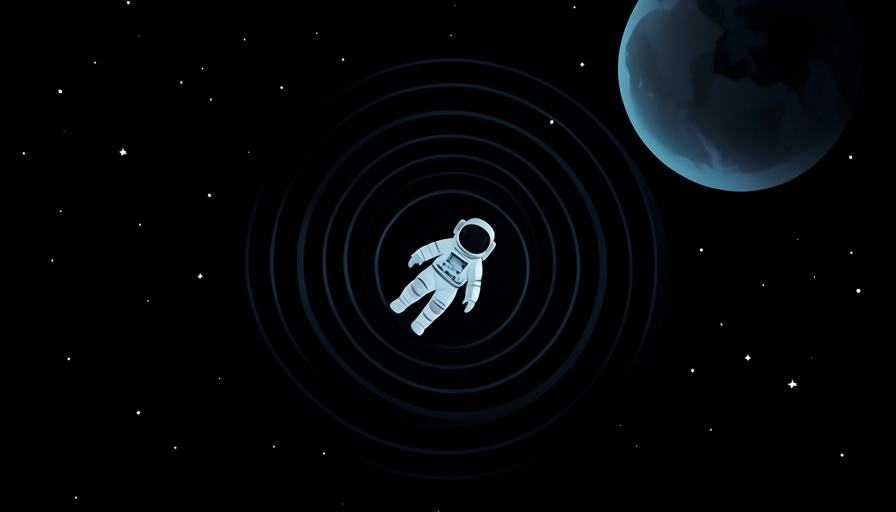
Open space is as close to empty as it gets, with only a handful of particles scattered across huge distances. With almost nothing to vibrate, a sound wave has no way to propagate, so a scream, an explosion, or a snapping cable makes no sound at all once it leaves the air around it. The tagline holds up.
Where you actually can hear
The vacuum rule only applies to open space. Wherever astronauts bring air with them, sound behaves exactly as it does on Earth.
Inside the International Space Station, the air carries voices, fans, and the constant hum of equipment normally. Inside a spacesuit, an astronaut hears their own breathing just fine. What they cannot do is shout across the void to each other on a spacewalk, so they talk by radio instead. Radio is an electromagnetic wave, which needs no medium and crosses a vacuum happily, which is why the crew can hear each other while the space between their helmets stays silent.
The one place with real sound: galaxy clusters
Here is the twist that surprises people. Space is not uniformly empty. Galaxy clusters, the largest structures held together by gravity, are filled with vast clouds of hot, thin gas, and that gas is just dense enough to carry pressure waves.
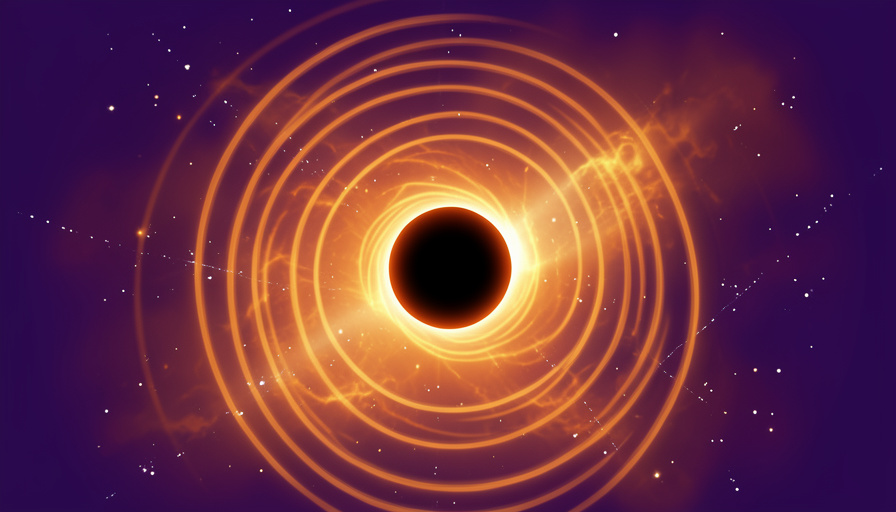
The clearest example sits in the Perseus galaxy cluster. Since 2003, astronomers have known that the supermassive black hole at its center pushes out pressure waves that ripple through the surrounding gas. Those ripples are genuine sound waves in space, and NASA’s Chandra X-ray Observatory measured them. The pitch is the catch: the note lands about 57 octaves below middle C, far too low for any human ear.
So what is NASA’s black hole sound?
The viral audio clip is real data, translated. In 2022 NASA took those actual pressure waves from the Perseus data and scaled them up by 57 to 58 octaves, raising the pitch by quadrillions of times until it fell inside the range of human hearing. The eerie result is faithful to the real waves; it just is not something a microphone in space picked up.
This is called sonification, and most “sounds of space” you hear from NASA work the same way, turning measurements of light, radio, or pressure into audio so people can experience the data. As NASA explains in its data sonification project, it is a translation tool, not a recording of noise echoing through the cosmos. Keeping that distinction straight is the difference between good science and a misleading headline. For related reading, browse SciExaminer’s Space section.
What about Mars?
Planets change the answer, because they come with an atmosphere. Mars has a thin one made mostly of carbon dioxide, and when NASA’s Perseverance rover landed in 2021 it carried microphones that recorded genuine Martian audio, from wind to the rover’s own laser zaps.
Sound on Mars is strange but real. The thin, cold air makes it quieter and more muffled than on Earth, and oddly, high and low pitches travel at slightly different speeds, so Mars effectively has two speeds of sound. The rule underneath it all stays the same: give sound a medium, even a wispy one, and it travels. Take the medium away, and silence returns. For more on the science of the everyday and the cosmic, the Science section digs deeper.
At a glance
- Sound needs a medium to travel, and open space is a near-vacuum, so it stays silent.
- Inside a spacecraft or suit there is air, so sound works normally; spacewalkers talk by radio.
- Galaxy-cluster gas is dense enough to carry real pressure waves, like those from the Perseus black hole.
- NASA’s black hole “sound” is a sonification of real data scaled into human hearing, not a microphone recording.
Frequently asked questions
Can you hear sound in space?
Not in open space. Sound is a pressure wave that needs a medium such as air to travel, and space is a near-vacuum with almost no particles to carry it, so it is effectively silent.
Why is there no sound in space?
Because there is almost nothing to vibrate. Sound moves by molecules bumping into each other, and open space has far too few molecules to pass the vibration along, so sound waves cannot propagate.
Then how did NASA record a black hole’s sound?
It did not record it with a microphone. The black hole in the Perseus cluster sends real pressure waves through the cluster’s gas, and NASA scaled those measured waves up by about 57 octaves into human hearing, a process called sonification.
Can astronauts hear each other in space?
Inside a spacecraft or suit, yes, because there is air. On a spacewalk they cannot hear each other through the vacuum, so they communicate by radio, which is an electromagnetic wave that does not need a medium.
Is there sound on Mars?
Yes. Mars has a thin carbon dioxide atmosphere, and NASA’s Perseverance rover recorded real Martian sounds. They are quieter and more muffled than on Earth, and high and low pitches travel at slightly different speeds.
Final takeaway
The honest answer to whether you can hear sound in space is a firm “no, except when yes.” Open vacuum is silent because there is nothing to carry a vibration, which is exactly what the movies got right. But bring air along in a ship, or point instruments at the dense gas of a galaxy cluster, and sound reappears. NASA’s haunting black hole note is not a cheat on that rule, it is a reminder that space is emptier in some places than others, and that a little translation can let us hear the parts we never could.