What Is a Nebula, and How Do Stars Form in One?
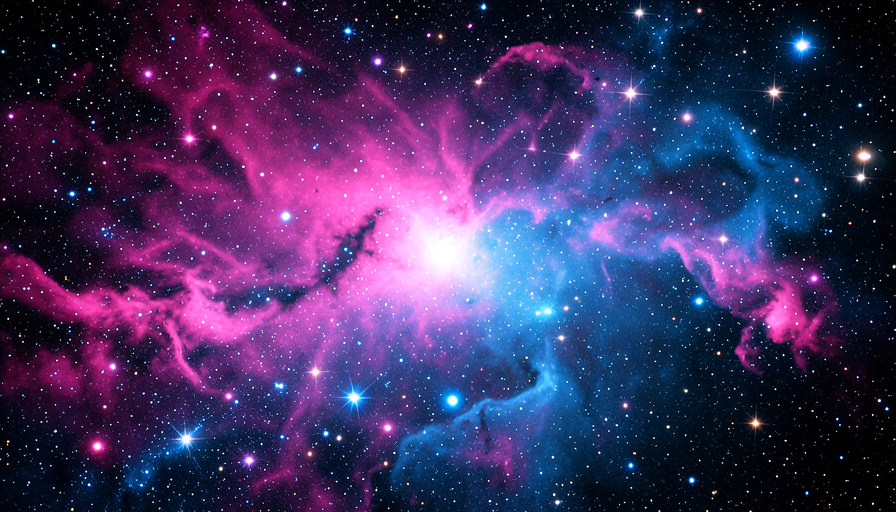
Some of the most breathtaking images in astronomy are not of planets or galaxies but of nebulae: vast, glowing clouds that look like cosmic paintings. Behind the beauty is real physics. These clouds are where stars are born, and often where they leave their remains when they die. A nebula is one of the great recycling centers of the universe, turning old star material into new suns. Once you understand what one is, those famous pictures start to tell a story.
Nebulae sit at the heart of how the universe builds stars, so they are worth understanding beyond the pretty pictures. Here is a clear guide to what a nebula is and how stars form inside it.
Short answer
A nebula is a giant cloud of gas and dust floating in space, made mostly of hydrogen and helium. Some nebulae are the birthplaces of stars, where gravity pulls the gas together until it ignites into a new sun. Others are the leftover material from stars that have died. They come in several types, and while a few are visible to the naked eye, most are best seen through telescopes.
What a nebula is
At its simplest, a nebula is a cloud in space. According to NASA, a nebula is a giant cloud of dust and gas, made mostly of hydrogen and helium, and many of them act as nurseries where new stars are born. The name comes from the Latin word for cloud, which is exactly what early astronomers thought these fuzzy patches were.
These clouds are part of what fills the seemingly empty space between stars. As Britannica describes it, a nebula is any of various tenuous clouds of gas and dust in interstellar space, and all the nebulae in our galaxy are forms of that interstellar matter. They can stretch across many light-years, yet they are so thin that they hold only a tiny fraction of a galaxy’s total mass. To explore more of the cosmos, browse SciExaminer’s Space section.
How nebulae form
Nebulae arise in two main ways, at opposite ends of a star’s life. Some are simply regions of cold interstellar gas and dust that have gathered together over time. These are the raw material of the universe, waiting to become something more.
Others are the aftermath of death. When a massive star runs out of fuel and explodes as a supernova, it flings its outer layers into space, creating a glowing nebula from the debris. Smaller stars end more gently, puffing off their outer shells to form what is called a planetary nebula. Either way, the material does not vanish. It becomes part of a cloud that may one day help build the next generation of stars.
How stars are born inside
The most exciting nebulae are stellar nurseries, and the process that plays out inside them is remarkable. NASA explains that gravity slowly pulls together clumps of dust and gas, and as each clump grows, its gravity gets stronger. Eventually a clump becomes so massive that it collapses under its own weight, and that collapse heats the material at the center. This hot, dense core is the beginning of a new star.
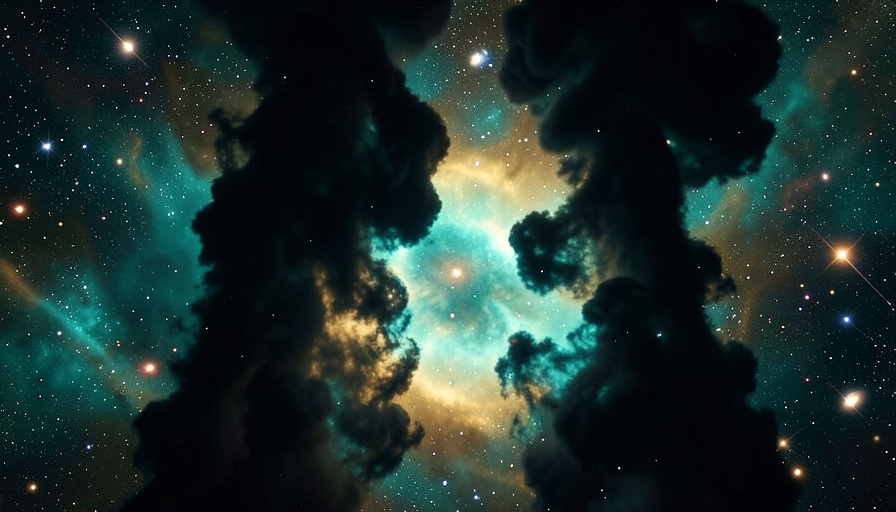
Once those young stars ignite, they reshape the cloud around them. According to the European Space Agency, in an emission nebula the intense ultraviolet radiation from hot young stars energizes the surrounding hydrogen gas, causing it to glow. The fierce stellar winds and radiation also carve the gas and dust into the towering pillars and elaborate shapes seen in famous images. In effect, the newborn stars sculpt the very nursery that made them.
The main types of nebulae
Astronomers sort nebulae by how they interact with light. Emission nebulae glow with their own light, produced when radiation from nearby stars energizes the gas. Reflection nebulae do not emit light themselves; instead they scatter the light of nearby stars, a bit like a streetlamp lighting up the fog around it.
Then there are dark nebulae. Britannica notes that these are very dense, cold clouds that appear as obscure, irregular patches blocking the light of anything behind them. Rather than glowing, their thick dust hides the stars beyond, which is why they show up as silhouettes against brighter backgrounds. Planetary nebulae and supernova remnants, the glowing shells left by dying stars, round out the family.
Can you see nebulae?
You can, though most require some help. A handful of nebulae are bright enough to spot with the naked eye under dark skies, the Orion Nebula being the most famous example, appearing as a faint smudge in the sword of the constellation Orion. Binoculars or a small telescope reveal far more.
Most of the vivid color in famous nebula photographs comes from long-exposure imaging and instruments that capture wavelengths our eyes cannot see. Through an eyepiece, nebulae usually look pale and grayish, since human eyes struggle with color in dim light. That does not make them any less real, and knowing what you are looking at, a cloud where stars are being born, adds a sense of wonder no photo fully captures. For more on the life cycle of stars, the story of the Big Bang is a good next stop.
Main takeaways
- A nebula is a giant cloud of gas and dust in space, made mostly of hydrogen and helium.
- Some nebulae are stellar nurseries where gravity collapses gas into new stars; others are the remains of dead stars.
- Inside a nursery, a collapsing clump heats up until its core becomes a new star.
- Main types include emission, reflection, and dark nebulae, plus planetary nebulae and supernova remnants.
- A few nebulae are visible to the naked eye, but most need binoculars or a telescope to see well.
Frequently asked questions
What is a nebula in simple terms?
A nebula is a huge cloud of gas and dust in space, made mostly of hydrogen and helium. Some nebulae are places where new stars form, as gravity pulls the gas together until it ignites. Others are clouds of material left behind when stars die. They can span many light-years.
How do stars form in a nebula?
Inside a nebula, gravity slowly gathers clumps of gas and dust. As a clump grows, its gravity strengthens until it collapses under its own weight. That collapse heats the material at the center, and this hot, dense core becomes the beginning of a new star, eventually igniting nuclear fusion.
What are the main types of nebulae?
The main types are emission nebulae, which glow with their own light; reflection nebulae, which scatter the light of nearby stars; and dark nebulae, which are dense clouds that block light from behind them. Planetary nebulae and supernova remnants, formed by dying stars, are also common types.
Can you see a nebula without a telescope?
A few nebulae are bright enough to see with the naked eye under dark skies, such as the Orion Nebula, which looks like a faint smudge. Most, however, are best viewed with binoculars or a telescope. The vivid colors in photographs come from long exposures and special imaging.
What is the difference between a nebula and a galaxy?
A nebula is a cloud of gas and dust within a galaxy, while a galaxy is a vast system of billions of stars, along with gas, dust, and dark matter, bound together by gravity. A single galaxy like the Milky Way contains many nebulae scattered throughout it.
What to do next
Nebulae turn the abstract idea of star formation into something you can actually picture: glowing clouds where gravity patiently assembles the next generation of suns, and where dying stars scatter the ingredients for the ones to come. The famous images are gorgeous, but the real marvel is the process behind them, a cosmic cycle of birth and renewal playing out over millions of years. Next time you see a nebula photo, look for the dark lanes and bright knots, and remember that stars are quietly taking shape inside. To keep exploring how the universe works, the Space section has much more to discover.

Related Posts
What Is the Big Bang, and What Does It Explain?
What Is a Comet, and What Is It Made Of?