What Are Calories, and How Do They Work?
Calories are everywhere: on the back of every package, in every fitness app, at the center of every diet argument. They are treated almost like a moral score, something to be counted, burned, and feared. Yet strip away the anxiety and a calorie is a wonderfully simple idea. It is just a measure of energy, the same kind of unit an engineer might use to describe fuel. Understanding what a calorie actually is turns nutrition from a source of guilt into something you can reason about.
Most people count calories, or try to avoid them, without really knowing what they are or where they come from. Here is a clear guide to what calories are, how your body uses them, and why energy balance matters for your weight.
The short version
A calorie is a unit of energy. When it comes to food, calories measure how much energy you get from what you eat and drink. Your body uses that energy for everything from breathing and thinking to walking and exercising. If you regularly take in more calories than your body uses, you tend to gain weight; if you use more than you take in, you tend to lose it. Different nutrients carry different amounts of energy, and how many calories you need depends on your body and activity level.
What a calorie actually is
At its core, a calorie is simply a measure of energy. As the US National Institute of Diabetes and Digestive and Kidney Diseases (NIDDK) defines it, a calorie is a unit used to measure the energy in food, technically a kilocalorie, which is why the calorie counts you see on labels are really thousands of the tiny scientific calories.
This is worth pausing on, because it reframes everything. Food is fuel, and calories are the way we measure how much fuel a food provides. A calorie in an apple and a calorie in a cookie represent the same amount of energy, even though the two foods differ enormously in their nutrients. So a calorie is not inherently good or bad; it is a quantity of energy your body can put to use. For more on staying well, browse SciExaminer’s Health section.
Where food calories come from
The calories in your food come from a few specific components, called macronutrients, and each one packs a different amount of energy. This is why two foods of the same weight can have very different calorie counts.
As the US Food and Drug Administration (FDA) notes, the calories on a food label represent the total energy from all sources: carbohydrate, fat, protein, and alcohol. Carbohydrate and protein each provide about 4 calories per gram, alcohol provides about 7, and fat provides about 9, more than twice as much as carbs or protein. That density is why fatty foods tend to be higher in calories, and why the mix of nutrients in a food, rather than its size alone, determines how much energy it delivers.
How your body uses calories
You are burning calories every moment, even while doing nothing at all. The single largest share goes to keeping you alive: your basal metabolism, the energy needed to run your heart, brain, lungs, and other organs at rest. For most people, this quiet background work uses the majority of their daily calories.
On top of that, your body spends energy in two other main ways. Some calories go to digesting and processing the food you eat, and the rest fuel physical activity, from walking to the kitchen to running a marathon. Activity is the part you can most easily change day to day. Together, these three demands, staying alive, digesting food, and moving, make up the total number of calories your body uses, sometimes called calories out.
Energy balance and weight
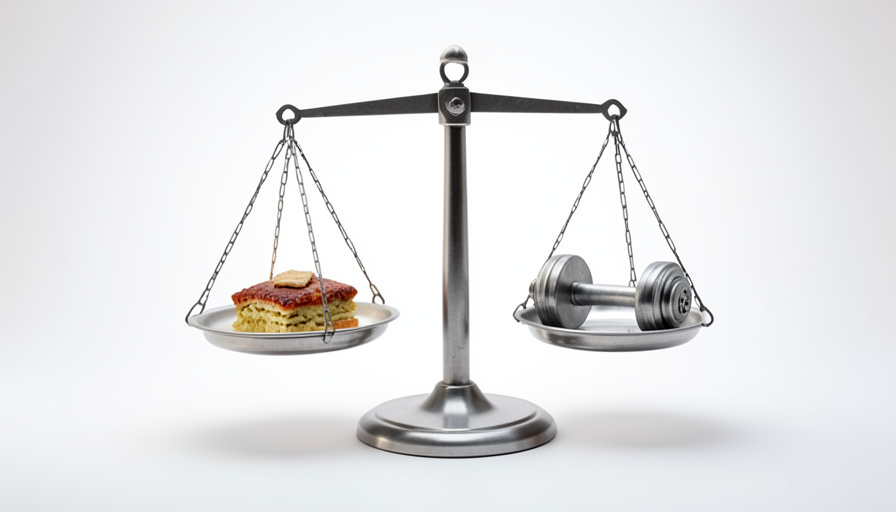
Put the two sides together and you get the concept that governs weight: energy balance. As the US Centers for Disease Control and Prevention describes it, calorie balance is the difference between the calories you take in from food and drink and the calories you use through physical activity and your body’s natural processes.
When calories in and calories out are roughly equal, your weight stays stable. Take in more than you use over time, a calorie surplus, and your body stores the extra energy, mostly as fat, so you gain weight. Use more than you take in, a calorie deficit, and your body draws on its stores, so you lose weight. The CDC points out that even physically active people can gain weight if they eat more calories than they burn. This simple accounting is the foundation beneath every diet, even the ones that never mention it.
How many calories you need
There is no single right number, because calorie needs vary from person to person. The figure you see most often is 2,000 calories a day, which the FDA uses as a general reference for nutrition advice, but it is only a rough guide, not a target for everyone.
Your actual needs depend on factors like your age, sex, height, weight, and how active you are. A tall, athletic young adult may need far more than 2,000 calories, while a smaller or more sedentary person may need fewer. This is also why blanket calorie rules can be misleading, and why the healthiest approach focuses less on hitting an exact number and more on the overall quality of your diet and staying reasonably active. For personalized guidance, a doctor or registered dietitian can help.
What matters most
- A calorie is a unit of energy; food calories measure the energy you get from eating and drinking.
- Calories come from carbohydrate and protein (about 4 per gram), fat (about 9), and alcohol (about 7).
- Your body uses calories for basal metabolism, digestion, and physical activity.
- Energy balance drives weight: a surplus tends to add weight, a deficit tends to reduce it.
- Calorie needs vary by person; 2,000 a day is only a general reference, not a universal target.
This article is general information, not medical or dietary advice. Individual calorie needs and the best approach to eating depend on your health, age, and circumstances. Consult a doctor or registered dietitian before making significant changes to your diet.
Frequently asked questions
What is a calorie in simple terms?
A calorie is a unit of energy. In nutrition, it measures how much energy your body gets from food and drink. Your body uses that energy for everything it does, from basic functions like breathing to physical activity. The calories on labels are technically kilocalories.
How many calories are in carbs, protein, and fat?
Carbohydrate and protein each provide about 4 calories per gram, while fat provides about 9 calories per gram, more than twice as much. Alcohol provides about 7 calories per gram. This is why fatty foods tend to be higher in calories for the same weight.
How does the body burn calories?
Your body burns calories in three main ways: basal metabolism, the energy to keep organs working at rest, which uses the most; digesting and processing food; and physical activity. Activity is the part you can change most easily, but resting metabolism accounts for the majority.
Do calories determine whether I gain or lose weight?
Largely, yes, through energy balance. Taking in more calories than you use over time leads to weight gain, while using more than you take in leads to weight loss. Even active people can gain weight if they eat more calories than they burn.
How many calories do I need per day?
It varies by person. The commonly cited 2,000 calories a day is only a general reference used for nutrition advice. Your real needs depend on your age, sex, height, weight, and activity level. A doctor or dietitian can help estimate a number right for you.
What this means
Once you see a calorie for what it is, a unit of energy rather than a verdict, the whole subject becomes calmer and clearer. Food gives you energy, your body spends it, and the long-run balance between the two shapes your weight. That does not mean every calorie is equal in nutrition; an apple and a cookie feed your body very differently even at the same calorie count. But understanding the energy side removes a lot of the mystery and fear around eating. Focus on overall diet quality and staying active, and let the calorie be a useful tool rather than a source of stress. For more on how the body works, the Science section digs deeper.

Related Posts
What Is the Immune System, and How Does It Work?

What Is Cortisol, and What Does It Do?