What Is a Fossil, and How Does One Form?
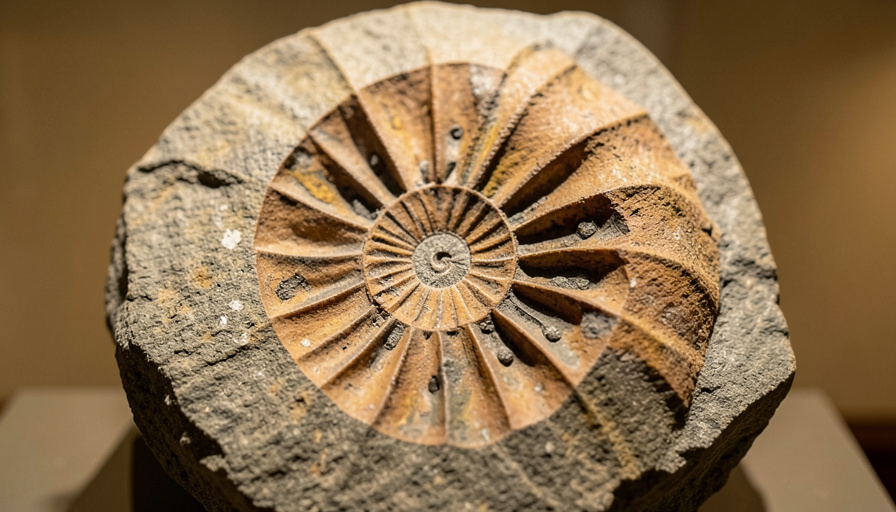
Hold a fossil in your hand and you are holding a piece of deep time. That spiral of stone was once a living animal, that dark imprint on the rock was a fern that photosynthesized under a prehistoric sun. Somehow, across millions of years, a scrap of life escaped total decay and turned to rock, preserving its shape for a species that would not exist for ages. Fossils are the closest thing we have to a direct window into the ancient past.
We tend to picture fossils as dinosaur bones in a museum, but the idea is both broader and stranger than that. A fossil can be a shell, a leaf, a footprint, or even preserved dung, and the process that makes one is a rare stroke of geological luck. Here is what a fossil is and how one comes to be.
Short answer
A fossil is the preserved remains or traces of an organism from the distant past, kept in rock. It can be a physical part of a creature, like a bone or shell, or a mark it left behind, like a footprint. Most fossils form when an organism is buried quickly in sediment, its hard parts slowly turn to stone as minerals seep in, and the surrounding sediment hardens into rock over thousands to millions of years. Fossilization is rare, which makes every fossil a small miracle of preservation.
What a fossil actually is
A fossil is any preserved remains or evidence of ancient life, held in the rock record. That includes plants, animals, and even microbes, and it covers both actual body parts and the marks that living things left behind. As a rough rule, something is generally called a fossil once it is at least around 10,000 years old.
The remains are almost always found in sedimentary rock, the kind formed from layers of mud, sand, and silt pressed together over time. As the Australian Museum explains, most fossils form when an organism is buried in sediment, its soft parts decay, and the sediment gradually hardens into rock around what remains. Igneous and metamorphic rocks, formed by heat and pressure, would destroy anything delicate, so fossils and the sedimentary layers they sit in go hand in hand. For more on the history of life, browse SciExaminer’s Science section.
Body fossils and trace fossils
Fossils come in two broad kinds, and the distinction is worth knowing because it changes what a fossil can tell us.
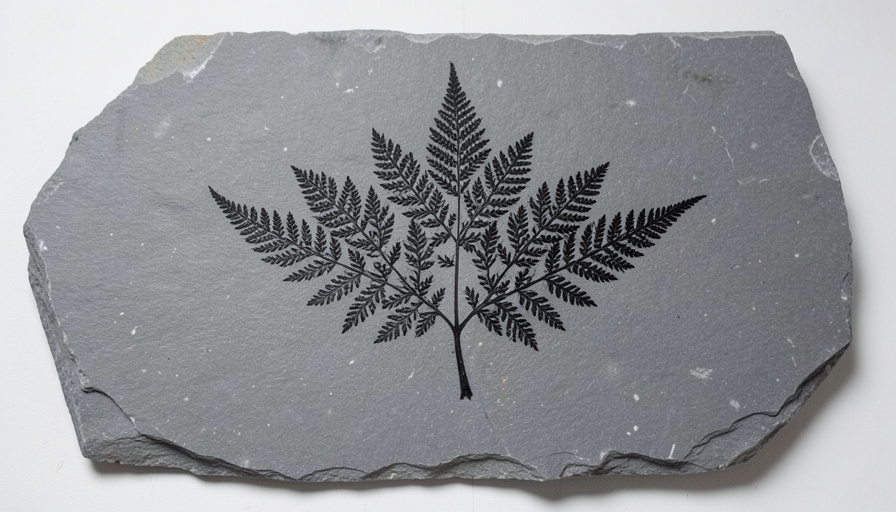
Body fossils are the actual physical remains of an organism: bones, teeth, shells, wood, or an insect trapped in hardened tree resin called amber. Trace fossils, by contrast, record behavior rather than the body. They include footprints, burrows, trails, and even coprolites, which is the technical name for fossilized dung. A skeleton tells you what an animal looked like; a set of footprints tells you how it walked, how fast it moved, and sometimes whether it traveled in a herd. Together, the two kinds let paleontologists reconstruct ancient bodies and ancient lives alike.
How a fossil forms
The most common path to becoming a fossil begins with a quick burial. When an organism dies and is rapidly covered by sediment, such as mud on a river bed or the floor of a sea, it is protected from scavengers, oxygen, and the fast decay that would otherwise erase it completely.
Over time, the soft tissues rot away, leaving the hard parts like bones and shells. Then chemistry takes over. Mineral-rich water seeps through the sediment and into the tiny spaces of those hard parts, depositing minerals that gradually fill and replace the original material. This process, called permineralization, is what turns bone and wood to stone while keeping their structure intact. Meanwhile the surrounding sediment compresses into solid rock. Millions of years later, erosion or a paleontologist’s tools expose the fossil at last.
Why fossils are so rare
Given how many creatures have lived and died on Earth, you might expect fossils to be everywhere. In fact, becoming a fossil is extraordinarily unlikely, and the fossil record captures only a tiny sliver of past life.
The reason is that fossilization demands a specific chain of luck. The organism has to be buried fast, before it is eaten or rots. It helps enormously to have hard parts, which is why creatures with bones and shells fossilize far more often than soft-bodied ones. The chemistry and conditions have to be right, and then the fossil must survive intact through vast stretches of geological time and upheaval. As the Britannica entry on fossils notes, only a small fraction of organisms are ever preserved this way. The record we have is real but incomplete, tilted toward hard-bodied animals and watery places where sediment piles up.
Why fossils matter
For all their gaps, fossils are the single most important evidence we have for the history of life on Earth. They are how we know that dinosaurs once ruled the planet, that strange trilobites crawled ancient seafloors, and that countless species have come and gone long before humans arrived.
By comparing fossils from different rock layers, scientists can trace how life has changed over enormous spans of time, evidence that helped build the theory of evolution. Fossils also record past environments and climates, since the creatures preserved in a rock reveal what the world was like when they lived. As the University of California Museum of Paleontology highlights, this fossil record is the foundation of paleontology, the science of ancient life. Certain widespread, short-lived species even serve as markers that let geologists date the rock layers they appear in. A fossil, in the end, is far more than an old bone. It is a data point in the long story of life.
Main takeaways
- A fossil is the preserved remains or traces of ancient life, held in rock and usually at least 10,000 years old.
- Body fossils are physical parts like bones and shells; trace fossils are marks like footprints and burrows.
- Most form when an organism is buried fast, its hard parts mineralize, and the sediment turns to rock.
- Fossilization is rare, so the fossil record captures only a small, uneven slice of past life.
- Fossils are the main evidence for the history of life, evolution, and ancient environments.
Frequently asked questions
What is a fossil in simple terms?
A fossil is the preserved remains or trace of a living thing from the distant past, kept in rock. It can be an actual part of an organism, such as a bone or shell, or a sign of its activity, such as a footprint, and it is usually many thousands to millions of years old.
How do fossils form?
Most fossils form when an organism is quickly buried in sediment before it decays. Its soft parts rot away, and over long periods mineral-rich water seeps into the hard parts, replacing them with minerals and turning them to stone, while the surrounding sediment hardens into rock.
What is the difference between body and trace fossils?
Body fossils are the actual physical remains of an organism, like bones, teeth, shells, or wood. Trace fossils are evidence of an organism’s activity rather than its body, such as footprints, burrows, trails, or fossilized dung called coprolites.
Why are fossils so rare?
Because fossilization needs a rare set of conditions: rapid burial, ideally hard body parts, the right chemistry, and survival over vast stretches of time. Most organisms decay completely and leave nothing behind, so only a tiny fraction of past life is ever preserved as fossils.
Why are fossils important?
Fossils are the primary record of the history of life on Earth. They reveal extinct species, show how life has changed over time in support of evolution, and preserve clues about ancient climates and environments. Some also help geologists date rock layers.
The bottom line
A fossil is a rare piece of luck frozen in stone, the result of an organism being buried at the right moment and preserved across an almost unimaginable span of time. Each one is a small survivor from a vanished world, and together they form the only detailed record we have of life before us. The next time you see a fossil in a museum or a rock shop, it is worth remembering the long odds it beat to reach you, and the deep history it quietly carries. For more on the planet and its past, the Environment section digs deeper.

Related Posts
What Is Photosynthesis, and How Does It Work?
What Is Quantum Entanglement, and Why Is It Strange?