What Is Cholesterol, and Is It Really Bad?
Cholesterol is one of the most feared words in health, printed on food labels and blamed for heart attacks. Yet here is the twist: without cholesterol, you would die. Your body deliberately makes the stuff because it is essential to life. The real story is not that cholesterol is bad, but that there is a helpful kind and a harmful kind, and what matters is keeping them in balance.
Most people know they are supposed to worry about their cholesterol without quite knowing what it is or what the numbers on a test mean. It is worth understanding, because cholesterol quietly shapes the health of your heart and arteries over a lifetime. Here is a clear guide.
Bottom line first
Cholesterol is a waxy, fat-like substance your body needs to build cells, make hormones, and produce vitamin D. Most of it is made by your liver. It travels in your blood on two main carriers: LDL, the “bad” cholesterol that can clog arteries, and HDL, the “good” cholesterol that helps clear it away. Too much LDL raises the risk of heart attack and stroke, and because high cholesterol has no symptoms, the only way to know your levels is a blood test.
What cholesterol actually is
Cholesterol is a waxy, fat-like substance found in every cell of your body. Far from being a mere villain, it is essential. Your body uses it to build the membranes around cells, to make hormones such as estrogen and testosterone, to produce vitamin D, and to create the bile that helps you digest fat.
Crucially, most of the cholesterol in your body is not something you ate. As the US Centers for Disease Control and Prevention notes, your liver makes most of the cholesterol you need, and the rest comes from animal-based foods. So cholesterol itself is a normal, necessary part of how your body works. The problem begins only when there is too much of the wrong kind in your blood. For more on staying well, browse SciExaminer’s Health section.
The two types: LDL and HDL
Because cholesterol is fatty, it does not dissolve in blood. To travel around the body, it hitches a ride on particles made of fat and protein, called lipoproteins. Two of these carriers matter most, and they behave in opposite ways.
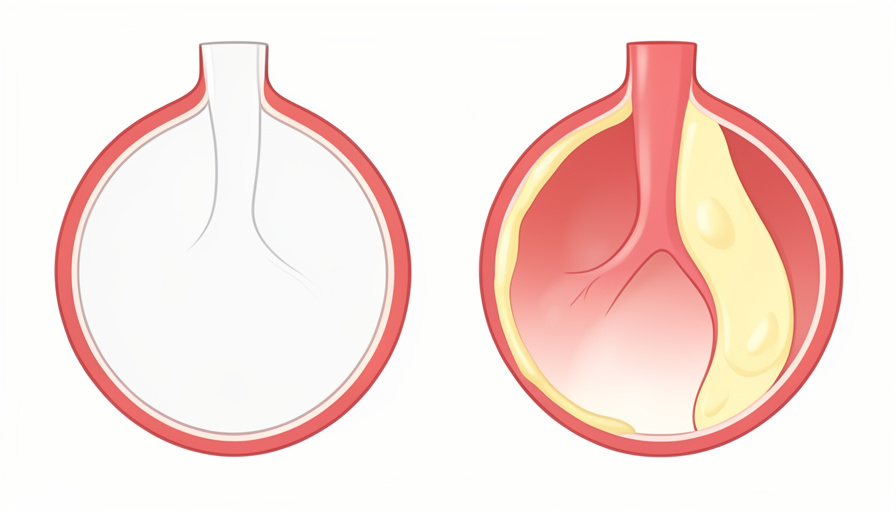
As the American Heart Association explains, LDL, or low-density lipoprotein, is the “bad” cholesterol. When there is too much of it, it builds up as a sticky substance called plaque on the inside of artery walls, a process known as atherosclerosis that narrows and stiffens the arteries. HDL, or high-density lipoprotein, is the “good” cholesterol. It carries excess cholesterol away from the arteries and back to the liver, where it is removed from the body. A higher HDL level is generally protective, while a high LDL level is the one to worry about.
Triglycerides and the blood test
There is a third number that usually appears alongside cholesterol: triglycerides. These are a separate type of fat in the blood, and high levels of them also raise the risk of heart disease, so doctors track them together with cholesterol.
All of this is measured with a simple blood test called a lipid panel. As MedlinePlus describes, it reports your total cholesterol, LDL, HDL, and triglycerides. As a rough guide, many adults aim for a total cholesterol below 200, an LDL below 100, a higher HDL, and triglycerides below 150, measured in milligrams per deciliter. The right targets vary from person to person, though, depending on age and overall heart risk, which is why the numbers are best interpreted with a doctor rather than judged alone.
Why high cholesterol is dangerous
The danger of high cholesterol is that it is silent. High LDL produces no symptoms at all, so a person can walk around for years with arteries slowly clogging and feel completely fine. That is exactly why routine testing matters.
The harm builds gradually. As LDL plaque accumulates, arteries narrow and lose flexibility, reducing blood flow. If a piece of plaque ruptures, it can trigger a clot that blocks an artery entirely. When that happens in the arteries feeding the heart, it causes a heart attack; in those feeding the brain, a stroke. High cholesterol is one of the major, and treatable, risk factors behind both, which is why it gets so much medical attention despite causing no discomfort of its own.
What raises it, and how to manage it
Several things push cholesterol in the wrong direction. Diets heavy in saturated and trans fats raise LDL, as do physical inactivity, excess weight, and smoking, and levels tend to rise with age. Genetics also play a large role, and some people inherit a condition that keeps their cholesterol very high no matter how well they live.
The encouraging news is that cholesterol responds well to action. A heart-healthy diet with less saturated fat and more fiber, fruits, and vegetables can lower LDL, and regular exercise, a healthy weight, and not smoking all help. When lifestyle changes are not enough, medicines such as statins can bring the numbers down effectively. For most people, managing cholesterol is a matter of steady habits and, where needed, treatment, guided by their own test results.
At a glance
- Cholesterol is a waxy substance your body needs for cells, hormones, and vitamin D, mostly made by the liver.
- LDL is the “bad” cholesterol that builds up as plaque in arteries; HDL is the “good” kind that clears it.
- Triglycerides are a separate blood fat measured alongside cholesterol in a lipid panel.
- High cholesterol has no symptoms but raises the risk of heart attack and stroke.
- Diet, exercise, weight, not smoking, and medication when needed all help manage it.
This article is general information, not medical advice. Healthy cholesterol targets and treatment depend on your individual health and risk factors. Consult a qualified healthcare professional about your own cholesterol levels and any changes to diet or medication.
Frequently asked questions
What is cholesterol in simple terms?
Cholesterol is a waxy, fat-like substance found in all your cells that your body needs to build cell membranes, make hormones, and produce vitamin D. Most of it is made by your liver, and the rest comes from animal-based foods you eat.
What is the difference between LDL and HDL cholesterol?
LDL is the “bad” cholesterol; too much of it builds up as plaque inside artery walls and raises heart risk. HDL is the “good” cholesterol; it carries excess cholesterol back to the liver to be removed. In general, you want lower LDL and higher HDL.
Why is high cholesterol dangerous if it has no symptoms?
Because the harm happens silently over years. High LDL gradually deposits plaque that narrows arteries, and a rupture can cause a clot leading to a heart attack or stroke. Since you cannot feel it, a blood test is the only way to know your levels.
How is cholesterol measured?
With a blood test called a lipid panel, which reports total cholesterol, LDL, HDL, and triglycerides. Many adults aim for total below 200, LDL below 100, higher HDL, and triglycerides below 150 in milligrams per deciliter, though ideal targets depend on individual risk.
How can I lower my cholesterol?
Eating less saturated and trans fat and more fiber, fruits, and vegetables helps, along with regular exercise, keeping a healthy weight, and not smoking. If lifestyle changes are not enough, a doctor may prescribe medication such as statins. Any plan should be guided by a professional.
What this means
Cholesterol is a good example of how health advice gets flattened into slogans. It is not simply bad; it is a substance your body cannot function without, and the real goal is balance, keeping the harmful LDL low and the helpful HDL up. Because high cholesterol hides without symptoms, the single most useful thing you can do is get it checked, then act on what the numbers show through diet, activity, and treatment if needed. Understanding the good and the bad turns a scary word into something you can actually manage. For more on how the body works, the Science section digs deeper.

Related Posts

What Is Blood Pressure, and What Do the Numbers Mean?
Why Do We Get Fevers, and When to Worry?