
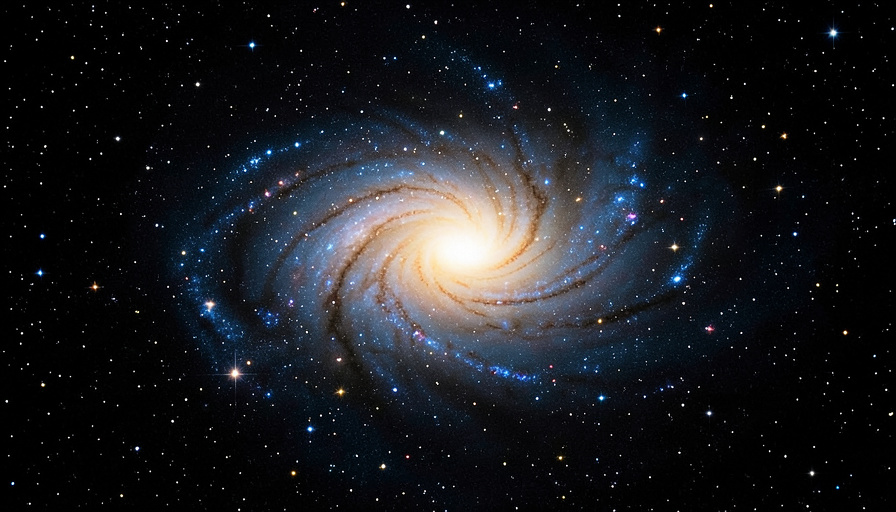
What Is a Galaxy, and How Many Are There?
On a truly dark night, far from city lights, you can see a faint band of light arching across the sky. That hazy glow is the combined light of billions of distant stars, and it is your own galaxy seen edge-on from the inside. We live inside a galaxy, a vast island of stars, and beyond it lie hundreds of billions more, scattered across a universe almost too large to picture.
Galaxies are the basic building blocks of the cosmos, the great structures that stars and planets belong to. Yet what exactly a galaxy is, what it contains, and how many exist are questions with genuinely astonishing answers. Here is a plain guide to galaxies and our place within one.
In brief
A galaxy is an enormous system of stars, gas, dust, and dark matter, all held together by gravity. Galaxies range from a few hundred million to many trillions of stars, and they come in a few main shapes: spiral, elliptical, and irregular. Our home galaxy, the Milky Way, is a spiral over 100,000 light-years across. And the observable universe is thought to contain somewhere between hundreds of billions and around two trillion galaxies in all.
What a galaxy actually is
A galaxy is a huge, gravitationally bound collection of stars and everything that comes with them. As NASA describes, galaxies are systems of stars, gas, dust, and dark matter, ranging from dwarf galaxies with a few hundred million stars to giants holding a hundred trillion.
The key word is bound. Gravity is what gathers all that material into a single object and keeps it turning together through space, rather than drifting apart. A galaxy is not a random scattering of stars but an organized system, often spinning, frequently with a supermassive black hole anchoring its center. It is, in effect, a city of stars. For more from beyond our planet, browse SciExaminer’s Space section.
What is inside a galaxy
Stars are the most visible part of a galaxy, but they are far from the whole story. Between the stars lies the interstellar medium, a thin mix of gas and dust. As the ESA/Hubble reference notes, a galaxy is an ensemble of stars, dust, gas, and dark matter bound together by gravity, and that gas is mostly hydrogen and helium, the raw material from which new stars are born.
Then there is the strangest ingredient. The stars and gas we can actually see make up only a small fraction of a galaxy’s mass. Most of it is dark matter, an invisible substance that we detect only through its gravity. In other words, the glittering part of a galaxy is a minority of what is really there, riding within a much larger, unseen halo that holds the whole thing together.
The three main types
Galaxies are not all the same shape, and astronomers sort them into a few broad classes based on how they look. Three main types cover most of them.
- Spiral galaxies have a flat, rotating disk with graceful arms winding out from a bright central bulge. They are rich in gas and actively forming new stars. The Milky Way is one.
- Elliptical galaxies are rounded, ranging from nearly spherical to a stretched oval. They tend to hold older stars, contain little gas and dust, and show little internal structure.
- Irregular galaxies have no regular shape at all. Their chaotic forms are often the result of gravitational tugs or collisions with other galaxies.
These shapes are more than cosmetic. They hint at a galaxy’s history, its age, and whether it is still busy making stars or has largely settled into old age.
Our galaxy, the Milky Way
Our own galaxy, the Milky Way, is a spiral, and it is the one place in the universe we can study from the inside. Its disk of stars stretches more than 100,000 light-years from edge to edge, and it holds somewhere in the range of a few hundred billion stars.
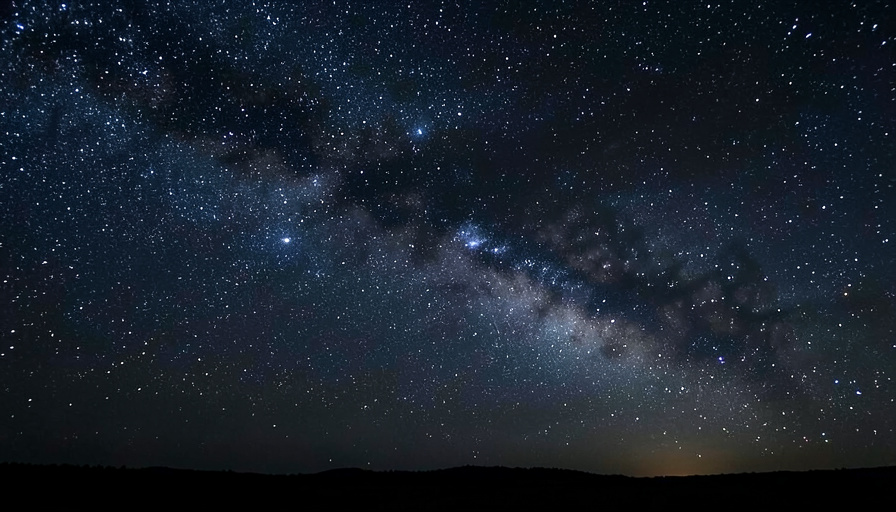
Our Sun is one unremarkable star among them, sitting far out in one of the spiral arms, tens of thousands of light-years from the center. That location is why the galaxy looks the way it does to us. When you see the pale band called the Milky Way stretching across a dark sky, you are looking along the flat plane of our own galaxy’s disk, through the massed light of countless stars too distant to pick out one by one.
How many galaxies are there
This is where the numbers become almost impossible to grasp. Galaxies are not rare. The universe is filled with them, and modern surveys keep pushing the count higher.
Estimates based on deep images from the Hubble Space Telescope have suggested the observable universe holds on the order of two trillion galaxies, as summarized by resources like Caltech’s Cool Cosmos. Even the more conservative figures run to hundreds of billions. And galaxies are not spread evenly. They gather into groups and clusters, and those clusters into vast superclusters, forming a cosmic web that threads through the entire universe. Our Milky Way, for all its size, is a single thread in that web.
What matters most
- A galaxy is a large system of stars, gas, dust, and dark matter bound together by gravity.
- Most of a galaxy’s mass is invisible dark matter, not the stars and gas we see.
- The three main types are spiral, elliptical, and irregular galaxies.
- The Milky Way is our home spiral galaxy, over 100,000 light-years across, with the Sun far from its center.
- The observable universe likely contains hundreds of billions to around two trillion galaxies.
Frequently asked questions
What is a galaxy in simple terms?
A galaxy is a giant group of stars, along with gas, dust, and dark matter, all held together by gravity. Galaxies can contain anywhere from a few hundred million to many trillions of stars, and our Sun is one star inside a galaxy called the Milky Way.
What is a galaxy made of?
Galaxies are made of stars, interstellar gas and dust, and dark matter. The gas is mostly hydrogen and helium, the material that forms new stars. Dark matter, though invisible, makes up most of a galaxy’s total mass and helps hold it together.
What are the main types of galaxies?
The three main types are spiral galaxies, with a flat disk and winding arms; elliptical galaxies, which are rounded and mostly older stars; and irregular galaxies, which have no regular shape and are often distorted by collisions with other galaxies.
What galaxy do we live in?
We live in the Milky Way, a spiral galaxy more than 100,000 light-years across containing several hundred billion stars. Our Sun sits far out in one of the spiral arms, and the band of light we call the Milky Way is our view through the galaxy’s disk.
How many galaxies are there in the universe?
Estimates vary, but studies based on deep telescope images suggest the observable universe contains on the order of two trillion galaxies, with more conservative counts still reaching hundreds of billions. They cluster together into groups, clusters, and superclusters.
Closing thoughts
A galaxy is one of those ideas that quietly resets your sense of scale. Our Sun is one star among hundreds of billions in the Milky Way, and the Milky Way is one galaxy among hundreds of billions more, all bound by gravity and drifting through a universe of almost unimaginable size. The faint band of light overhead on a dark night is a direct glimpse of that structure, the edge of our own island of stars. Understanding what a galaxy is turns that view from a pretty smudge into a window on the architecture of the cosmos. For more on how the universe is built, the Science section digs deeper.

Related Posts
What Is the International Space Station?
What Is a Light-Year, and How Far Is It?