What Is the Big Bang, and What Does It Explain?
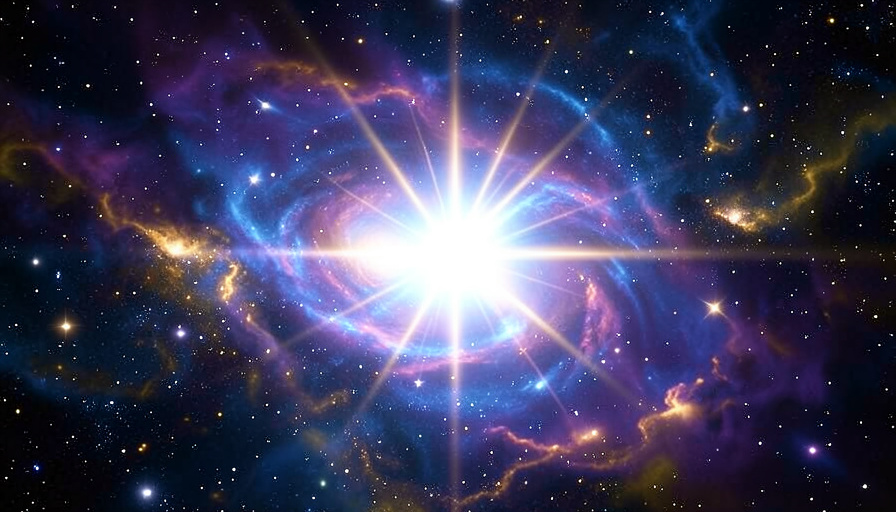
Everything you have ever seen, every star, planet, atom, and living thing, traces back to a single beginning about 13.8 billion years ago. That beginning is what scientists call the Big Bang. It is the most successful theory we have for the origin of the universe, backed by decades of evidence. Yet the name is misleading, and the picture most people carry of a giant explosion in the darkness of space is almost exactly wrong. The real story is stranger and more beautiful.
The Big Bang is one of those phrases everyone knows but few can explain accurately. Understanding it clears up some of the deepest questions people have about where the universe came from. Here is a clear guide to what the Big Bang is and how we know it happened.
In brief
The Big Bang is the leading scientific theory for how the universe began. It says that around 13.8 billion years ago, the entire universe was in an extremely hot, dense state, and it has been expanding and cooling ever since. Importantly, the Big Bang was not an explosion of matter into empty space; it was the rapid expansion of space itself. The strongest evidence for it is a faint glow of radiation, left over from the early universe, that fills the whole sky.
What the Big Bang is
The Big Bang is the theory that the universe began from an incredibly hot and dense state and has been growing ever since. As Britannica describes it, the Big Bang is the emergence of the universe from a state of extremely high temperature and density that occurred roughly 13.8 billion years ago.
In other words, it is not really a theory about an event so much as about a beginning and everything that followed. At the earliest moment we can describe, all the matter and energy that would become galaxies, stars, and people was packed into an unimaginably small, hot space. From there it expanded and cooled, and over billions of years that cooling material clumped together into the structures we see today. For more on the cosmos, browse SciExaminer’s Space section.
Why it was not an explosion in space
Here is the single most important thing to get right. The Big Bang was not a bomb going off at some point in a pre-existing, empty universe. There was no dark, waiting space for it to explode into. Instead, space itself was part of what began, and it expanded everywhere at once.
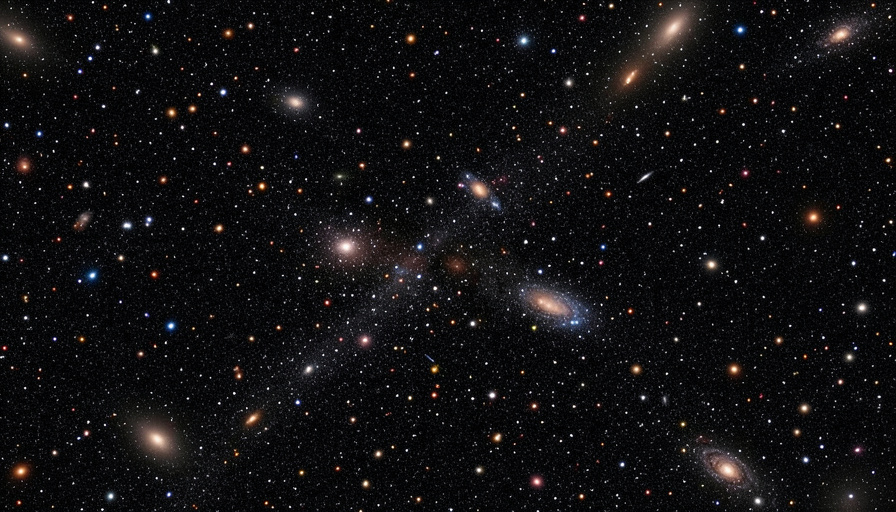
As Britannica explains, the expansion of the universe is not so much a motion of galaxies through space as an expansion of space and time themselves. A helpful way to picture it is dots drawn on a balloon: as you inflate the balloon, every dot moves away from every other dot, not because the dots are traveling across the surface, but because the surface between them is stretching. In the same way, galaxies drift apart because the space between them is growing. This is why there is no single center of the universe and no edge it is expanding into.
The first moments
The early universe changed with astonishing speed. According to NASA, one second after the Big Bang the cosmos was a primordial soup of light and particles at billions of degrees. In those first minutes, the simplest elements formed, mostly hydrogen and helium, the raw material of all future stars.
For a long time afterward, the universe was a hot, glowing fog, so dense that light could not travel far. Then, about 380,000 years after the Big Bang, it had cooled enough for atoms to form and capture electrons. NASA notes that this cleared the fog and made the universe transparent for the first time, letting light stream freely across space. That moment is crucial, because the light released then is still reaching us today.
The evidence: an ancient glow
A theory is only as good as its evidence, and the Big Bang has a spectacular piece of it. That light freed when the first atoms formed has been traveling for billions of years, stretched by the expanding universe into faint microwaves. It is called the cosmic microwave background, and it fills the entire sky in every direction.
NASA calls this glow the oldest light we can observe in the universe, a direct snapshot of the cosmos as it was 380,000 years after the beginning. Space missions have mapped it in exquisite detail; the European Space Agency‘s Planck spacecraft produced a precise map revealing tiny temperature variations in this ancient light. Those variations mark regions of slightly different density that would later grow into galaxies. Finding this predicted afterglow, exactly where the theory said it should be, is a large part of why the Big Bang is so widely accepted.
What we still do not know
For all its success, the Big Bang theory does not answer everything, and honest science admits its limits. It describes how the universe evolved from an early hot, dense state, but it does not explain what, if anything, came before, or what caused that beginning. Those questions remain open.
The universe also keeps surprising us. Rather than slowing down, its expansion is actually speeding up, apparently driven by a mysterious influence scientists call dark energy, whose nature is still unknown. NASA notes this acceleration suggests the universe may continue expanding forever. So the Big Bang is best understood as an extremely well-supported account of cosmic history, not a final word. It has answered enormous questions while opening profound new ones.
At a glance
- The Big Bang is the leading theory that the universe began about 13.8 billion years ago from a hot, dense state.
- It was not an explosion in space; it was the expansion of space itself, happening everywhere at once.
- The early universe cooled, formed the first atoms after about 380,000 years, and became transparent.
- The cosmic microwave background, an ancient glow filling the sky, is the key evidence for the theory.
- The Big Bang does not explain what came before, and the universe’s expansion is now accelerating.
Frequently asked questions
What is the Big Bang in simple terms?
The Big Bang is the theory that the universe started about 13.8 billion years ago in an extremely hot, dense state and has been expanding and cooling ever since. It is not an explosion in space but the stretching of space itself, which carried everything apart as it grew.
Was the Big Bang really an explosion?
Not in the usual sense. It was not matter blasting outward into empty space from a single point. Instead, space itself expanded everywhere at once. Galaxies move apart because the space between them stretches, which is why the universe has no single center or edge.
How old is the universe?
The universe is about 13.8 billion years old, according to current measurements. This age comes from studying the expansion of the universe and the cosmic microwave background, the faint leftover radiation from the early universe that scientists have mapped in detail.
What is the evidence for the Big Bang?
The strongest evidence is the cosmic microwave background, a faint glow of microwave radiation that fills the whole sky. It is the oldest light in the universe, released about 380,000 years after the Big Bang, and its presence and patterns closely match what the theory predicts.
What came before the Big Bang?
Science does not have a confirmed answer. The Big Bang theory describes how the universe evolved from an early hot, dense state, but it does not explain what, if anything, existed before or what caused the beginning. These remain open questions in cosmology.
The bottom line
The Big Bang is one of humanity’s greatest intellectual achievements: a coherent, evidence-backed account of how the entire universe came to be. The key to understanding it is to drop the image of an explosion and picture instead a beginning in which space and time themselves started expanding from a hot, dense state. The faint afterglow that still surrounds us is a message from that ancient moment, confirming the story. It does not answer every question, and perhaps it never will, but it turns the origin of everything from pure mystery into science we can actually study. For more on the forces that shape reality, the Science section digs deeper.

Related Posts
What Is a Comet, and What Is It Made Of?
What Causes the Seasons? It Is Not Distance