What Is a Solar Eclipse, and How Does It Happen?
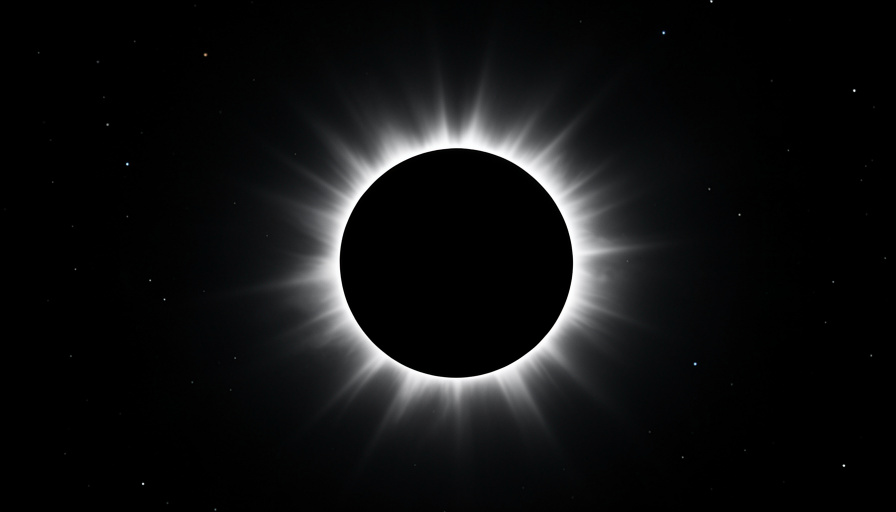
Every so often, in the middle of the day, the sky begins to dim. Birds fall quiet, the air cools, and a dark disk creeps across the Sun until, for a couple of stunning minutes, day turns to twilight and a ghostly halo of light rings a black hole in the sky. A total solar eclipse is one of nature’s grandest spectacles, and it comes down to a remarkable coincidence: the Moon and the Sun look almost exactly the same size from Earth.
Eclipses have awed and frightened people for thousands of years, and even now they draw crowds who travel across continents to stand in the Moon’s shadow. Behind the drama is some elegant astronomy. Here is a clear guide to what a solar eclipse is and why it happens.
Bottom line first
A solar eclipse happens when the Moon passes directly between the Sun and Earth, blocking the Sun’s light and casting a shadow on our planet. Because the Moon is far smaller than the Sun but also much closer, the two can appear nearly the same size in the sky, which lets the Moon cover the Sun completely. Depending on the exact alignment and the Moon’s distance, you get a total, partial, or annular eclipse. It is never safe to stare at the Sun during most of an eclipse without proper eye protection.
What a solar eclipse actually is
A solar eclipse occurs when the Sun, the Moon, and Earth line up so that the Moon comes between the other two. As NASA explains, this happens when the Moon moves between the Sun and Earth, blocking the Sun’s rays and casting a shadow on our planet. From the ground, it looks as if something is taking a bite out of the Sun.
The reason it works at all is a striking coincidence of scale. The Sun is about 400 times wider than the Moon, but it also sits about 400 times farther away, so the two appear almost identical in size from Earth. That is why the Moon can slot neatly over the Sun’s disk. A solar eclipse can only happen at a new moon, the phase when the Moon sits between Earth and the Sun. For more on the night sky and beyond, browse SciExaminer’s Space section.
The three types of solar eclipse
Not every eclipse looks the same. There are three main kinds, and which one you see depends on how precisely the three bodies align and how far the Moon happens to be from Earth at the time.
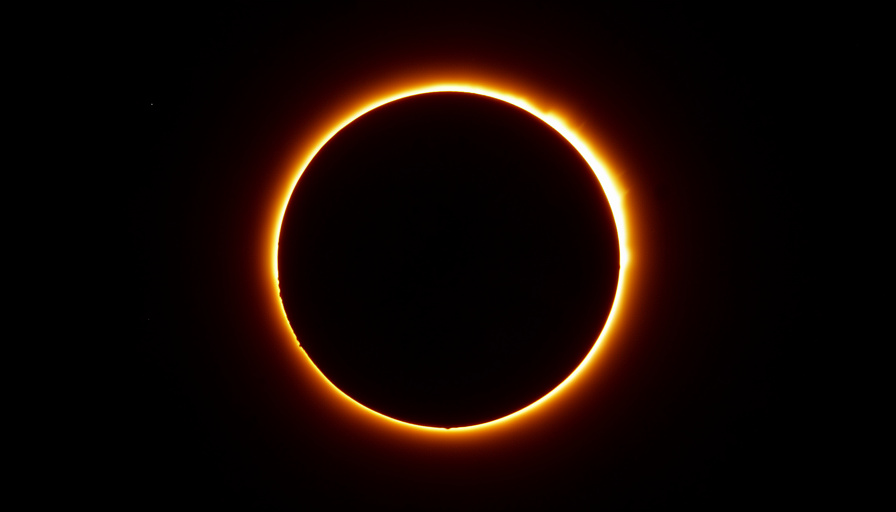
In a total solar eclipse, the Moon completely covers the Sun’s bright face, revealing the Sun’s faint outer atmosphere, the corona. This can only occur when the Moon is near its closest point to Earth, so it appears large enough to blot out the Sun entirely. A partial solar eclipse happens when the alignment is slightly off, so the Moon covers only part of the Sun and leaves a crescent of light. An annular eclipse occurs when the Moon is near its farthest point from Earth and looks a little too small to cover the whole Sun, leaving a brilliant “ring of fire” around the dark Moon. NASA notes that these three, total, partial, and annular, are the main varieties of solar eclipse.
The shadow and the path of totality
The Moon casts two kinds of shadow, and the difference decides what you see. The dark inner shadow is called the umbra, and the faint outer shadow is the penumbra. If you stand in the penumbra, you see a partial eclipse; only from within the narrow umbra do you experience totality, when the Sun disappears completely.
Because Earth spins and the Moon races along its orbit, that umbral shadow sweeps across the surface in a long, narrow strip known as the path of totality. NASA points out that this path is usually quite small, often less than 50 miles wide, while the surrounding region that sees a partial eclipse can stretch a thousand miles or more. That is why a total eclipse is such a localized event: you have to be standing in exactly the right band of the planet to witness the full show.
Why eclipses are rare
If a solar eclipse needs only a new moon, you might expect one every month. It does not work that way, because the Moon’s orbit is tilted by about five degrees compared with Earth’s path around the Sun. As Britannica notes, that tilt means the Moon usually passes well above or below the Sun, so most months its shadow misses Earth entirely.
An eclipse only happens when a new moon occurs at one of the two points where the two orbital planes cross. Those alignments come around a few times a year, which is why solar eclipses of some kind are not extremely rare overall. A total eclipse visible from any one particular place, however, is uncommon, since the narrow path of totality only occasionally crosses the same spot. On average, a given location waits centuries between total eclipses, which is part of what makes them so prized.
How to watch one safely
This is the part to take seriously. Looking directly at the Sun can permanently damage your eyes, and an eclipse is no exception. According to the American Astronomical Society, ordinary sunglasses, even very dark ones, are nowhere near enough, because they let through far too much sunlight. The only safe way to look at the partially eclipsed Sun is through certified eclipse glasses or handheld solar viewers made for the purpose.
There is one exception. During the brief moments of totality in a total eclipse, when the Moon completely hides the Sun’s bright face, it is safe to look with the naked eye, and it is the only time you can. The instant any sliver of the Sun reappears, you must protect your eyes again. If you do not have eclipse glasses, you can watch indirectly with a simple pinhole projector, letting sunlight pass through a small hole onto a surface so you view the projected image with the Sun at your back. Never look at the Sun through a camera, telescope, or binoculars without a proper solar filter.
What matters most
- A solar eclipse happens when the Moon passes between the Sun and Earth, casting its shadow on us.
- It works because the Sun and Moon look nearly the same size in our sky, a coincidence of scale.
- The three types are total, partial, and annular, depending on alignment and the Moon’s distance.
- Totality is visible only within the narrow path of the Moon’s dark umbral shadow.
- Never look at the Sun without certified eclipse glasses, except during the brief total phase.
Frequently asked questions
What is a solar eclipse in simple terms?
A solar eclipse is when the Moon moves directly between the Sun and Earth and blocks the Sun’s light, casting a shadow on part of the Earth. From the ground, the Moon appears to cover some or all of the Sun. It can only happen during a new moon.
What is the difference between a total and an annular eclipse?
In a total eclipse, the Moon is close enough to Earth to fully cover the Sun, revealing the Sun’s corona. In an annular eclipse, the Moon is farther away and looks too small to cover the Sun completely, leaving a bright ring of sunlight, the “ring of fire,” around it.
What is the path of totality?
The path of totality is the narrow strip of Earth’s surface swept by the Moon’s dark inner shadow, the umbra. Only people within this path, often less than 50 miles wide, see a total solar eclipse. Everywhere else in the broader shadow sees a partial eclipse instead.
Why don’t we get a solar eclipse every month?
Because the Moon’s orbit is tilted about five degrees relative to Earth’s orbit around the Sun. Most new moons pass slightly above or below the Sun, so the Moon’s shadow misses Earth. Eclipses only occur when a new moon lines up at the points where the two orbits cross.
How can I watch a solar eclipse safely?
Use certified eclipse glasses or a handheld solar viewer; regular sunglasses are not safe. You can also use a pinhole projector to view the Sun indirectly. The only time it is safe to look directly is during the brief totality of a total eclipse, when the Sun is fully covered.
What this means
A solar eclipse is a reminder that the sky is a moving system of clockwork, and that we happen to live at a moment when the Moon and Sun align just closely enough to produce something breathtaking. Understanding the geometry, the shadow, the orbit, the coincidence of size, takes nothing away from the wonder; it deepens it. If a total eclipse ever crosses near you, it is worth the trip to stand in the path of totality, eclipse glasses in hand, and watch day briefly turn to night. For more on the science behind what we see, the Science section digs deeper.

Related Posts
What Is a Galaxy, and How Many Are There?
What Is the International Space Station?