What Is Photosynthesis, and How Does It Work?
Plants do something no factory can match. Using only sunlight, air, and water, they build their own food from scratch, and as a byproduct they release the oxygen that fills the sky. Almost every meal you eat and every breath you take can be traced back to this one process, quietly running in every green leaf on the planet. It is called photosynthesis, and it is arguably the most important chemical reaction on Earth.
Most of us learn the word in school and then forget the details. But the basic idea is elegant and worth holding onto, because it explains where our food, our oxygen, and much of our climate balance actually come from. Here is what photosynthesis is and how it works.
Short answer
Photosynthesis is the process plants, algae, and some bacteria use to turn light energy into chemical energy they can store as food. They take in carbon dioxide from the air and water from the soil, and using sunlight captured by the green pigment chlorophyll, they convert these into glucose, a sugar, and release oxygen. In short, plants make their own food out of light, air, and water, and the oxygen we breathe is the leftover.
What photosynthesis actually is
Photosynthesis is, at heart, a way of capturing sunlight and locking its energy into a form that living things can use. Animals eat to get energy, but plants make theirs. As National Geographic explains, plants take in carbon dioxide and water and, powered by sunlight, transform them into glucose and oxygen, storing energy in the sugar and releasing the oxygen into the air.
You can sum the whole thing up in a single word equation: carbon dioxide plus water plus light energy gives glucose plus oxygen. The glucose is the plant’s food, used to grow and to fuel its cells, while the oxygen is simply left over. That leftover happens to be the gas that most life on Earth, including us, depends on to breathe. For more on the living world, browse SciExaminer’s Science section.
Where it happens, and why leaves are green
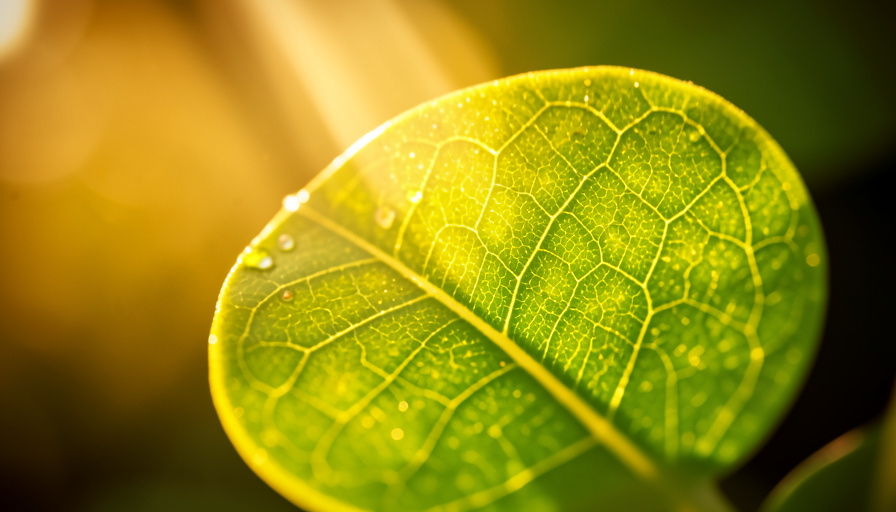
Photosynthesis takes place inside tiny structures within plant cells called chloroplasts. Packed into these chloroplasts is a green pigment named chlorophyll, and it is the real star of the show. Chlorophyll is what actually absorbs sunlight and kicks off the entire process.
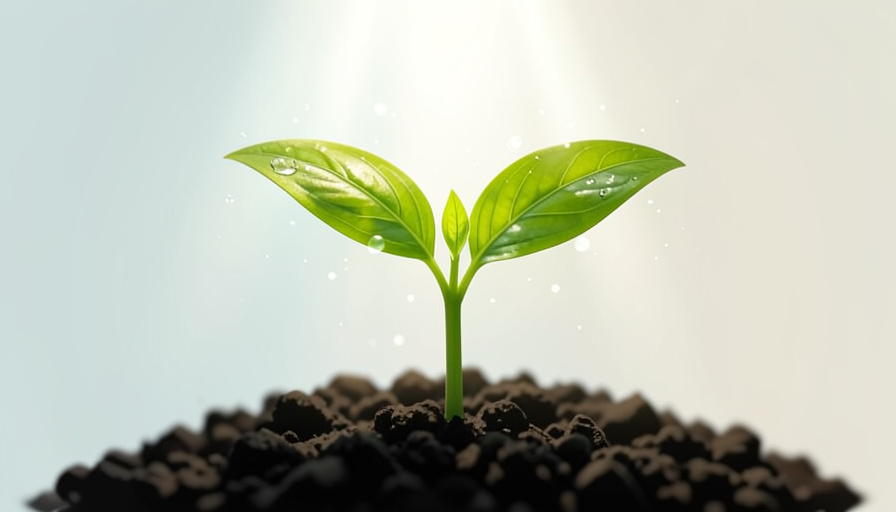
Chlorophyll also explains one of nature’s most familiar sights. As the Nature Education resource notes, chlorophyll absorbs red and blue light most strongly but reflects green light. Since the green light bounces off rather than being absorbed, that is the color that reaches our eyes, which is why leaves and grass look green. The color of the living world is essentially the light that photosynthesis does not use.
The two stages of the process
Although it happens in an instant to our eyes, photosynthesis runs in two connected stages inside the chloroplast, each doing a different job.
- The light-dependent reactions come first, in membranes called thylakoids. Here chlorophyll captures sunlight and uses that energy to split water molecules, which releases the oxygen and produces energy-carrying molecules.
- The Calvin cycle, also called the light-independent reactions, comes second, in a region called the stroma. It uses the energy captured in the first stage to build carbon dioxide into glucose.
So the first stage grabs and stores the Sun’s energy while releasing oxygen, and the second stage spends that energy assembling sugar. Together they turn sunlight, air, and water into food, which is a genuinely remarkable piece of natural chemistry.
Why all life depends on it
It is hard to overstate how much rests on photosynthesis. Because plants and other photosynthesizers make food from sunlight, they sit at the base of almost every food chain. Everything that eats plants, and everything that eats those plant-eaters, is ultimately living on energy that photosynthesis captured from the Sun.
It is also the source of the oxygen in our atmosphere and a major force removing carbon dioxide from the air. As Britannica notes, photosynthesis is responsible for producing and maintaining the oxygen content of the Earth’s atmosphere. Much of this work happens out of sight, including in the oceans, where microscopic drifting algae called phytoplankton photosynthesize on an enormous scale and generate a large share of the planet’s oxygen. Every forest and every stretch of green ocean is quietly running this same reaction.
Photosynthesis and its opposite
Photosynthesis has a mirror image called cellular respiration, and understanding the pair completes the picture. In respiration, living things, including plants themselves, break glucose back down using oxygen to release energy, giving off carbon dioxide and water in the process.
Notice that respiration uses exactly what photosynthesis produces, and produces exactly what photosynthesis uses. One builds sugar and releases oxygen; the other burns sugar and releases carbon dioxide. Between them, they keep carbon and oxygen cycling through living things and the atmosphere. Plants do both, making their own food by day and burning it around the clock, which is why photosynthesis is best understood as one half of a continuous natural loop.
Main takeaways
- Photosynthesis lets plants, algae, and some bacteria make food from light, water, and carbon dioxide.
- It produces glucose, which stores energy, and releases oxygen as a byproduct.
- It happens in chloroplasts using chlorophyll, whose reflected green light makes leaves look green.
- The process runs in two stages: the light reactions and the Calvin cycle.
- It underpins nearly all food chains and produces most of the oxygen we breathe.
Frequently asked questions
What is photosynthesis in simple terms?
It is how plants make their own food. Using sunlight captured by the green pigment chlorophyll, a plant combines carbon dioxide from the air with water from the soil to produce a sugar called glucose for energy, releasing oxygen into the air as a byproduct.
What are the inputs and outputs of photosynthesis?
The inputs are carbon dioxide, water, and light energy. The outputs are glucose, which the plant uses as food, and oxygen, which is released into the atmosphere. In short, light, air, and water go in, and sugar and oxygen come out.
Why are plants green?
Because of chlorophyll, the pigment that drives photosynthesis. Chlorophyll absorbs red and blue light strongly but reflects green light. The green light it does not absorb bounces back to our eyes, which is why leaves, grass, and most plants appear green.
What are the two stages of photosynthesis?
The light-dependent reactions, which capture sunlight, split water, and release oxygen while storing energy, and the Calvin cycle, which uses that stored energy to turn carbon dioxide into glucose. The first happens in the thylakoid membranes and the second in the stroma of the chloroplast.
Why is photosynthesis important?
It forms the base of most food chains by making food from sunlight, and it produces and maintains the oxygen in the atmosphere while removing carbon dioxide. Without it, there would be no food for most life and little breathable oxygen on Earth.
The bottom line
Photosynthesis is one of those processes that fades into the background precisely because it is everywhere, running silently in every leaf and every patch of green sea. Yet it is the engine behind nearly all the food on the planet and nearly all the oxygen in the air, a slow, sunlit chemistry that quietly keeps the living world going. The next time you stand in the shade of a tree, it is worth remembering that the tree is busy turning light into life, and breathing out the very air you are enjoying. For more on how the planet sustains itself, the Environment section digs deeper.

Related Posts
What Is Quantum Entanglement, and Why Is It Strange?
What Causes Lightning, and Why Thunder Follows