What Is a Comet, and What Is It Made Of?
Every so often, a faint smudge appears in the night sky, grows brighter over weeks, and unfurls a glowing tail millions of miles long, before fading and slipping away, sometimes for centuries. For most of history, comets were read as omens. We now know they are something more wonderful: pristine leftovers from the birth of the solar system, deep-frozen for billions of years and briefly brought to life by the heat of the Sun.
Comets are among the most dramatic sights in astronomy, yet what they actually are, and why they grow those spectacular tails, is often misunderstood. Here is a clear guide to what a comet is, what it is made of, and where these icy travelers come from.
In brief
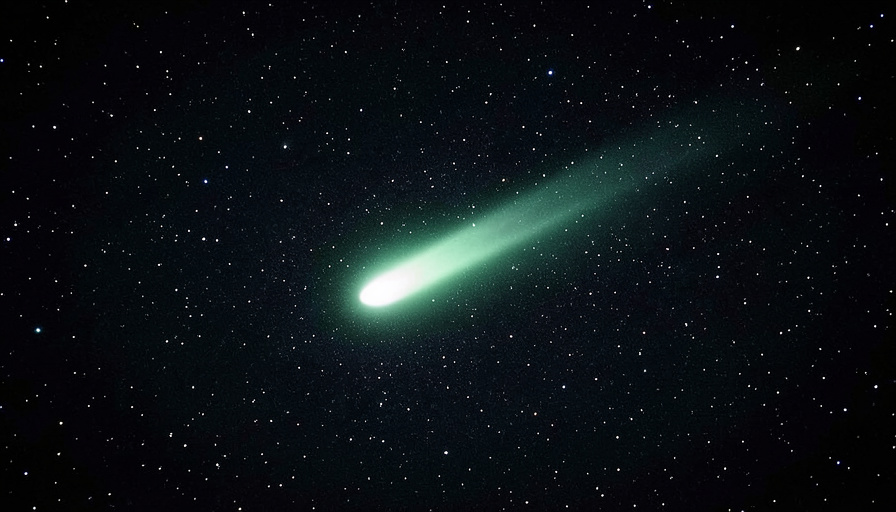
A comet is a small, icy body that orbits the Sun, made mostly of frozen gases, dust, and rock, often described as a dirty snowball. When a comet’s orbit carries it close to the Sun, the ice heats up and turns to gas, releasing dust and forming a glowing cloud called a coma and one or more long tails. Comets come from the cold outer edges of the solar system, and their tails always point away from the Sun, not behind the comet as you might expect.
What a comet actually is
A comet is essentially a chunk of ancient ice and dust orbiting the Sun. As NASA describes them, comets are cosmic snowballs of frozen gases, rock, and dust that orbit the Sun, and when frozen far from its heat, a comet is roughly the size of a small town.
They are often nicknamed dirty snowballs, and the label fits: the frozen part is mostly water ice, mixed with other frozen gases like carbon dioxide and carbon monoxide, all bound together with rocky dust and grit. Crucially, comets are leftovers from the era when the planets formed, so they preserve some of the original material of the early solar system, which is part of why scientists find them so valuable to study. For more on the night sky and beyond, browse SciExaminer’s Space section.
The nucleus, coma, and tail
A comet has three main parts, and they look dramatically different in size. At the center is the nucleus, the solid, icy core, which is actually quite small, just a few miles across for a typical comet. Far out in space, the nucleus is all there is.
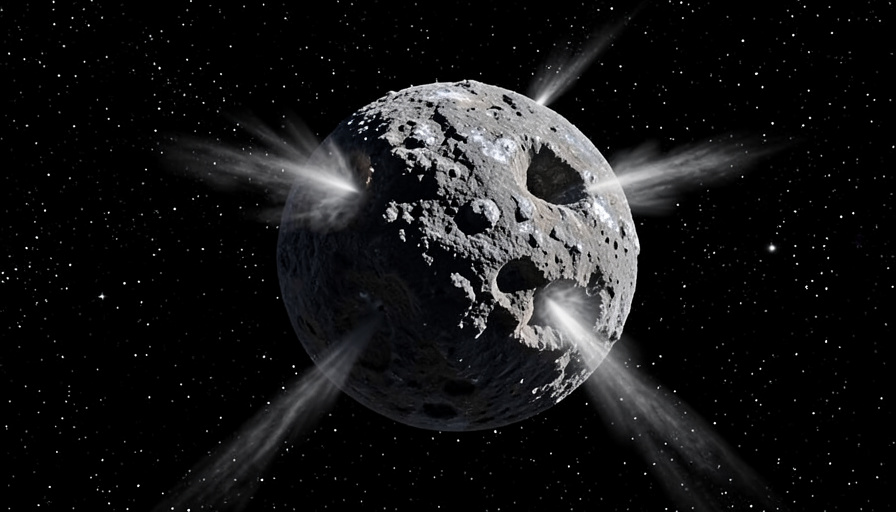
The transformation happens as the comet nears the Sun. As NASA explains, the Sun’s heat causes the ices to turn straight from solid to gas, releasing dust and forming a glowing head called the coma, which can grow larger than a planet, and streaming material into tails that can stretch for millions of miles. So the solid part of a comet stays tiny, while the coma and tail it grows can become enormous, which is why a small icy lump can light up the whole sky.
Why the tail points away from the Sun
Here is the fact that surprises most people. You might assume a comet’s tail streams out behind it, like the exhaust of a rocket. It does not. A comet’s tail always points away from the Sun, no matter which direction the comet is traveling.
The reason is that the tail is pushed by the Sun itself. Sunlight and the stream of charged particles known as the solar wind blow the comet’s gas and dust outward, away from the Sun, just as wind blows smoke. So as a comet swings around the Sun and heads back out, its tail actually leads the way, pointing ahead of it rather than trailing behind. NASA notes this is a defining behavior of comets: the tail extends away from the Sun rather than following the comet’s path.
Where comets come from
Comets are visitors from the deep freeze at the edge of the solar system, and they come from two main regions. The nearer source is the Kuiper Belt, a disc-shaped zone of icy bodies beyond the orbit of Neptune. Comets from here tend to be short-period comets, returning in less than 200 years, like the famous Halley’s Comet.
The far more distant source is the Oort Cloud, a vast spherical shell of icy objects surrounding the entire solar system. According to NASA, there are likely billions of comets out in these regions. Comets nudged loose from the Oort Cloud become long-period comets, taking more than 200 years, sometimes thousands or even millions, to complete a single orbit. That is why some spectacular comets appear once and are not seen again for many human lifetimes.
Comets versus asteroids
Comets are often confused with asteroids, since both are small bodies orbiting the Sun left over from the solar system’s formation. The difference comes down to what they are made of and how they behave.
Asteroids are mostly rock and metal, and they generally stay in the warmer inner solar system, so they do not develop tails. Comets are rich in ice, and when they approach the Sun that ice vaporizes. As the European Space Agency notes, whether an object is classed as a comet rather than an asteroid usually depends on whether it is seen spewing out gas and dust and wrapping itself in a coma. In short, a comet is the icy cousin that grows a glowing head and tail, while an asteroid is the rocky one that does not. For a fuller definition, the Britannica entry on comets is a good reference.
At a glance
- A comet is a small icy body of frozen gases, dust, and rock that orbits the Sun, a dirty snowball.
- Its parts are the small solid nucleus, the glowing coma around it, and one or more long tails.
- Near the Sun, the ice vaporizes, forming the coma and tails that can stretch for millions of miles.
- A comet’s tail always points away from the Sun, pushed by sunlight and the solar wind.
- Comets come from the Kuiper Belt (short-period) and the far Oort Cloud (long-period), unlike rocky asteroids.
Frequently asked questions
What is a comet in simple terms?
A comet is a small, icy object that orbits the Sun, made of frozen gases, dust, and rock, often called a dirty snowball. When it nears the Sun, the ice heats up and forms a glowing cloud and a long tail, which is what makes comets visible in the sky.
What is a comet made of?
A comet is made mostly of frozen ices, primarily water ice along with frozen carbon dioxide and carbon monoxide, mixed with rocky dust and grit. This mix is why comets are nicknamed dirty snowballs. They are leftover material from the formation of the solar system.
Why does a comet have a tail?
As a comet approaches the Sun, its ice turns directly into gas, releasing dust and forming a glowing coma and tails. Sunlight and the solar wind then push this gas and dust outward, creating tails that can stretch for millions of miles across space.
Why does a comet’s tail point away from the Sun?
Because the tail is blown by the Sun. Sunlight and the solar wind push the comet’s escaping gas and dust away from the Sun, so the tail always points away from it, regardless of the comet’s direction of travel. On the way out, the tail actually leads the comet.
What is the difference between a comet and an asteroid?
Asteroids are rocky or metallic bodies, usually in the inner solar system, and they do not grow tails. Comets are icy and come from the cold outer regions; when they near the Sun, their ice vaporizes to form a coma and tail. The coma is the main distinguishing feature.
The bottom line
A comet is a small piece of the early solar system, a frozen mix of ice, dust, and rock that spends most of its existence in the dark and cold, then briefly blazes into glory when the Sun warms it. Understanding the nucleus, coma, and tail, and the surprising fact that the tail points away from the Sun, turns a mysterious streak of light into a readable piece of cosmic machinery. The next time a bright comet is announced, it is worth looking up, knowing you are seeing a traveler that may not pass this way again for a thousand years. For more on the science of the sky, the Science section digs deeper.

Related Posts
What Causes the Seasons? It Is Not Distance
What Is a Solar Eclipse, and How Does It Happen?