What Is a Food Chain, and How Does It Work?
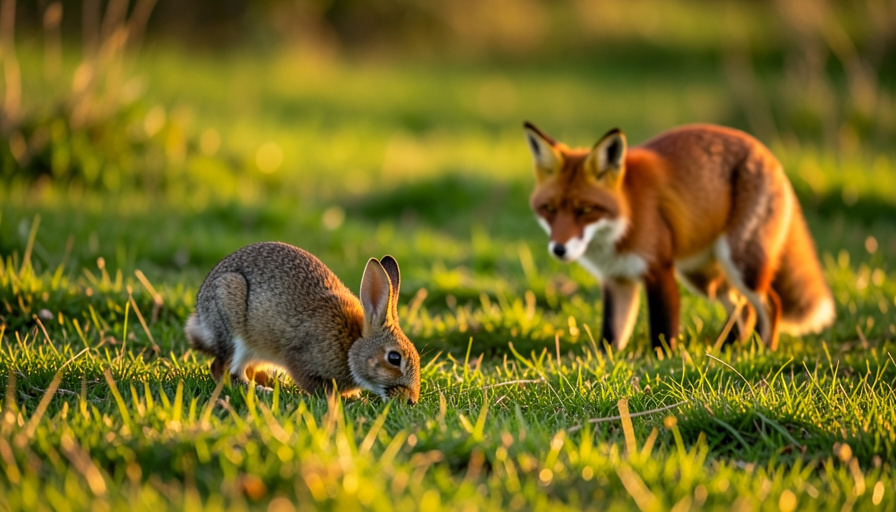
Watch a fox stalk a rabbit across a meadow and you are watching one of the oldest patterns in nature. The rabbit ate the grass, the fox eats the rabbit, and every step in that little drama runs on energy that began as sunlight falling on a blade of grass. That thread, connecting the Sun to the grass to the rabbit to the fox, is a food chain, and versions of it link together every living thing on Earth.
The idea sounds simple, and at its core it is. But a food chain also explains some surprising rules about nature, like why top predators are always rare and why the chains never stretch very long. Here is what a food chain is and how energy moves along it.
The short version
A food chain is a sequence that shows how energy and nutrients pass from one organism to the next as one is eaten by another. It starts with producers, usually plants, that make food from sunlight, then moves up through animals that eat the plants and animals that eat those animals, and ends with decomposers that break everything back down. Only a fraction of the energy carries over at each step, which is why food chains are always short.
What a food chain actually is
A food chain is a linear map of who eats whom, and more importantly, of how energy travels through a community of living things. As Britannica explains, it is a sequence of organisms through which nutrients and energy pass as each one feeds on the one before it, forming a single path from bottom to top.
The critical thing to understand is that a food chain is really about energy. Nearly all of it starts with the Sun. Green plants and algae capture sunlight and turn it into food, and from there that captured energy is handed up the chain, meal by meal. Each organism is a step where some of that energy is used, stored, or lost. For more on how the living world works, browse SciExaminer’s Environment section.
The links, from producers to predators
Every food chain is built from a few standard roles, and each is called a trophic level, meaning a feeding level. Knowing them makes any food chain easy to read.
- Producers sit at the base. These are plants, algae, and phytoplankton that make their own food from sunlight through photosynthesis.
- Primary consumers are herbivores, the animals that eat the producers, like a rabbit grazing on grass.
- Secondary consumers are usually carnivores or omnivores that eat the primary consumers.
- Tertiary consumers, including apex predators at the very top, eat the secondary consumers and have few natural enemies of their own.
Read from bottom to top, the chain tells a story of energy moving upward: grass to rabbit to fox, or in the sea, tiny plankton to small fish to large fish. Scientists draw the arrows pointing from the one eaten to the one eating, to show the direction the energy flows.
How energy flows, and the 10 percent rule
Here is where food chains reveal one of their strangest rules. Energy does not pass cleanly from one level to the next. Most of it is lost along the way, burned up in movement, given off as heat, or left behind in parts that are not eaten.
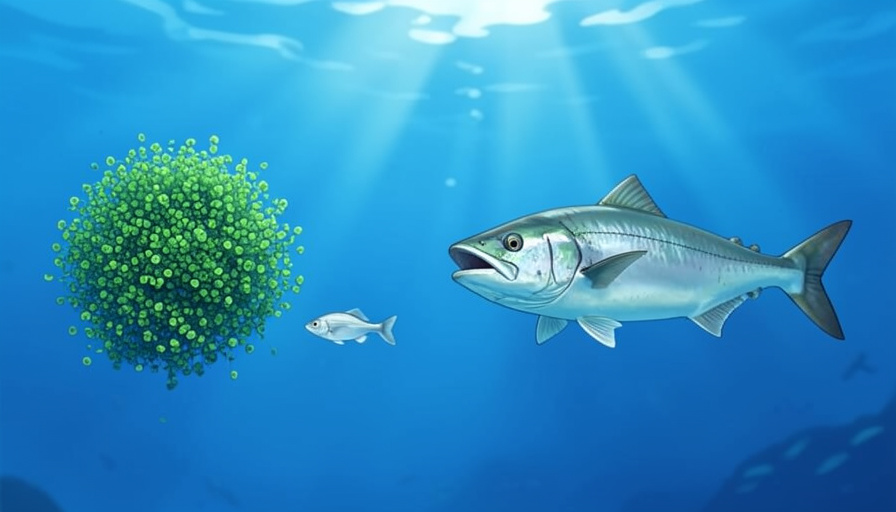
As National Geographic describes, only about 10 percent of the energy at one trophic level makes it to the next, a pattern often called the 10 percent rule. The other 90 percent is spent or lost. This single fact explains a great deal. It is why food chains rarely have more than four or five links, since after that there is simply too little energy left to support another predator, and it is why apex predators like lions or sharks are so few and need such large territories to survive.
The recyclers at the end
There is one group that does not fit neatly into the upward climb but is essential to the whole system: the decomposers. These are the fungi, bacteria, earthworms, and other organisms that feed on dead plants and animals and their waste.
Decomposers close the loop. By breaking down dead matter, they release its stored nutrients back into the soil and water, where producers can take them up again to grow. Without decomposers, dead material and its trapped nutrients would pile up, and the chain would eventually starve at its base. They are the cleanup crew and the recyclers that keep the whole cycle running, quietly turning endings back into beginnings.
Why real ecosystems are food webs
A single food chain is a useful simplification, but nature is rarely that tidy. Most animals eat more than one kind of food, and most foods are eaten by more than one kind of animal. A fox eats rabbits, but also mice and berries, and a rabbit is prey for foxes, hawks, and more.
As Khan Academy notes, in real ecosystems these many food chains overlap and interconnect into a food web, a far more accurate picture of how energy moves. The web also shows why ecosystems can be fragile. Remove one species, and the effects can ripple outward through every chain it touched, which is a big part of why protecting biodiversity matters.
At a glance
- A food chain shows how energy passes from one organism to another as one eats the next.
- It runs from producers, which make food from sunlight, up through consumers to top predators.
- Only about 10 percent of energy transfers to each higher level, so chains stay short.
- Decomposers break down dead matter and return nutrients to the base of the chain.
- In real ecosystems, many food chains interconnect to form a food web.
Frequently asked questions
What is a food chain in simple terms?
It is a sequence that shows how energy and nutrients pass from one living thing to another as one eats the other. It starts with plants that make food from sunlight and moves up through the animals that eat them and the predators that eat those animals.
What are producers, consumers, and decomposers?
Producers are plants and algae that make their own food from sunlight. Consumers are animals that eat producers or other consumers, ranging from herbivores up to top predators. Decomposers, such as fungi and bacteria, break down dead organisms and return their nutrients to the environment.
What is the 10 percent rule?
It is the pattern that only about 10 percent of the energy at one level of a food chain passes to the next level. The rest is lost as heat, used for movement, or left uneaten. This is why food chains rarely have more than four or five links.
What is the difference between a food chain and a food web?
A food chain is a single, straight-line path of who eats whom. A food web is many food chains linked together, reflecting that most animals eat several kinds of food and are eaten by several predators. A food web is a more realistic picture of an ecosystem.
Why are there so few top predators?
Because energy shrinks at every step of a food chain, with only about 10 percent passing upward each time, there is very little energy left at the top. That limited supply can support only a small number of apex predators, which is why they are rare and range widely.
What this means
A food chain turns out to be more than a lesson about who eats whom. It is a map of how the Sun’s energy spreads through every living thing, thinning out at each step until only a little reaches the top. That simple rule shapes entire ecosystems, deciding how many predators a habitat can hold and how tightly every species is bound to the others. Seeing the chain, and the wider web it belongs to, is a reminder that nothing in nature stands alone. For more on the science behind the living world, the Science section digs deeper.

Related Posts
What Is the Jet Stream, and Why It Matters
What Is El Niño, and How Does It Work?