

What Is Circadian Rhythm, and How Does It Work?
Why do you get sleepy at roughly the same time each night, feel groggy after crossing time zones, or hit an afternoon slump like clockwork? The answer is a quiet timekeeper running in the background of your body, day and night, whether you notice it or not. It is called your circadian rhythm, and it shapes far more than sleep. Understanding it is one of the most practical pieces of biology you can learn, because it touches how you feel every single day.
Your circadian rhythm influences sleep, energy, mood, and long-term health, so it is worth understanding well. Here is a plain-language guide to what it is and how it works.
Short answer
Your circadian rhythm is your body’s internal roughly 24-hour clock. It is coordinated by a master clock in the brain that responds mainly to light and dark, telling your body when to feel alert and when to feel sleepy. This rhythm controls your sleep-wake cycle along with hormone release, body temperature, and digestion. When it is thrown off by things like jet lag or late-night screens, sleep and health can suffer, but steady habits keep it running smoothly.
What circadian rhythm is
At its simplest, a circadian rhythm is a daily cycle your body runs on. According to the National Institute of General Medical Sciences, circadian rhythms are the physical, mental, and behavioral changes an organism experiences over a 24-hour cycle, found in nearly all living things.
The word itself is a clue. As the Cleveland Clinic explains, circadian comes from Latin words meaning around or approximately a day, and your circadian rhythm is your body’s natural 24-hour clock. It is the reason your body has a sense of timing even without you checking a watch.
The body’s master clock
That sense of timing comes from a specific place in the brain. The NIGMS explains that in humans, a group of nerve cells called the suprachiasmatic nucleus, or SCN, serves as the master clock, coordinating rhythms throughout the body. It is a tiny structure with an outsized job.
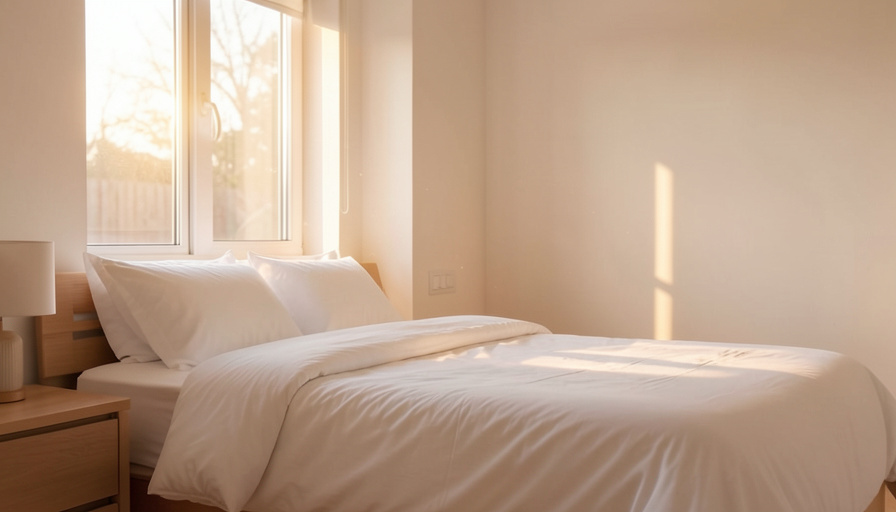
Light is the master clock’s most important signal. The SCN responds directly to light entering the eyes, and it uses that information to control melatonin, the sleep hormone. In the evening, as light fades, the brain is told to make more melatonin, which brings on sleepiness. In the morning, light tells it to ease off. This is why your body clock and the sun tend to move together.
Light is not the only cue, though. The NIGMS notes that meals, exercise, temperature, and social routines also help shape the rhythm, which is why a regular daily pattern reinforces the clock and a chaotic one can blur it.
What it controls
Sleep is the most obvious thing circadian rhythm governs, but it is far from the only one. The NIGMS notes that these rhythms control critical processes including sleep patterns, hormone release, appetite and digestion, and body temperature. Your alertness rises and falls on this schedule too.
Because so much runs on the same clock, its reach is wide. The daily pattern of the stress hormone cortisol, which peaks in the morning, is set by this rhythm, and the timing influences how your body handles food and energy, connecting it to metabolism. When your clock is aligned, these systems work in concert; when it is not, they fall out of step.
What throws it off
Modern life offers plenty of ways to confuse the body clock. The Cleveland Clinic lists common disruptors including jet lag from crossing time zones, shift work, blue light from screens before bed, irregular schedules, and stress. Each sends the brain mixed signals about what time it really is.
Shift work is a striking example. The Centers for Disease Control and Prevention notes that because our body clocks are set for daytime activity and nighttime sleep, working night hours can disrupt sleep, and that circadian disruption from too little or interrupted sleep is linked to risks for immune dysfunction, diabetes, and cardiovascular disease. The NIGMS similarly connects long-term disruption to obesity, mood disorders, and other conditions.
Keeping it healthy
The encouraging news is that a few steady habits keep the clock on track. The Cleveland Clinic suggests keeping a consistent daily routine, getting outdoor light during the day, exercising regularly, limiting screens before bed, and avoiding caffeine and alcohol in the evening.
Light and timing are the key levers. Morning daylight helps anchor the clock to the day, while dimming lights and screens at night lets melatonin rise on schedule. The Cleveland Clinic notes that most adults need seven to nine hours of sleep for healthy circadian function, so protecting a regular sleep window is one of the simplest things you can do. For more on caring for your body, the Health section has plenty to explore.
At a glance
- Circadian rhythm is your body’s roughly 24-hour internal clock.
- A master clock in the brain, the suprachiasmatic nucleus, keeps time using light.
- It controls sleep, hormone release, body temperature, and digestion.
- Jet lag, shift work, screens, and irregular schedules can throw it off, affecting health.
- Consistent routines, morning light, and limiting evening light keep it steady.
This article is for general information and is not medical advice. If you have ongoing sleep problems or a health condition affecting your body clock, consult a qualified healthcare professional.
Frequently asked questions
What is circadian rhythm in simple terms?
It is your body’s internal clock that runs on a cycle of about 24 hours. It tells you roughly when to feel awake and when to feel sleepy, and it also times other processes like hormone release and body temperature. It is guided mostly by exposure to light and darkness.
What controls the circadian rhythm?
A master clock in the brain called the suprachiasmatic nucleus, or SCN, coordinates it. The SCN responds directly to light entering the eyes and adjusts the body accordingly, including how much melatonin, the sleep hormone, is produced. Light is the strongest signal that keeps this clock set.
What disrupts your circadian rhythm?
Common disruptors include jet lag from crossing time zones, working night or rotating shifts, bright screens and light late at night, irregular sleep schedules, and stress. These send the body clock conflicting cues about the time of day, which can lead to poor or insufficient sleep.
Why does circadian rhythm matter for health?
Because the same clock times many systems, keeping it aligned supports healthy sleep, mood, and metabolism. Long-term disruption has been linked to higher risks of conditions such as obesity, diabetes, cardiovascular disease, and mood disorders, which is why steady sleep and light habits are valuable.
How can I reset my circadian rhythm?
Consistency is the main tool. Keep regular sleep and wake times, get bright outdoor light in the morning, and dim lights and avoid screens in the evening. Regular exercise and avoiding late caffeine and alcohol help too. After travel, gradually shifting your schedule toward the new time zone eases the adjustment.
What to do next
Your circadian rhythm is a reminder that when you do things can matter almost as much as what you do. The body is not a machine that runs the same at any hour; it is a finely timed system that expects light by day and darkness by night. Working with that rhythm, rather than against it, is one of the least glamorous and most effective health habits available. Start with a consistent bedtime and a dose of morning light, and the rest of the clock tends to follow. For more on how your body works, the Health section is a good place to continue.

Related Posts

What Is Inflammation, and Why Does It Matter?
What Is BMI, and What Does It Actually Measure?