What Is the Ozone Layer, and Why Does It Matter?
Roughly ten miles above your head, a faint layer of gas is quietly saving your life. You cannot see it, feel it, or smell it, yet without the ozone layer, the Sun’s ultraviolet rays would reach the ground with enough force to make much of life on land impossible. It is also the subject of one of the most encouraging stories in environmental history: humanity noticed we were destroying it, agreed to stop, and it is now slowly healing.
The ozone layer gets mentioned often, usually alongside the words hole or damage, but what it actually is and how it protects us tends to get lost. Here is a clear guide to the ozone layer, why it matters, and the difference between the ozone that helps us and the ozone that harms us.
Short answer
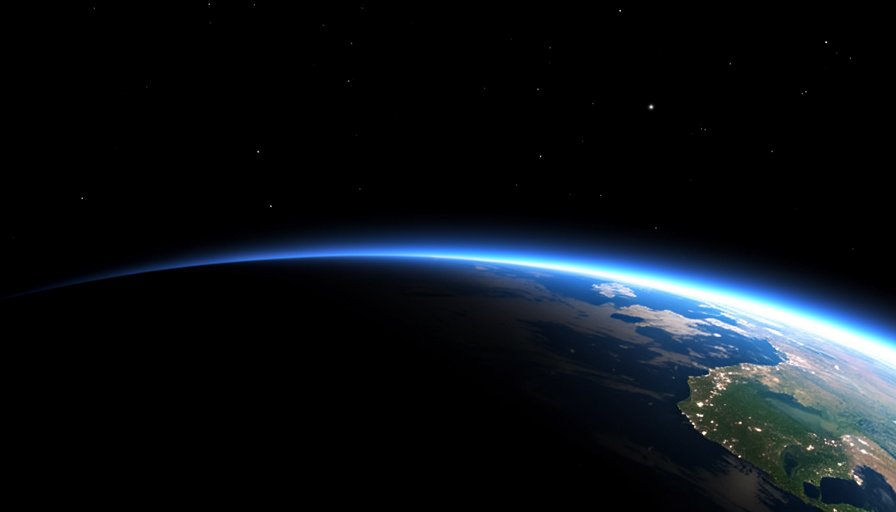
The ozone layer is a region of the upper atmosphere, in the stratosphere about 9 to 18 miles up, that is rich in ozone, a gas made of three oxygen atoms. It acts as a shield by absorbing most of the Sun’s harmful ultraviolet radiation before it reaches the surface, protecting living things from damage like skin cancer and crop losses. Human-made chemicals called CFCs thinned this layer, creating the ozone hole, but a global treaty has put it on the road to recovery.
What the ozone layer is
Ozone is a molecule made of three oxygen atoms, written as O3, which makes it different from the ordinary oxygen we breathe, which has two. As the US Environmental Protection Agency explains, most of the planet’s ozone sits in a band of the stratosphere roughly 9 to 18 miles above the surface, a region we call the ozone layer.
Up there, ozone is constantly being created and broken apart in a natural balance, keeping the total amount fairly steady over time. It is not a solid shield or a thick blanket; the ozone is quite thinly spread through that part of the atmosphere. Even so, this modest amount of gas does something extraordinary for life below. For more on the planet’s systems, browse SciExaminer’s Environment section.
How it protects us
The ozone layer’s great job is filtering sunlight. Sunlight contains ultraviolet, or UV, radiation, a high-energy form of light that can damage living cells. The ozone layer absorbs a large portion of it, especially the most harmful type, before it can reach the ground.

According to NASA, stratospheric ozone absorbs UV-B, the most harmful form of ultraviolet radiation that reaches Earth’s surface, which can damage the DNA of plants and animals. Without this filter, the extra UV reaching the ground would sharply increase skin cancer and cataracts in people, harm crops, and damage the tiny organisms at the base of ocean food webs. In short, the ozone layer is a big part of why complex life can thrive on land at all.
Good ozone versus bad ozone
Here is a twist that confuses many people: the same molecule can be a hero or a hazard depending on where it is. High up in the stratosphere, ozone is good, shielding us from UV. Down at ground level, ozone is bad.
NASA describes ozone as good up high and bad nearby. Near the surface, ozone is a harmful pollutant and the main ingredient in smog. It forms when gases from vehicle exhaust and industry react in sunlight, and breathing it irritates the lungs and harms plants, which is why hot, smoggy summer days come with ozone warnings. So the goal is to protect the good ozone far above us while reducing the bad ozone we create at the surface. Same chemical, opposite effects, all depending on altitude.
The ozone hole and CFCs
In the 1970s and 1980s, scientists made an alarming discovery: the ozone layer was thinning, especially over Antarctica, where each spring a vast region of severely depleted ozone appears, known as the ozone hole. The culprit was a class of human-made chemicals.
These chemicals, chlorofluorocarbons or CFCs, were once common in refrigerators, air conditioners, spray cans, and fire extinguishers. As NOAA explains, CFCs are not destroyed in the lower atmosphere, so they drift up into the stratosphere, where sunlight breaks them apart and the released chlorine destroys ozone molecules. NASA defines the ozone hole as areas where ozone drops below a certain threshold, and it develops over Antarctica from around August, peaking in late September or early October. It was a clear case of an invisible product causing planet-scale harm.
The treaty that is healing it
The response to the ozone crisis became a model for global environmental action. In 1987, nations signed the Montreal Protocol, a treaty to phase out the chemicals that destroy ozone, and it has since been strengthened and adopted worldwide.
The results have been remarkable. By cutting CFCs and similar substances, the world has avoided far worse ozone loss, and the layer is slowly recovering. Scientists project that the Antarctic ozone hole should largely heal around the middle of this century if the treaty is upheld. It stands as proof that when the world acts together on clear science, even a global environmental problem can be turned around. The ozone story is often held up as the example other environmental challenges are measured against.
Main takeaways
- The ozone layer is a band of the stratosphere, about 9 to 18 miles up, rich in ozone (O3, three oxygen atoms).
- It shields life by absorbing most of the Sun’s harmful UV radiation, especially UV-B.
- Ozone is good high in the stratosphere but bad at ground level, where it is a main ingredient of smog.
- Human-made CFCs thinned the layer and created the Antarctic ozone hole.
- The 1987 Montreal Protocol phased out those chemicals, and the ozone layer is now slowly recovering.
Frequently asked questions
What is the ozone layer in simple terms?
The ozone layer is a thin region high in the atmosphere, in the stratosphere, that contains a lot of ozone gas. It acts like a natural sunscreen for the planet, absorbing most of the Sun’s harmful ultraviolet radiation before it can reach the surface and damage living things.
Why is the ozone layer important?
Because it blocks most of the Sun’s harmful UV radiation. Without it, far more UV would reach the ground, sharply increasing skin cancer and cataracts, harming crops, and damaging ocean life. The ozone layer is a key reason complex life can survive on land.
What is the difference between good and bad ozone?
Good ozone is high in the stratosphere, where it shields Earth from UV radiation. Bad ozone is at ground level, where it is a harmful air pollutant and the main ingredient in smog. It is the same molecule, but its effect depends entirely on its altitude.
What caused the ozone hole?
Human-made chemicals called chlorofluorocarbons, or CFCs, used in refrigerants, spray cans, and other products. They rise into the stratosphere, where sunlight breaks them apart and the released chlorine destroys ozone, thinning the layer most dramatically over Antarctica each spring.
Is the ozone layer recovering?
Yes, slowly. After the 1987 Montreal Protocol phased out ozone-destroying chemicals worldwide, the layer began to heal. Scientists project the Antarctic ozone hole should largely recover around the middle of this century, provided the treaty continues to be followed.
What to do next
The ozone layer is a quiet reminder that the atmosphere, thin as it is, does enormous work to keep the surface habitable. It is also proof that environmental damage is not always permanent: faced with clear evidence, the world changed course and the layer is mending. As an individual, the main thing is to be aware of the distinction, protecting the good ozone above by supporting the phase-out of harmful chemicals, and reducing the bad ozone at ground level by cutting the pollution that creates smog. It is one of the rare environmental stories that offers genuine hope. For more on the science of our planet, the Science section digs deeper.