How Do Solar Panels Work, and Are They Worth It?
A solar panel just sits there. It has no engine, no moving parts, and makes no sound. Yet point it at the sun and it quietly produces electricity, drawing power straight out of the light. It is one of the more elegant pieces of technology in everyday use, and how it works is simpler than most people think.
Solar has gone from a niche curiosity to a fixture on rooftops around the world, driven by prices that have fallen dramatically. Whether you are curious about the physics or weighing panels for your own home, it helps to understand both how they generate power and where the honest tradeoffs lie.
Bottom line first
A solar panel works by using the photovoltaic effect, in which sunlight knocks electrons loose in a layer of silicon and pushes them into a flow of electricity. That power is converted for household use by an inverter. Modern panels turn about a fifth of the sunlight hitting them into electricity, and in many places they pay for themselves within roughly 7 to 12 years while lasting far longer.
How a panel turns light into electricity
The heart of a solar panel is a set of cells made from silicon, the same semiconductor used in computer chips. When sunlight strikes a cell, the energy in the light knocks electrons loose from their atoms. The cell is built with a built-in electric field, so those freed electrons do not drift randomly. They are pushed in one direction, and that organized flow of electrons is an electric current.
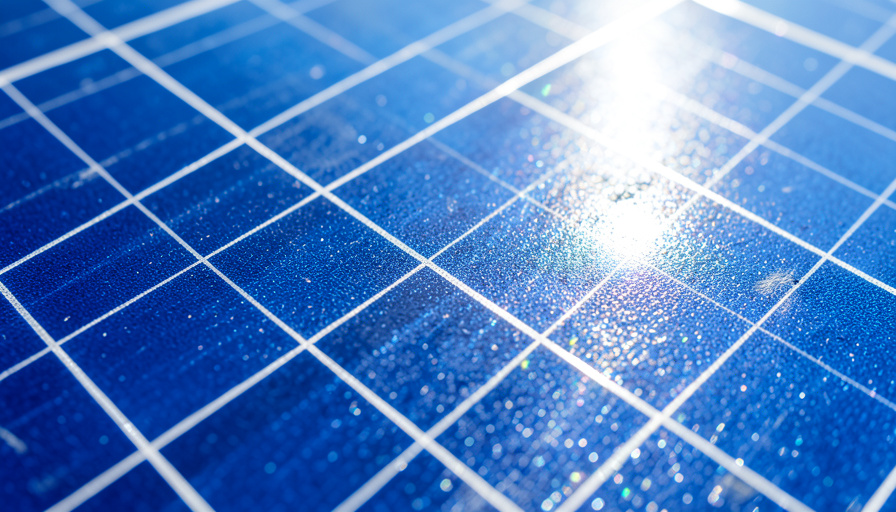
This is the photovoltaic effect, named for turning light, or photons, into voltage. As the US Department of Energy describes it, the sunlight absorbed by the cells creates electrical charges that move in response to the cell’s internal field, and that movement is the electricity. As the US Energy Information Administration notes, a photovoltaic cell does this with no moving parts at all, converting sunlight directly into power. For more environmental reporting, browse SciExaminer’s Environment section.
From panel to power outlet
There is one catch. Solar cells produce direct current, or DC, the kind of steady one-way electricity that comes from a battery. Your home runs on alternating current, or AC, which rapidly switches direction. So a solar system includes an inverter, a device that converts the panel’s DC output into the AC electricity your appliances need.
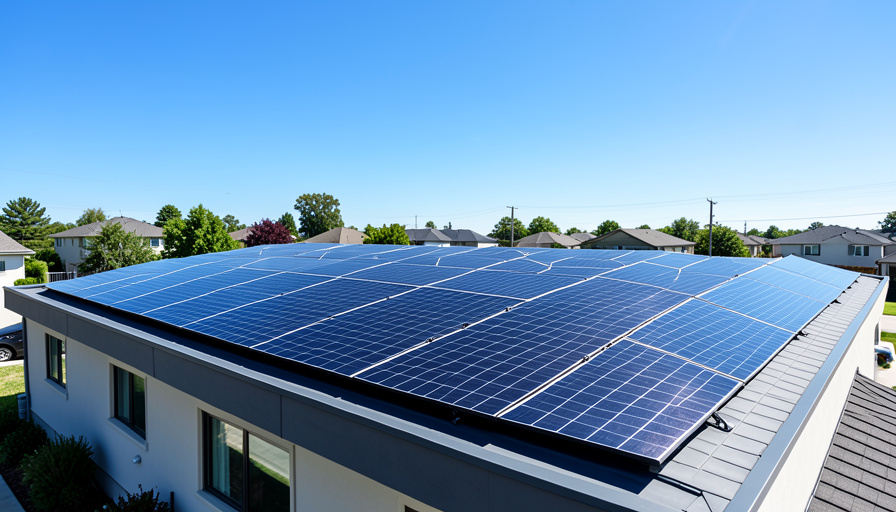
From there, the power flows to your home. When your panels make more than you are using, the extra can flow back into the grid, often earning you credit through an arrangement called net metering, or it can charge a home battery for use after dark. At night or on cloudy days, when the panels make little, you draw from the grid or the battery as usual. The panels and the grid work as a team.
How efficient are they, really?
Solar panels are not yet miraculous, and their efficiency is a fair question. Most residential panels convert somewhere around 20 percent of the sunlight that hits them into usable electricity, with the best modern silicon panels reaching the low-to-mid 20s. The rest of the energy is lost mostly as heat.
That might sound low, but it is enough to power a home when you cover a roof with panels, and efficiency has climbed steadily over the years. According to the National Renewable Energy Laboratory, there is a physical ceiling on how much a single silicon cell can capture, which is why researchers are exploring new materials to push beyond it. For now, 20 percent turns out to be plenty for real-world use.
Are solar panels worth it?
This is the question most people actually care about, and the honest answer is that it depends on your situation. The cost of solar has plunged over the past decade, and a typical home system now pays for itself in savings within roughly 7 to 12 years, then keeps generating for a couple of decades more.
Whether it works out for you comes down to a few factors:
- How much sun your location and roof get across the year.
- Your local electricity rates, since higher rates mean bigger savings.
- Available incentives, which vary by country and state and change over time, so check the current federal and local programs.
- Whether you buy the system outright, finance it, or lease it, which changes the math significantly.
Panels typically carry warranties of around 25 years and often keep working beyond that, so a system that breaks even in a decade can deliver many years of nearly free power afterward, and it can raise a home’s value.
How clean are they, really?
Once installed, a solar panel generates electricity with no emissions, no fuel, and no noise. Manufacturing them does take energy and materials, and that footprint is real, but panels typically generate enough clean power to offset the energy used to make them within about one to three years. Over a 25-year life, that is a large net gain for the climate.
The main open challenges are recycling old panels as the first big wave reaches retirement, and sourcing materials responsibly. Neither erases the core benefit. As a way to turn sunlight into low-carbon power, solar is one of the clearest wins in the shift away from fossil fuels.
Main takeaways
- Solar panels use the photovoltaic effect to turn sunlight directly into electricity, with no moving parts.
- An inverter converts the panel’s DC power into the AC electricity homes use.
- Most panels are about 20 percent efficient, which is enough to power a home.
- Systems often pay for themselves in roughly 7 to 12 years and last 25 years or more.
- They generate clean power and repay their manufacturing energy within a few years.
This article is general information, not financial advice. Solar costs, savings, and incentives vary widely by location and change over time, so get quotes and check current programs for your own situation.
Frequently asked questions
How do solar panels work in simple terms?
Sunlight hits silicon cells in the panel and knocks electrons loose. A built-in electric field pushes those electrons into a steady flow, which is electricity. An inverter then converts that power into the form your home can use.
What is the photovoltaic effect?
It is the process of converting light into electricity. When photons from sunlight strike a solar cell, they free electrons in the silicon, and the cell’s design channels those electrons into an electric current, all without any moving parts.
How efficient are solar panels?
Most residential solar panels convert about 20 percent of the sunlight that reaches them into electricity, and the best modern silicon panels reach the low-to-mid 20s. The remaining energy is mostly lost as heat, but 20 percent is enough to power a typical home.
Are solar panels worth the money?
In many places, yes. A typical system pays for itself in savings within roughly 7 to 12 years and then keeps producing for a decade or more. Whether it pays off depends on your sunlight, electricity rates, incentives, and how you finance the system.
Do solar panels work on cloudy days or at night?
They still generate some power on cloudy days, just less than in full sun. At night they produce nothing, so your home draws from the grid or a battery. Systems are designed to combine solar with grid or stored power to cover the gaps.
What to do next
Solar panels are a rare piece of technology that feels almost too simple to be true: a flat sheet with no moving parts that turns sunlight into power for decades. The physics is settled, the prices have fallen, and for a growing number of homes the economics now line up too. If you are considering it, the smart move is to get a few quotes, learn your local electricity rates and current incentives, and run the payback math for your own roof. The sunlight is free, and increasingly, so is much of the power it can make. For more on the money side of home upgrades, the Business section can help.