
What Is a Credit Score, and How Is It Calculated?
A single three-digit number, one you rarely see and never chose, quietly follows you around. It helps decide whether you get the apartment, the car loan, and the interest rate on your mortgage. Understanding your credit score is one of the highest-value hours you can spend on your money.
Most people know their credit score matters and have only a fuzzy sense of what it is or how it moves. That fog is expensive, because the same purchase can cost one person thousands of dollars more than another purely because of this number. The good news is that the rules behind it are knowable, and once you know them, the score is far more in your control than it feels.
Quick answer
A credit score is a three-digit number, usually from 300 to 850, that predicts how likely you are to repay borrowed money on time. Lenders use it to decide whether to approve you and what interest rate to charge. It is calculated from your credit history, and the biggest factor by far is whether you pay your bills on time.
What a credit score actually is
A credit score is a number that sums up your track record with borrowed money into a single measure of risk. It is built from the information in your credit reports, the files that the three major bureaus, Equifax, Experian, and TransUnion, keep on your borrowing and repayment.
Two scoring models dominate, FICO and VantageScore, and both run from 300 to 850. As the Consumer Financial Protection Bureau explains, lenders use these scores to gauge how risky it is to lend to you, which shapes both whether you are approved and the rate you are offered. Checking your own score does not lower it, since that counts as a soft inquiry. For more on managing money, browse SciExaminer’s Business section.
How your score is calculated
The exact formula is a trade secret, but FICO publishes the weight of each category, so you know what moves the needle. Five factors go into the score, and they do not carry equal weight.
- Payment history, about 35 percent. Whether you pay on time is the single largest factor, and a missed payment hurts more than almost anything else.
- Amounts owed, about 30 percent. This is largely your credit utilization, meaning how much of your available credit you are using. Keeping it below 30 percent helps, and lower is better.
- Length of credit history, about 15 percent. A longer track record and older average account age work in your favor.
- New credit, about 10 percent. Applying for several accounts in a short time can ding your score, since each hard inquiry signals risk.
- Credit mix, about 10 percent. A blend of credit types, such as a card and an installment loan, helps modestly.
These weights come straight from myFICO, and they explain why the fastest way to protect a score is simply to never miss a payment.
What counts as a good score
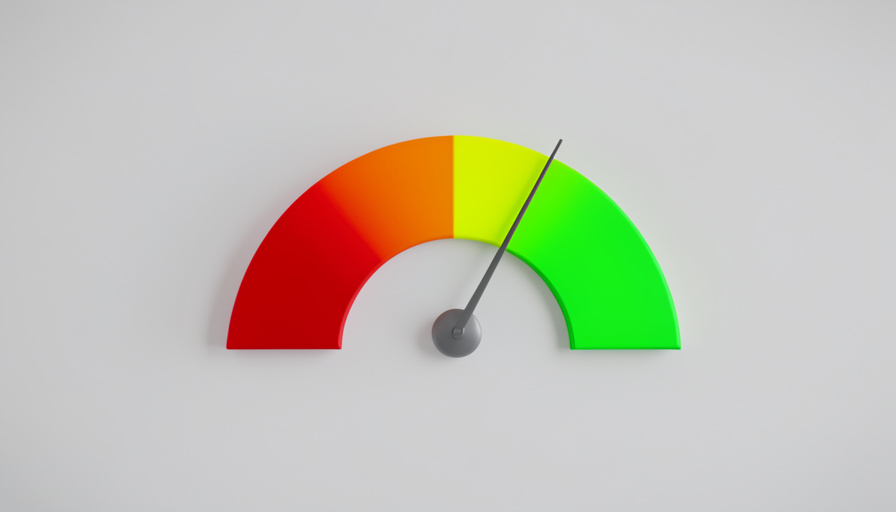
Scores fall into bands, and lenders treat them differently at each tier. Using the common FICO ranges, a score of 800 to 850 is exceptional, 740 to 799 is very good, 670 to 739 is good, 580 to 669 is fair, and anything below 580 is poor.
As Experian notes, crossing from one tier into the next is where the real money lives, because a jump from fair to good can unlock far better rates. You do not need a perfect 850. Reaching the good or very good range captures most of the benefit.
Why your credit score matters
The score reaches well beyond loan approvals. It sets the interest rate on your mortgage, car loan, and credit cards, and over the life of a big loan a lower rate can save or cost tens of thousands of dollars for the exact same purchase.

It shows up in places people do not expect, too. Landlords often check credit before renting to you. Utility and phone companies may require a deposit if your score is low. In many states, insurers factor a credit-based score into your premiums. A strong score is less a bragging right than a quiet discount applied across your financial life.
How to build and protect it
You have more say over your score than the mystery around it suggests. A handful of habits do almost all the work.
- Pay every bill on time, every time, since payment history carries the most weight.
- Keep your credit utilization low, ideally under 30 percent of your limits, and pay balances down before the statement date.
- Keep your oldest accounts open, because closing them shortens your credit history.
- Apply for new credit sparingly, so you avoid a cluster of hard inquiries.
- Check your credit reports for free at AnnualCreditReport.com and dispute any errors, which are more common than people expect.
None of this is fast. Building credit is a slow, steady process measured in months and years, but it is also forgiving, since old mistakes fade in impact as your record improves.
This article is general information, not financial advice. Credit scoring models and lender criteria vary, so check with the specific lender or a qualified financial professional for your own situation.
Main takeaways
- A credit score is a 300 to 850 number predicting how likely you are to repay debt.
- Payment history, at about 35 percent, is the biggest factor in a FICO score.
- Credit utilization is next, so keeping balances low helps significantly.
- A score of 670 or above is generally considered good, and higher unlocks better rates.
- Paying on time, keeping balances low, and checking your reports are the core habits.
Frequently asked questions
What is a credit score in simple terms?
It is a three-digit number, usually 300 to 850, that estimates how likely you are to repay money you borrow. Lenders use it to decide whether to approve you for credit and what interest rate to offer.
How is a credit score calculated?
A FICO score is based on five factors: payment history (about 35 percent), amounts owed (30 percent), length of credit history (15 percent), new credit (10 percent), and credit mix (10 percent). The exact formula is proprietary, but these weights are published.
What is a good credit score?
On the common FICO scale, 670 to 739 is good, 740 to 799 is very good, and 800 to 850 is exceptional. Below 670 is fair or poor. You do not need a perfect score to get good rates.
Does checking my own credit score lower it?
No. Checking your own score is a soft inquiry and has no effect on it. Only hard inquiries, which happen when you apply for new credit, can ding your score slightly.
How can I improve my credit score?
Pay every bill on time, keep your credit utilization low, avoid closing old accounts, apply for new credit sparingly, and check your credit reports for errors. Improvement is gradual but reliable.
The bottom line
A credit score can feel like a black box that judges you from a distance, but it runs on rules you can learn and habits you can control. Pay on time, keep your balances low, and give your history time to grow, and the number tends to take care of itself. Treat it less as a grade and more as a tool, because a strong score quietly lowers the price of nearly everything you finance. For more on the technology behind the systems that score us, the Technology section digs in.

Related Posts
What Is Inflation, and Why Do Prices Keep Rising?

How Much Does It Cost to Have a Baby?