How Does Compound Interest Work, and Why It Matters
People call compound interest a lot of things. The closest thing to free money. The eighth wonder of the world. The reason a small, steady saver can end up wealthier than someone who earns far more but starts late. It sounds like financial magic, but there is no magic to it. It is simple arithmetic that becomes powerful when you give it time.
The same force also has a dark side. It is exactly why an unpaid credit card balance can grow into something frightening. Understanding how compounding works, in both directions, is one of the most useful pieces of money knowledge you can have, and it does not require any math beyond what you already know.
The short version
Compound interest is interest you earn on both your original money and on the interest it has already earned. Because each round of interest gets added to the balance, the next round is calculated on a bigger number, so growth speeds up over time. That is different from simple interest, which is paid only on your original amount. Given enough years, compounding turns modest, regular saving into a surprisingly large sum. The same effect makes debt grow fast when you carry a balance.
What compound interest actually is
Interest is the price of money. When you save, a bank pays you interest for holding your deposit. When you borrow, you pay interest for the use of someone else’s money. Compound interest is what happens when that interest is added back to the balance and then earns interest of its own.
As the Consumer Financial Protection Bureau puts it, compound interest is when you earn interest on both the money you have saved and the interest you have already earned. So the balance does not grow by the same amount each year. It grows by a little more each year, because there is more money working each time. That snowballing is the whole idea. For more on money and markets, browse SciExaminer’s Business section.
Compound versus simple interest
The easiest way to see the effect is to compare it with its plainer cousin, simple interest. Simple interest is calculated only on your original amount, called the principal, and never on the interest you earn. Put 1,000 units into an account paying 5 percent simple interest, and you earn 50 every year, forever. After 20 years you have gained 1,000 in interest. Steady, predictable, and linear.
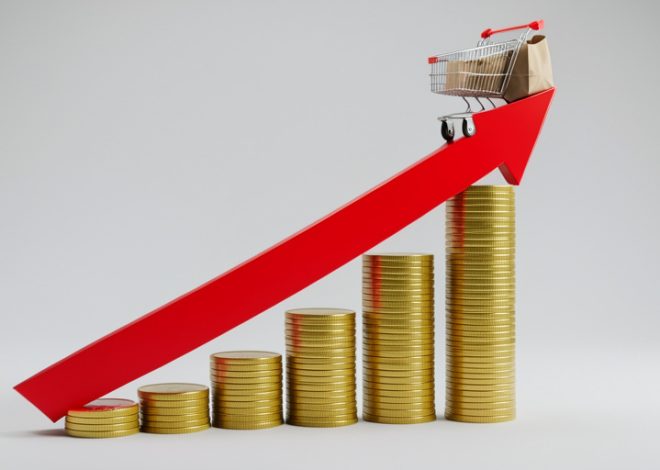
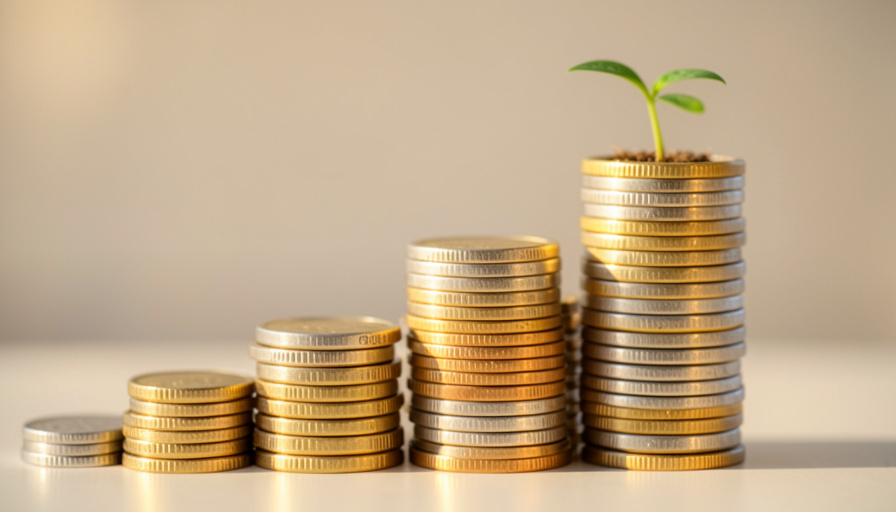
Compound interest changes the shape of that growth. With the same 1,000 at 5 percent compounded once a year, you earn 50 in year one, but in year two you earn 5 percent of 1,050, which is 52.50, and so on. Each year the gain is slightly bigger than the last. The formal version is written as A equals P times one plus r over n, raised to the power of n times t, but you do not need the formula to grasp the point. The curve bends upward instead of running in a straight line, and over decades that bend makes an enormous difference.
Why time does the heavy lifting
The single most important ingredient in compounding is time, which is why the advice to start saving early is repeated so often. The longer your money compounds, the more of your final balance comes from interest rather than from what you put in.

The CFPB offers a striking example. Someone who sets aside 100 a year starting at age 14 would have around 23,000 by age 65, assuming a 5 percent annual return. Someone who saves the same 100 a year but waits until age 35 to begin would reach only about 7,000 by 65. Same yearly contribution, same rate, wildly different outcomes, and the only difference is the head start. The early saver actually contributes less in total over a full lifetime in many such comparisons, yet ends up far ahead, because their money had more years to compound. Time, more than the size of your deposits, is what does the heavy lifting.
A shortcut: the rule of 72
You do not need a calculator to estimate how fast compounding works. There is a handy mental trick called the rule of 72. Divide 72 by your annual interest rate, and the answer is roughly how many years it takes for your money to double.
At 6 percent, money doubles in about 12 years. At 8 percent, in about 9 years. At 10 percent, in a little over 7. As Khan Academy explains, the rule is an approximation, most accurate for rates in the middle single-digit to low double-digit range, but it is close enough to be genuinely useful. It also makes the cost of a low rate obvious. Money growing at 2 percent takes about 36 years to double, while money at 9 percent takes only 8. Small differences in rate turn into big differences in time.
The same force, working against you
Everything that makes compounding wonderful for a saver makes it dangerous for a borrower. Credit cards and many other loans compound too, which means unpaid interest gets added to what you owe and then charges interest itself. A balance left to sit can grow alarmingly fast, especially at the high rates cards often carry.
This is why financial guidance so often puts paying off high-interest debt ahead of investing. The government investor education site Investor.gov offers a free compound interest calculator that lets you see the effect in either direction, on savings you are building or on a debt you are carrying. Clearing a balance charging 20 percent gives you a guaranteed return that most investments cannot match. The lesson is the same either way. Compounding rewards whoever is on the receiving end of the interest, so the goal is to make sure that is you.
Key takeaways
- Compound interest is interest earned on both your principal and the interest already added to it.
- Unlike simple interest, it makes a balance grow faster and faster over time.
- Time matters more than deposit size, so starting early has an outsized effect.
- The rule of 72 estimates doubling time: divide 72 by the interest rate.
- Debt compounds too, which is why paying off high-interest balances is so valuable.
This article is general information, not financial advice. Interest rates, fees, and account terms vary, and everyone’s situation is different. Consider speaking with a qualified financial professional before making decisions about saving, investing, or paying down debt.
Frequently asked questions
What is compound interest in simple terms?
It is interest that you earn on top of interest. Your original money earns interest, that interest is added to your balance, and then the larger balance earns interest too. Over time this makes savings grow faster and faster, and it makes unpaid debt grow the same way.
How is compound interest different from simple interest?
Simple interest is paid only on your original amount, so you earn the same fixed sum each period. Compound interest is paid on your original amount plus the interest you have already earned, so the amount you gain rises over time and the balance grows in a curve rather than a straight line.
Why does starting early matter so much?
Because compounding builds on itself, the earlier you begin, the more years your money has to grow. Two people saving the same amount can end up with very different totals if one starts decades earlier, since the early saver’s interest has far longer to compound.
What is the rule of 72?
It is a quick way to estimate how long money takes to double. Divide 72 by the annual interest rate, and the result is the approximate number of years. At 6 percent, that is about 12 years. It is an approximation, most accurate for mid single-digit to low double-digit rates.
Does compound interest work against me with debt?
Yes. Credit cards and many loans compound, so unpaid interest is added to your balance and then charged interest itself. At high rates, a balance can grow quickly, which is why paying off costly debt is often a higher priority than investing.
The bottom line
Compound interest is not a trick or a product. It is a basic feature of how money grows, and its power comes almost entirely from patience. Give it years and a steady habit, and it quietly turns small amounts into large ones, doing most of the work while you do very little. Ignore it, or land on the wrong side of it with high-interest debt, and the same mechanism works against you just as efficiently. The practical takeaway is simple: start early, keep going, and make sure the interest is flowing toward you. For more on the tools shaping modern money, the Technology section covers related ground.

Related Posts

What Is a Recession, and How Is One Declared?

How Does the Stock Market Actually Work?