

Why Do We Dream? What Science Actually Knows
Every night, your brain writes a series of strange little films, casts you as the lead, and screens them to an audience of one. By morning most are gone. We have been having this experience for as long as we have been human, and science still cannot say for certain why.
Dreaming feels deeply meaningful and utterly baffling at the same time. People have read dreams as prophecy, as hidden desire, and as random noise. Modern neuroscience has learned a great deal about what the brain is doing while we dream, yet the simplest question, what dreams are actually for, remains genuinely open. Here is where the science honestly stands.
Short answer
We dream mostly during REM sleep, when the brain is nearly as active as when we are awake. Despite decades of research, there is no single agreed reason why. The leading theories are that dreams help consolidate memories, process emotions, or arise as the brain weaves meaning from random signals. The most honest answer is that dreaming likely serves more than one purpose, and none of them are fully proven.
What happens in the brain when we dream
Most vivid dreaming happens during REM sleep, short for rapid eye movement, a stage the brain cycles into several times a night. During REM, brain activity surges to nearly waking levels, which is why dreams then feel so real. Across a full night, a person spends roughly two hours dreaming, usually without remembering it.
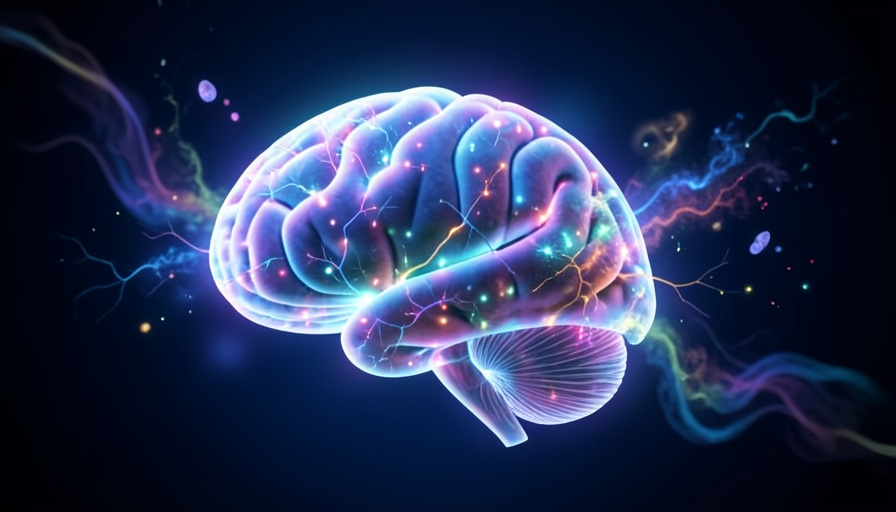
The mechanics are elegant. As the National Institute of Neurological Disorders and Stroke explains, during REM the thalamus feeds the cortex a stream of images, sounds, and sensations that become the fabric of a dream. At the same time, the brainstem briefly paralyzes most of your muscles, a state called atonia, which stops you from physically acting out whatever is happening in the story. For more on the science of the body, browse SciExaminer’s Science section.
The leading theories for why
No one theory has won the argument, but a few have strong support, and they are not mutually exclusive.
- Memory consolidation. Sleep is when the brain sorts and files the day’s experiences, and dreams may be part of moving memories into long-term storage and strengthening what you learned.
- Emotional processing. Dreams may help you work through feelings and stress. Research in Scientific Reports supports the idea that dreaming helps process emotional memories, softening their sharp edges over time.
- Activation-synthesis. This older idea holds that dreams start as random electrical signals from the brainstem, and the higher brain, unwilling to leave chaos alone, stitches them into a narrative using your memories and emotions.
- Threat and social rehearsal. Some researchers argue dreams are a safe simulator, letting you practice facing dangers or navigating social situations without real-world stakes.
As the Sleep Foundation puts it plainly, no one knows for sure why we dream, though the evidence points toward roles in emotion, memory, and creativity.
Why you forget most of your dreams
If dreams matter, why do they evaporate the moment you wake? The answer lies in brain chemistry. During REM sleep, the brain runs low on a chemical called norepinephrine that helps lock experiences into memory. Without much of it, the brain simply does a poor job of recording the dream in the first place.
This is why the trick to remembering a dream is to stay still and replay it the instant you wake, before the fragile trace fades. Wait even a minute, get up, check your phone, and it is usually gone for good. Forgetting is not a sign the dream meant nothing, it is a quirk of how memory works while you sleep.
So what are dreams actually for?
Here is the part that resists a tidy conclusion. After more than a century of serious study, and remarkable progress in mapping the sleeping brain, science still has no consensus on the purpose of dreaming. Every theory explains some dreams well and others poorly.
The likeliest picture is that dreaming does several jobs at once. It may help file memories, regulate emotion, and rehearse for waking life, while also generating some pure neural noise that means nothing in particular. That is a less satisfying answer than a single grand purpose, but it fits the evidence better. Dreams sit at the frontier where neuroscience meets the mystery of the mind, and part of their appeal is that they have not given up all their secrets.
Nightmares and lucid dreams
Not all dreams are created equal. Nightmares are simply dreams with a strong dose of fear or distress, and they are common, especially after stress, trauma, or disrupted sleep. An occasional bad dream is normal, though frequent nightmares that wreck your sleep are worth raising with a doctor.
At the other end is lucid dreaming, where you become aware that you are dreaming while still inside the dream, and sometimes can even steer it. It is real and has been confirmed in the lab, when lucid dreamers signaled to researchers with prearranged eye movements during REM. For most people it happens rarely by chance, though some learn to trigger it with practice. Both phenomena are reminders that dreaming is not one uniform thing but a whole range of states the sleeping mind can move through.
Key takeaways
- Most vivid dreaming occurs during REM sleep, when the brain is highly active.
- During REM, the thalamus feeds the cortex sensations while the body stays paralyzed.
- Leading theories tie dreams to memory consolidation, emotional processing, and narrative-building.
- We forget most dreams because the brain records them poorly during REM.
- There is no scientific consensus, and dreaming probably serves several purposes at once.
Frequently asked questions
Why do we dream?
Science has no single confirmed answer. The leading theories are that dreams help consolidate memories, process emotions, or emerge as the brain builds a story from random signals during REM sleep. Most researchers think dreaming likely serves more than one function.
What is REM sleep?
REM, or rapid eye movement, is the sleep stage where the most vivid dreaming happens. Brain activity rises to near-waking levels, the eyes dart around, and the body’s muscles are temporarily paralyzed so you do not act out your dreams.
Why do we forget our dreams so quickly?
During REM sleep the brain has low levels of norepinephrine, a chemical important for forming memories, so dreams are recorded poorly. That is why a dream can feel vivid on waking and vanish within a minute or two.
Does everyone dream?
Yes. Nearly everyone dreams during REM sleep, even people who never remember doing so. Not recalling dreams is very common and does not mean you are not having them.
Do dreams have hidden meanings?
There is no scientific evidence that dreams predict the future or carry fixed symbolic meanings. Many dreams appear to reflect recent experiences, worries, and emotions, but interpreting them as coded messages is not supported by research.
What this means
Dreaming is one of those rare things that is both completely ordinary and genuinely unexplained. You will do it tonight, as you have every night of your life, and science can describe the brain that produces it in fine detail while still debating what it is for. That gap is not a failure so much as an invitation. The next time you wake from a strange dream, you are brushing up against a real edge of human knowledge. For more on the mind and body, the Health section digs deeper.

Related Posts

What Causes Lightning, and Why Thunder Follows
What Is a Connectome? Brain Mapping Explained