
What Is End-to-End Encryption, and How Does It Work?
Open a chat app and you will often see a small note: messages are end-to-end encrypted. It is easy to scroll past, but it describes something remarkable. It means the message you send is scrambled on your phone and can only be unscrambled on the phone of the person you sent it to. Not the app maker, not your internet provider, not anyone tapping the wire in between can read it. This one idea underpins much of modern digital privacy, and it is worth understanding how it actually works.
End-to-end encryption protects a huge share of the messages, calls, and files we send every day, so here is a plain-language guide to what it is and how it works.
Short answer
End-to-end encryption, often shortened to E2EE, is a way of protecting messages so that only the sender and the intended recipient can read them. The message is encrypted on the sender’s device and decrypted only on the recipient’s device, using a pair of digital keys. Because the service carrying the message never holds the key to unlock it, even the company running the app cannot see the contents. It is the strongest form of everyday communication privacy.
What end-to-end encryption is
The core idea is about who holds the keys. According to Cloudflare, end-to-end encryption is a method of secure communication in which a message only appears in readable form for the person sending it and the person receiving it. Everywhere in between, it exists only as scrambled data.
That “everywhere in between” is the important part. Your message travels through many hands: the app’s servers, your internet provider, the various networks that route it. With E2EE, none of them can read it, because the content is locked before it leaves your device and stays locked until it reaches the other end. The endpoints are the only places the message is ever readable.
How the keys work
The magic behind E2EE is public-key cryptography, which uses two mathematically linked keys. The Electronic Frontier Foundation explains it simply: if you encode a message using a person’s public key, they can decode it using their matching private key. The two keys are generated as a pair, and it is practically impossible to work out the private key from the public one.
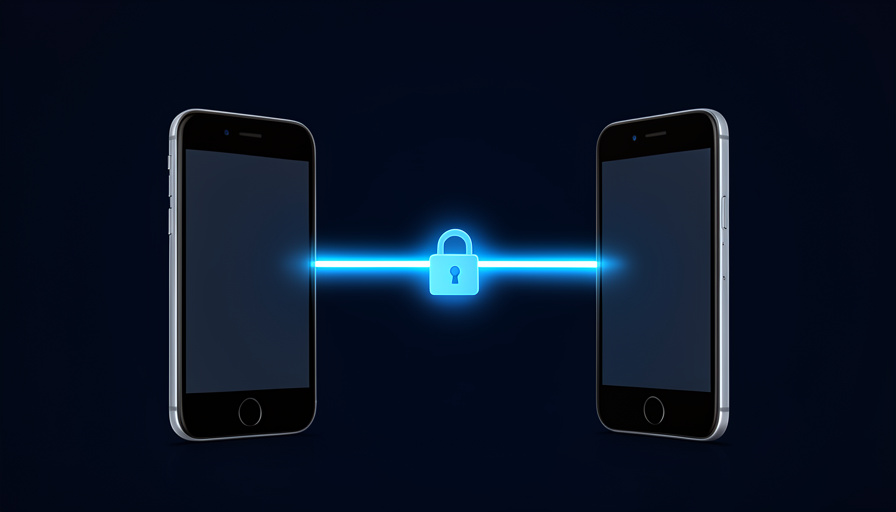
Here is how that plays out. Everyone shares their public key openly, like an address anyone can send to. To message you, someone locks their message with your public key. From that moment, only your private key, which never leaves your device, can unlock it. If an eavesdropper grabs the message in transit, all they get is scrambled text they have no way to open. This is the same family of encryption that also protects tools like a VPN.
How it differs from ordinary encryption
Not all encryption is end-to-end, and the difference matters. Much of the web uses encryption in transit, such as the padlock you see in your browser, which protects data as it travels between your device and a company’s server. The catch is that the message is decrypted once it reaches that server, where the company can read it.
IBM draws this line clearly, noting that encryption in transit does not provide strong protection against access by intermediaries such as application servers or network providers. End-to-end encryption closes that gap by keeping the data locked the entire way, so the service providers facilitating the communication cannot access the content at all. In short, ordinary encryption protects the road; end-to-end encryption protects the message itself.
Where you already use it
You are almost certainly using E2EE already, often without thinking about it. IBM points to secure messaging apps such as Signal, WhatsApp, and iMessage as the most familiar examples, where every chat is end-to-end encrypted by default.
The same protection now shows up well beyond chat. IBM notes that end-to-end encryption is also used in some password managers, in certain cloud storage services, and in secure file-sharing tools. As privacy expectations have risen, more products have adopted E2EE as a selling point. When an app advertises it, that is a meaningful signal that the company has chosen not to be able to read your data.
What it does not protect
End-to-end encryption is strong, but it is not a cloak of total invisibility. Its most important blind spot is metadata. The encryption hides what you say, but as both the EFF and IBM point out, it often does not hide who you talked to, when, or how often. That surrounding information can still reveal a great deal.
The other limit is the endpoints themselves. Because messages are readable on the sending and receiving devices, E2EE cannot help if one of those devices is compromised by malware or physically taken. IBM also flags that man-in-the-middle attacks remain possible if key exchange is not verified. Encryption protects the message on its journey, but the security of your own device still matters just as much.
At a glance
- End-to-end encryption lets only the sender and intended recipient read a message.
- It uses paired public and private keys; only the recipient’s private key can unlock the message.
- Unlike encryption in transit, it stays locked the whole way, so service providers cannot read it.
- You already use it in apps like Signal, WhatsApp, and iMessage, and in some cloud and password tools.
- It does not hide metadata, and it cannot protect a device that is already compromised.
Frequently asked questions
What does end-to-end encryption mean in simple terms?
It means a message is scrambled on your device and can only be unscrambled on the recipient’s device. Anyone in between, including the app company and your internet provider, sees only unreadable data. Only the two people communicating can actually read what is sent.
Can the company running the app read my messages?
With true end-to-end encryption, no. The company never holds the private key needed to unlock your messages, so the content stays hidden from it. This is the key difference from services that encrypt data only in transit, where the provider can read messages on its servers.
Is end-to-end encryption completely secure?
It is very strong for protecting message content, but not absolute. It generally does not hide metadata such as who you contacted and when. It also cannot protect a message if one of the devices is infected with malware or stolen, since the message is readable at those endpoints.
What is the difference between public and private keys?
A public key is shared openly and used to lock messages sent to you. The matching private key stays secret on your device and is the only thing that can unlock those messages. The two are a mathematically linked pair, but the private key cannot be worked out from the public one.
Which apps use end-to-end encryption?
Popular messaging apps including Signal, WhatsApp, and iMessage use it by default. It also appears in some password managers, secure cloud storage, and encrypted file-sharing services. When an app advertises end-to-end encryption, it means the provider has chosen not to be able to read your data.
What to do next
End-to-end encryption is one of the quiet successes of modern technology: a hard mathematical guarantee that some things you send stay between you and one other person. Knowing it exists changes how you can think about privacy. When a service offers it, that is a genuine reason to trust it with sensitive conversations, and when a service does not, it is worth asking who else might be able to read along. Pair it with a well-secured device and strong passwords, and you have a solid foundation for private communication. For more on staying safe online, the Technology section has much more to explore.

Related Posts
What Is Ransomware, and How Does an Attack Work?
What Is Phishing, and How Do You Spot It?