



Step on a scale at the doctor’s office, and sooner or later someone mentions your BMI. It gets treated like a verdict on your health, a single number that sorts people into neat boxes. But body mass index is both simpler and more limited than most people assume. It was never meant to be the final word on anyone’s health, and knowing what it does and does not capture can save you a lot of worry.
BMI is everywhere in health advice, so it is worth understanding what the number really tells you. Here is a clear look at what body mass index is, how it works, and where it falls short.
In brief
BMI, or body mass index, is a number calculated from your weight and height. You divide your weight in kilograms by your height in meters squared, and the result places you in a category such as underweight, healthy weight, overweight, or obesity. It is a quick, low-cost screening tool that flags whether your weight might raise health risks. Importantly, it is not a diagnosis and does not directly measure body fat or overall health.
What BMI is
Body mass index is a measure of weight relative to height. According to the Centers for Disease Control and Prevention, BMI is calculated from a person’s weight and height and is used to estimate weight status. It gives a single number that can be compared against standard ranges.
The appeal is its simplicity. You do not need any special equipment beyond a scale and a way to measure height, which is why doctors, researchers, and public health agencies have used it for decades. The World Health Organization calls BMI the most useful population-level measure of overweight and obesity, because it is calculated the same way for adult men and women of all ages. That makes it handy for comparing large groups, even if it is a rough guide for any single person.
How it is calculated
The math is straightforward. BMI equals your weight in kilograms divided by the square of your height in meters. If you use pounds and inches, you multiply the result by a conversion factor, but the idea is the same: bigger numbers reflect more weight for a given height.
That number then maps onto categories. Using WHO thresholds, a BMI below 18.5 is considered underweight, 18.5 to 24.9 is a healthy weight, 25 to 29.9 is overweight, and 30 or above falls into obesity, which is itself split into further classes. These cutoffs are where the labels people recognize come from. A BMI outside the healthy range can signal a higher risk of certain health problems, which is exactly what the number is designed to flag.
A screening tool, not a diagnosis
Here is the part that gets lost most often. BMI is a screening measure, not a diagnostic one. The CDC is explicit that BMI is not intended to diagnose disease or illness, and should be considered alongside other factors such as a person’s medical history, health behaviors, physical exam, and lab results.

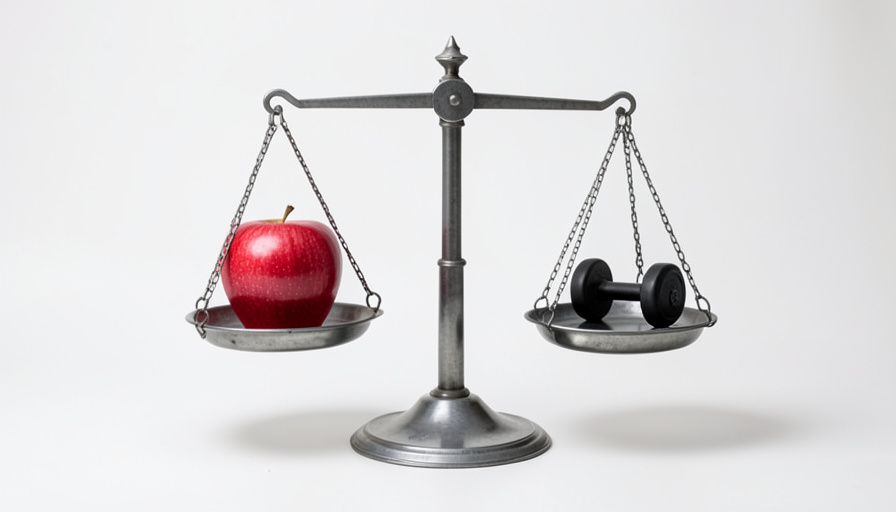
Think of BMI like a smoke detector. It can tell you something may be worth a closer look, but it cannot tell you what is actually going on. A number in the overweight or obese range is a prompt for a fuller conversation with a healthcare provider, not a diagnosis on its own. The National Heart, Lung, and Blood Institute notes that BMI is a screening tool that does not necessarily diagnose body fatness, and that other measures such as waist circumference help complete the picture.
Where BMI falls short
Because BMI only knows your height and weight, it cannot tell muscle from fat. This is its most famous flaw. A highly trained athlete carrying a lot of muscle can register as overweight or even obese despite having very little body fat. At the other extreme, an older adult who has lost muscle over the years might land in the healthy range while actually carrying a high proportion of fat.
There is also variation between populations. The WHO has noted that people of Asian descent can face higher health risks at lower BMI values, which is why some guidelines use lower thresholds for those groups. BMI also says nothing about where fat is stored, even though fat around the abdomen carries more health risk than fat elsewhere. None of this makes BMI useless, but it does mean the same number can mean very different things for different people.
What to look at alongside BMI
Because of these gaps, health professionals rarely rely on BMI alone. Waist circumference is a common companion measure, since a larger waist points to more abdominal fat and higher risk. Blood tests, blood pressure, activity levels, diet, and family history all add context that a single ratio cannot.
The practical takeaway is to treat BMI as one data point among many rather than a scorecard. If your number sits outside the healthy range, it is a reasonable cue to talk with a doctor, who can weigh it against the fuller picture of your health. For more on the daily habits that shape well-being, the Health section has plenty to explore, including a look at what calories really are.
At a glance
- BMI is your weight in kilograms divided by your height in meters squared, sorted into standard categories.
- WHO ranges are underweight below 18.5, healthy weight 18.5 to 24.9, overweight 25 to 29.9, and obesity 30 or above.
- It is a fast, low-cost screening tool that flags possible weight-related health risks, not a diagnosis.
- BMI cannot tell muscle from fat, so athletes and older adults are often misclassified.
- It works best alongside other measures such as waist circumference, blood tests, and lifestyle factors.
This article is for general information only and is not medical advice. BMI is a screening tool and does not replace a professional assessment. Talk to a qualified healthcare provider about what your weight and BMI mean for your individual health.
Frequently asked questions
What is a healthy BMI range?
Using World Health Organization thresholds, a BMI between 18.5 and 24.9 is considered a healthy weight for most adults. Below 18.5 is classed as underweight, 25 to 29.9 as overweight, and 30 or above as obesity. These are general guides and should be interpreted alongside other health information.
Is BMI an accurate measure of health?
BMI is a useful screening tool but not a complete measure of health. It estimates weight status quickly and cheaply, yet it does not measure body fat directly or account for muscle, fat distribution, or other factors. It is best used as one indicator among several, not as a standalone judgment of health.
Why can BMI be misleading for athletes?
BMI only uses height and weight, so it cannot distinguish muscle from fat. Because muscle is dense, a very muscular athlete can weigh enough to score as overweight or obese on BMI while carrying very little body fat. This is a well-known limitation of relying on BMI alone.
How is BMI calculated?
BMI is calculated by dividing your weight in kilograms by your height in meters squared. If you use pounds and inches, the same idea applies with a conversion factor. The resulting number is then compared against standard categories to estimate whether your weight may pose health risks.
What should I do if my BMI is outside the healthy range?
Treat it as a signal to look closer, not as a diagnosis. A BMI outside the healthy range is a good reason to talk with a healthcare provider, who can consider it alongside your medical history, waist measurement, blood work, and lifestyle before suggesting any next steps.
The bottom line
BMI has lasted for decades because it is simple, cheap, and useful for spotting weight-related risk across large groups. The mistake is treating that single number as the whole story of a person’s health. It cannot see your muscle, your fat distribution, or your fitness, and it was never built to. Used well, BMI is a quick first check, a nudge to look deeper rather than a final grade. If your number gives you pause, the best response is a conversation with a professional who can see everything the formula cannot. For more clear guides to understanding your body, keep reading in the Health section.