

What Is a Recession, and How Is One Declared?
Few economic words get thrown around as loosely as recession. It shows up in headlines, in nervous group chats, and in political arguments, usually with total confidence about whether we are in one. Yet the honest answer to when a recession begins is surprisingly slippery, because the popular rule most people cite is not the real definition, and the body that officially decides often does so long after the fact.
Understanding what a recession actually is, and how one is formally declared, cuts through a lot of the noise. It is a specific thing with a specific process behind it, rather than a vague bad economic mood. Here is what it means and who gets to make the call.
Quick answer
A recession is a significant, widespread decline in economic activity that lasts more than a few months. People often define it as two straight quarters of shrinking economic output, but that popular rule is not the official standard. In the United States, an independent research group called the National Bureau of Economic Research is treated as the official arbiter, and it weighs several measures, including employment and income, rather than output alone. It often announces a recession well after it has already begun.
What a recession actually is
At the simplest level, a recession is a stretch of time when the economy shrinks instead of grows. Businesses sell less, hiring slows or reverses, incomes stall, and the general level of economic activity falls. It is one phase of a natural pattern called the business cycle, which swings between periods of expansion and periods of contraction.
The most widely cited formal description comes from the group that dates US recessions. As the National Bureau of Economic Research defines it, a recession is a significant decline in economic activity that is spread across the economy and lasts more than a few months. Three ideas sit inside that sentence: the decline has to be deep, it has to be broad, and it has to last. A brief wobble in one industry does not count. For more on money and markets, browse SciExaminer’s Business section.
The two-quarters rule, and its limits
Ask most people how a recession is defined and they will tell you it is two consecutive quarters of falling gross domestic product, the total value of everything an economy produces. It is a tidy rule, easy to check, and it usually lines up with reality. But it is a rule of thumb, not the official definition.
The group that actually dates recessions is clear on this point. The NBER does not rely on the two-quarter test, and it notes that while most recessions do feature two down quarters of output, that is not always the case. Output can dip and recover while the broader economy is still healthy, or the economy can be genuinely sinking on other measures before the GDP numbers cooperate. The shorthand is handy for headlines, but the real judgment is more careful than a single statistic.
Who actually declares one
In the United States, recessions are not called by the government or written into law. The job falls, by long-standing convention, to the National Bureau of Economic Research, an independent nonprofit whose Business Cycle Dating Committee keeps the official timeline of American economic ups and downs.
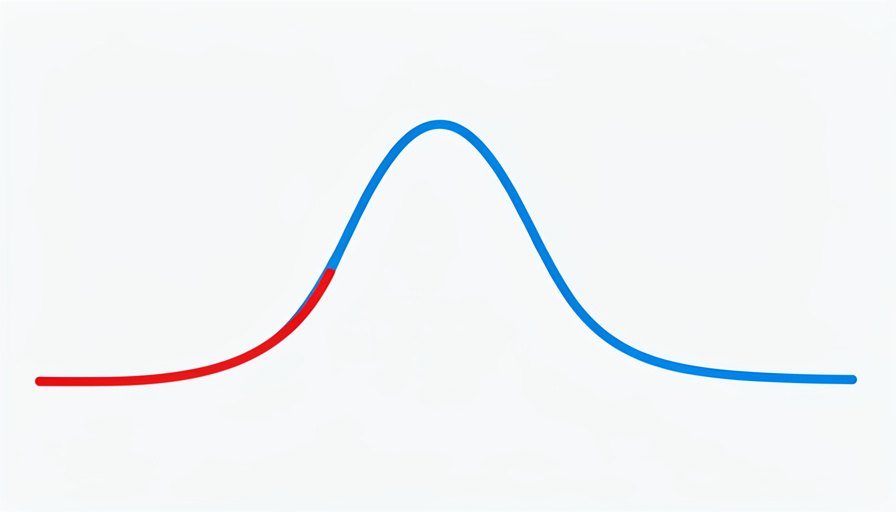
That committee marks the peaks and troughs of the business cycle, the exact months when an expansion ended and a contraction began, and vice versa. Because it wants to be certain rather than fast, it usually makes its call many months after a recession has actually started, once the data are solid and unlikely to be revised. So there is often a strange gap where the economy is clearly struggling but no recession has been officially declared yet. Other countries lean more on the two-quarter GDP rule, as the Reserve Bank of Australia notes, but the underlying idea of a sustained, broad downturn is shared everywhere.
The signs economists watch
Because a recession is about the whole economy, no single number settles it. The dating committee and economists generally look at a spread of indicators to judge depth, breadth, and duration together.
- Gross domestic product. The headline measure of total output, and the basis of the popular two-quarter rule.
- Employment. Rising unemployment and falling payrolls are among the clearest signs of a downturn.
- Real income. Household earnings, adjusted for inflation, tend to stall or fall.
- Industrial production and sales. Factories make less and shops sell less as demand cools.
When several of these turn down together and stay down, the case for a recession gets strong. When they send mixed signals, the picture is genuinely murky, which is part of why the official call takes time.
What causes a recession
Recessions do not all spring from the same source, but they tend to share a trigger that knocks demand or confidence sharply lower. Sometimes a financial bubble bursts, as with housing in 2008, wiping out wealth and freezing lending. Sometimes an outside shock hits, like a spike in oil prices or a pandemic that shuts down activity overnight.
As the Federal Reserve Bank of St. Louis explains, downturns can also follow a period of overheating, when central banks raise interest rates to cool rapid inflation and end up slowing the economy more than intended. Whatever the spark, the pattern rhymes: spending drops, businesses pull back, jobs are lost, and the pullback feeds on itself for a while before the cycle eventually turns back toward recovery.
At a glance
- A recession is a significant, broad, and lasting decline in economic activity.
- The two-consecutive-quarters-of-falling-GDP rule is a popular shorthand, not the official definition.
- In the US, the independent NBER is the recognized arbiter and often calls it months later.
- Economists watch GDP, employment, income, and production together, not one number.
- Common triggers include financial crises, outside shocks, and sharp interest-rate rises.
This article is general information, not financial advice. Economic conditions and their effects on your finances vary widely. Consider consulting a qualified financial professional before making decisions based on the state of the economy.
Frequently asked questions
What is a recession in simple terms?
A recession is a period when the economy shrinks in a broad and sustained way, with falling output, weaker spending, and usually rising unemployment. It is the contraction phase of the business cycle, lasting more than a few months rather than a brief dip.
Is a recession really two quarters of negative GDP?
That is a popular rule of thumb, but not the official definition. The group that dates US recessions does not rely on it, noting that most recessions include two down quarters of output but not all do. It weighs several measures beyond GDP.
Who decides when a recession happens?
In the United States, the National Bureau of Economic Research, an independent nonprofit, is treated as the official arbiter through its Business Cycle Dating Committee. Recessions are not declared by the government or defined in law, and the call often comes months after one has begun.
What is the difference between a recession and a depression?
A depression is essentially a far more severe and prolonged recession, with a much deeper drop in activity and much higher unemployment lasting for years. The Great Depression of the 1930s is the classic example. Depressions are rare compared with ordinary recessions.
What causes a recession?
Common triggers include a bursting financial bubble, an outside shock such as an oil price spike or a pandemic, and sharp interest-rate increases meant to cool inflation. Each can knock demand and confidence lower, leading businesses to cut back and unemployment to rise.
What this means
A recession is more than a gloomy headline. It is a specific, measurable phase of the economy, defined by depth, breadth, and duration, and in the United States it is dated by an independent group that values accuracy over speed. That is why you can feel a downturn well before anyone officially names it. Knowing that the two-quarter rule is only a shorthand, and that the real judgment rests on a fuller picture, makes it easier to read economic news with a clearer eye and less panic. For more on the forces shaping the economy, the Science section digs deeper.

Related Posts

What Is GDP, and How Is It Measured?

How Does Compound Interest Work, and Why It Matters