


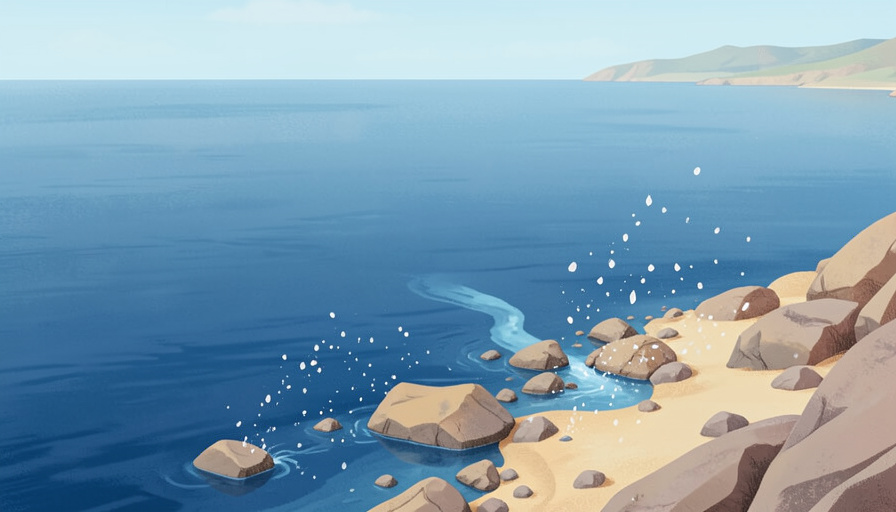
The rivers that pour into the sea run fresh, yet the ocean is salty enough to sting your eyes. Here is where all that salt comes from, and why it never washes away.
Take an accidental mouthful of seawater and the taste is unmistakable. Now think about the rivers feeding that ocean. Almost none of them taste salty, and you could drink from many of them. So how does fresh water flowing downhill end up in a sea salty enough to float in? The answer has been building for billions of years.
Quick answer
The ocean is salty because rain slowly dissolves minerals out of rock on land, and rivers carry those dissolved salts to the sea. Water then leaves the ocean by evaporation, but the salt stays behind and keeps accumulating. Undersea volcanoes and vents add more minerals directly. Over billions of years this left seawater at an average of about 35 grams of salt per liter, most of it the same sodium and chloride found in table salt.
Where the salt comes from
Most ocean salt starts as rock. Rainwater is slightly acidic because it absorbs a little carbon dioxide from the air, forming weak carbonic acid. When that rain lands on rock and soil, it dissolves tiny amounts of minerals and carries the released ions into streams and rivers, a slow grinding process called weathering.
Those rivers all end up in the same place. According to the NOAA National Ocean Service, rivers deliver an estimated four billion tons of dissolved salts to the ocean every year. A second, saltier source works from below: hydrothermal vents and undersea volcanoes pump minerals straight into deep seawater. Between the land washing down and the seafloor bubbling up, the ocean has been collecting salt for most of Earth’s history.
Why rivers stay fresh but the sea does not
Rivers carry salt, they just never hold onto it. A river is always being topped up by fresh rain and snowmelt, so the salt it carries stays extremely dilute, far too low to taste. The river is a delivery route, not a storage tank, and it keeps moving its dissolved load straight out to sea.
The ocean is where that delivery ends, and it behaves like the drain at the bottom of the system. As the NOAA explainer on rivers puts it, the sea collects the salt and minerals from every river that flows into it. Then sunlight evaporates water off the surface and returns it to the sky as rain, but evaporation leaves the salt behind. Fresh water cycles in and out; salt checks in and mostly stays. Do that for a few billion years and you get an ocean.
How salty the ocean really is
Seawater averages about 35 grams of dissolved salt per liter, or roughly 3.5 percent by weight. That number hides how much salt the whole ocean holds. NOAA estimates that if you removed all the salt from the sea and spread it evenly over the planet’s land, it would form a layer more than 500 feet, about 166 meters, deep.

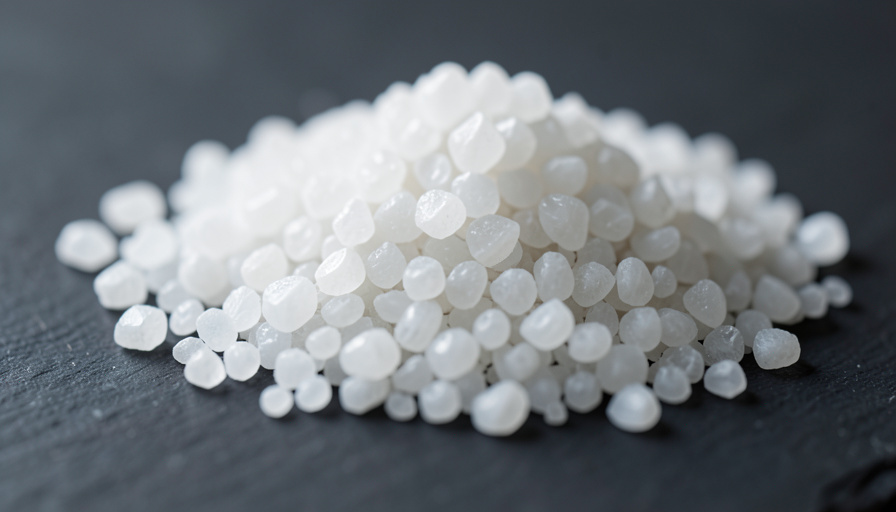
The salt is also not an exotic cocktail. About 85 percent of it is sodium and chloride, the same two elements that make up ordinary table salt, which is why sea salt tastes the way it does. The rest is a mix of magnesium, sulfate, calcium, potassium, and smaller traces. So the sea is essentially a very large, very dilute bath of the salt already sitting in your kitchen.
Why some seas are far saltier
A few bodies of water push saltiness to an extreme, and they share one feature: no way out. The Dead Sea and the Great Salt Lake are landlocked, so water enters but only leaves by evaporating. That traps the salt and concentrates it, year after year.
The result is water nearly 10 times saltier than the open ocean, salty enough that you bob on the surface without trying. It is the same evaporation-leaves-salt-behind effect that made the ocean salty, just running in a closed basin with no rivers to drain it. For more on Earth’s systems, browse SciExaminer’s Environment section.
Is the ocean still getting saltier?
Not in any way you would notice. Rivers keep adding salt, but the ocean also removes it at a similar pace, so the overall level has stayed roughly steady for a very long stretch of geological time. Salt leaves seawater when it gets locked into seafloor sediments, blown inland as sea spray, and left behind as thick evaporite deposits when shallow seas dry up.
Input and removal have settled into a rough balance, which is why the ocean is not on track to turn into brine. The saltiness you taste today is close to what a swimmer would have tasted a hundred million years ago. For related science reads, the Science section covers more of these everyday questions.
Main takeaways
- Ocean salt comes mainly from rain weathering rock on land, with rivers carrying the dissolved minerals to the sea.
- Rivers stay fresh because they are constantly refilled and keep flushing their salt downstream; the ocean is where it collects.
- Evaporation removes water but leaves salt, so the sea concentrated salt over billions of years to about 35 grams per liter.
- Landlocked seas with no outlet, like the Dead Sea, get far saltier because the salt has nowhere to go.
Frequently asked questions
Why is the ocean salty but rivers are not?
Rivers carry small amounts of dissolved salt but are constantly refilled with fresh rain, so their salt stays too dilute to taste and flows onward to the sea. The ocean collects that salt from every river, and because evaporation removes only the water, the salt builds up.
Where does the salt in the ocean come from?
Most of it comes from the weathering of rocks on land, where slightly acidic rain dissolves minerals that rivers then carry to the sea. Additional minerals come from hydrothermal vents and volcanic activity on the ocean floor.
How salty is seawater?
On average, seawater contains about 35 grams of salt per liter, or roughly 3.5 percent by weight. Around 85 percent of that salt is sodium and chloride, the same components as table salt.
Why is the Dead Sea so much saltier than the ocean?
The Dead Sea is landlocked, so water flows in but can only leave by evaporating. That traps and concentrates the salt, leaving water nearly 10 times saltier than the open ocean.
Is the ocean getting saltier over time?
Not noticeably. Rivers keep adding salt, but the ocean removes it at a similar rate through seafloor sediments, sea spray, and evaporite deposits, so overall salinity has stayed roughly stable for a very long time.
Closing thoughts
The ocean is salty for a reason that is almost boringly steady: land slowly gives up its minerals, water carries them to the sea, and only the water ever leaves again. The saltiness has held roughly constant for a hundred million years and shows no sign of changing on any human timescale. Next time the sea stings your eyes, remember you are tasting minerals that rain spent billions of years dissolving out of the land.