


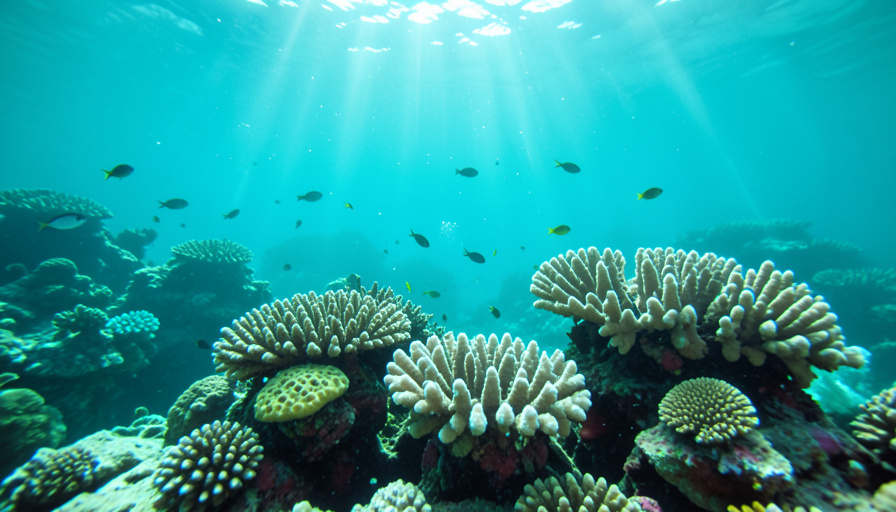
Every year the ocean does us an enormous quiet favor. It soaks up a large share of the carbon dioxide we pour into the sky, softening the pace of climate change. But that service comes with a hidden cost. As the sea swallows all that carbon, the water itself is changing, turning slowly more acidic in a process that is already reshaping life beneath the waves.
Ocean acidification does not make headlines the way heat waves and storms do, which is part of why it is sometimes called the other carbon dioxide problem. It is invisible, gradual, and chemical. Yet for oysters, corals, and the tiny creatures at the base of the food web, it is one of the most direct threats they face. Here is what it is and why it deserves attention.
In brief
Ocean acidification is the ongoing drop in the ocean’s pH caused by seawater absorbing carbon dioxide from the atmosphere. When that gas dissolves it forms an acid and releases hydrogen ions, making the water more acidic and using up carbonate ions that shell-building animals depend on. Since the industrial era, ocean surface pH has fallen from about 8.2 to 8.1, roughly a 30 percent rise in acidity. The main victims are corals, oysters, and other creatures that build shells and skeletons.
What ocean acidification is
Ocean acidification is the name for a steady, long-term decrease in the pH of the ocean. The pH scale measures how acidic or basic a liquid is, running from 0 at the most acidic to 14 at the most basic, with 7 in the middle. Seawater is naturally slightly basic, and acidification means it is drifting toward the acidic end of that scale.
The driver is the same carbon dioxide behind global warming. As NOAA’s National Ocean Service explains, the ocean absorbs about 30 percent of the carbon dioxide released into the atmosphere, and that constant uptake is changing the chemistry of the water. So acidification and climate change are two results of one cause, which is why they are often described as a pair. For more from the natural world, browse SciExaminer’s Environment section.
The chemistry that sours the sea
The mechanism is a simple chain of reactions. When carbon dioxide dissolves in seawater, it reacts with water to form carbonic acid. That acid quickly breaks apart, releasing hydrogen ions into the water. A higher count of loose hydrogen ions is exactly what a lower pH means, so the sea becomes more acidic.
There is a second, quieter effect that matters even more for ocean life. Those extra hydrogen ions bind up carbonate ions, one of the key building blocks that animals use to make calcium carbonate, the mineral in shells and coral skeletons. So acidification does two things at once. It raises acidity, and it strips away the raw material that shell-builders need. The water grows more corrosive to the very structures those creatures depend on.
How much has actually changed
A shift from a pH of 8.2 to about 8.1 sounds trivial. It is anything but. The pH scale is logarithmic, meaning each whole step is a tenfold change, so that small-looking drop of roughly 0.1 units since the 1700s works out to about a 30 percent increase in acidity. The ocean is more acidic now than it has been for a very long stretch of Earth’s history.
What makes scientists uneasy is the speed. According to the US Environmental Protection Agency, the current pace of change is far faster than anything in the geological record, giving marine life little time to adapt. Slow shifts over many thousands of years are one thing. A large change packed into a couple of centuries is a very different challenge for creatures whose biology evolved for stabler seas.
What it does to ocean life
The animals on the front line are the ones that build hard parts from calcium carbonate. That includes corals, oysters, mussels, clams, sea urchins, and many kinds of plankton. As the water turns more corrosive and carbonate grows scarce, these organisms must spend more energy to form and maintain their shells and skeletons, and some struggle to build them at all.

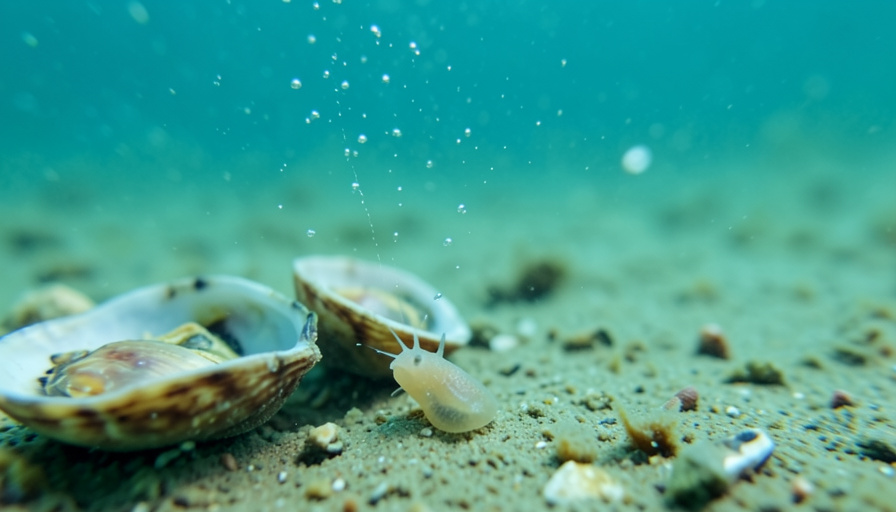
As the Smithsonian Ocean program describes, tiny sea snails called pteropods, a food source for fish and whales, can have their thin shells eaten away in more acidic water. Coral reefs, already stressed by warming, grow more slowly when carbonate is scarce. Shellfish hatcheries on some coasts have already recorded seasons where young oysters failed to develop properly in corrosive water. Because so many of these creatures sit near the base of the food web, trouble for them can ripple upward through entire ecosystems.
Why it reaches beyond the water
It would be a mistake to file this away as a problem only for marine biologists. Fisheries and shellfish farms feed billions of people and support large coastal economies, and both depend on the same shelled species that acidification threatens. A weaker base to the ocean food web eventually shows up in catches, jobs, and dinner plates.
The encouraging part is that the cause and the cure are clear. Since acidification is driven by carbon dioxide dissolving into the sea, the surest way to slow it is to cut carbon dioxide emissions, the same step that eases climate change. Protecting coastal ecosystems like seagrass and shellfish beds can offer local relief, but the global fix is the familiar one. Ocean acidification is another reminder that what we release into the air does not stay there. A large part of it ends up in the sea, changing a world most of us never see.
What to know
- Ocean acidification is the long-term fall in the ocean’s pH caused by seawater absorbing carbon dioxide.
- The ocean takes up about 30 percent of the carbon dioxide we emit.
- Surface pH has dropped from about 8.2 to 8.1 since the 1700s, roughly a 30 percent rise in acidity.
- The change uses up carbonate ions, making it harder for corals, oysters, and plankton to build shells.
- Cutting carbon dioxide emissions is the main way to slow it.
Frequently asked questions
What is ocean acidification in simple terms?
It is the gradual lowering of the ocean’s pH as seawater absorbs carbon dioxide from the air. The gas reacts with water to form an acid, releasing hydrogen ions that make the sea more acidic and reduce the carbonate that shell-building marine animals need.
Is the ocean actually becoming an acid?
No. Seawater is slightly basic, with a pH just above 8, and it remains basic. Acidification means the water is moving toward the acidic end of the scale, not that it has turned into an acid. Even so, that shift is enough to affect sensitive marine life.
Why is a small pH change a big deal?
Because the pH scale is logarithmic, so each unit is a tenfold change. The drop of about 0.1 units since the 1700s equals roughly a 30 percent increase in acidity, and it is happening far faster than past natural changes, leaving marine species little time to adapt.
Which animals are most affected?
Creatures that build shells or skeletons from calcium carbonate, including corals, oysters, mussels, clams, sea urchins, and small plankton such as pteropods. More acidic water makes it harder and more energy-costly for them to form and keep those hard parts.
Can ocean acidification be stopped?
Slowing it depends mainly on cutting carbon dioxide emissions, since that is what drives it. Protecting coastal habitats like seagrass and shellfish beds can ease local conditions, but the global solution is the same as for climate change: release less carbon dioxide.
What this means
Ocean acidification is the ocean sending back a bill for a service we rarely notice. By soaking up so much of our carbon dioxide, the sea has slowed the warming of the air, but it has paid for that with its own chemistry, growing steadily more acidic and harder to live in for the animals that build the base of marine life. The problem is quiet and slow, which makes it easy to ignore, and that is exactly why it is worth understanding. The good news is that the fix points the same direction as the wider climate effort. For more on the science shaping our planet, the Science section digs deeper.