


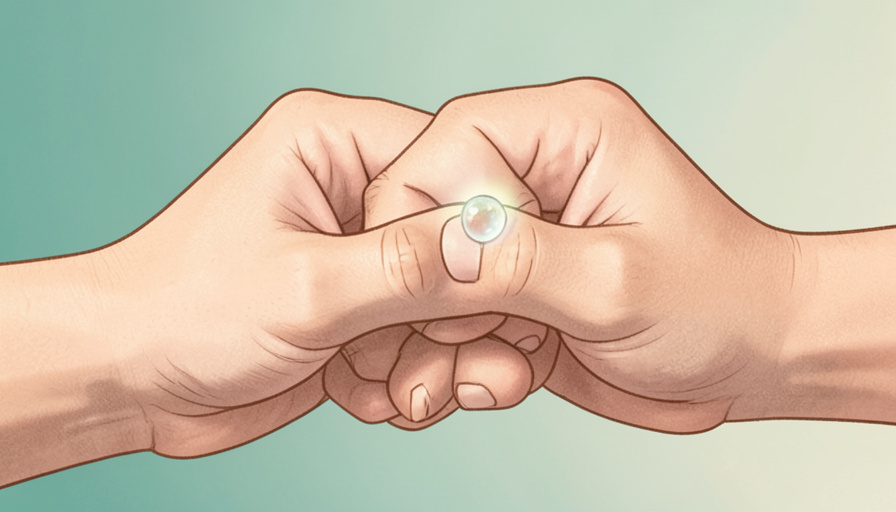
The warning that knuckle cracking wrecks your joints has been passed down for generations. The research tells a much calmer story.
Someone has almost certainly told you to quit cracking your knuckles or you will end up with arthritis. It usually arrives from a parent or a grandparent, delivered with full confidence, right as your fingers make that satisfying pop. Plenty of people do it out of habit without thinking twice. The warning that follows, though, does not survive a look at the evidence.
Short answer
No solid evidence links cracking your knuckles to arthritis. Several studies, including one doctor’s 50-year experiment on his own hands, found no difference in arthritis rates between people who crack their knuckles and people who never do. The pop comes from gas shifting inside the joint, not from bone grinding on bone. There is one small caveat worth knowing, and it involves grip strength and swelling rather than arthritis.
Where the arthritis myth came from
The belief is old, and it spreads at the kitchen table rather than in any journal. No study started it. It stuck around because the sound is loud and slightly alarming, so the brain fills in a story: something that pops that hard must be grinding the joint down over time.
That story feels right, which is exactly why it has been so hard to kill. The loud pop and the flinch on a listener’s face both seem like proof of damage, yet neither reflects what is actually going on inside the finger, and what is going on turns out to be fairly gentle.
What actually makes the popping sound
The sound is gas, not grinding. Your finger joints are wrapped in a capsule of synovial fluid, the slippery liquid that keeps the joint moving smoothly. When you pull or bend the joint, the pressure inside drops and a gas-filled cavity forms in that fluid. The formation of that cavity is what you hear.
Researchers pinned this down in 2015 by filming a finger inside an MRI scanner as it was slowly pulled until it cracked. The real-time imaging study in PLOS ONE showed a gas cavity appearing at the exact moment of the pop, a process called tribonucleation. That overturned an older theory from the 1970s that blamed a collapsing bubble. Worth flagging honestly: a 2018 mathematical model argued a partly collapsing bubble could still explain the noise, so the fine detail is not fully closed. On the point that matters here, both camps agree. Nothing is scraping against bone.

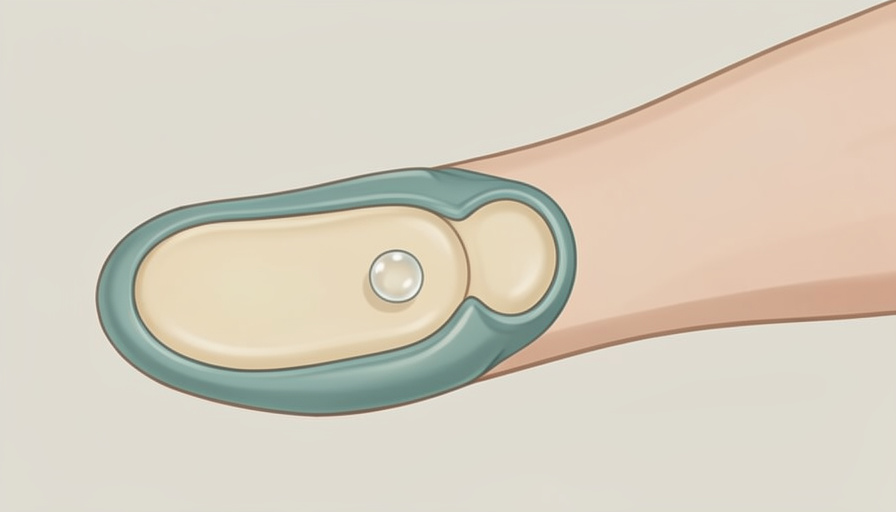
This also explains why you cannot crack the same knuckle twice in a row. The gas needs roughly 15 to 20 minutes to dissolve back into the fluid before the joint will pop again. For more on the mechanics behind everyday science questions, the Science section covers similar ground.
What the research says about arthritis
Direct studies of knuckle crackers have not found more arthritis in their hands. The most quoted example is hard to argue with. Dr. Donald Unger cracked the knuckles of his left hand at least twice a day for more than 50 years and deliberately left his right hand alone as a control. That works out to roughly 36,500 cracks in one hand and almost none in the other.
His result, published in Arthritis & Rheumatism in 1998: no arthritis in either hand, and no meaningful difference between them. The experiment earned him an Ig Nobel Prize in 2009, an award for research that makes you laugh, then makes you think. One man is not a clinical trial, so the larger studies matter more.
A 2011 case-control study did the wider version. Researchers compared people with and without hand osteoarthritis and asked about their cracking history. Among the 215 participants, the rate of osteoarthritis was almost identical in both groups, as the numbers below show.
| Study | Setup | What it found |
|---|---|---|
| Unger, 1998 | One hand cracked ~36,500 times over 50 years, other hand as control | No arthritis in either hand |
| deWeber and colleagues, 2011 | 215 people with and without hand osteoarthritis compared | Osteoarthritis in 18.1% of crackers vs 21.5% of non-crackers |
The 2011 team concluded that a history of habitual cracking, including how long and how often someone had done it, was not a risk factor for hand osteoarthritis. If anything, the crackers came in slightly lower, which is almost certainly noise rather than a protective effect.
The one real downside worth knowing
Here is the caveat the myth-busters sometimes skip. A 1990 study looked at 300 people aged 45 and older, 74 of whom were habitual crackers. It found no extra arthritis, which fits everything above. But the habitual crackers were more likely to have hand swelling and lower grip strength than the non-crackers.
That single finding is worth keeping in perspective. It came from one older study in Annals of the Rheumatic Diseases, later work has not reliably reproduced the grip-strength effect, and an association in a survey is not the same as proof that cracking caused it. The reasonable read across these studies is simple. If you crack your knuckles out of habit and it never hurts, there is no strong medical reason to force yourself to stop. If you find yourself doing it compulsively or feeling like you have to, that is worth noticing for its own sake, separate from any joint worry.
When a popping joint is worth checking
The crack on its own is harmless. What changes the picture is the company it keeps. A joint that pops painlessly is nothing like a joint that pops and hurts, and the difference is what tells you whether to book an appointment.
Get a popping or clicking joint looked at by a doctor or physiotherapist if it comes with any of these:
- Pain at the moment it pops, or aching afterward.
- Visible swelling around the joint.
- Stiffness or a noticeably smaller range of motion.
- The joint catching, locking, or giving way.
- Popping that started after an injury or a fall.
Those signs can point to actual joint problems, from early osteoarthritis to a ligament or cartilage issue, and they have nothing to do with the harmless gas-pop of a casual knuckle crack. For more everyday wellness explainers, the Health section is a good place to start.
This article is for general information only and is not medical advice. Speak with a qualified healthcare professional about ongoing joint pain, swelling, or stiffness before drawing conclusions about your own symptoms.
Frequently asked questions
Does cracking your knuckles cause arthritis?
No. Studies that compared knuckle crackers with non-crackers, including a 50-year single-hand experiment and a 215-person case-control study, found no higher rate of arthritis in the people who crack their knuckles.
What is the popping sound when I crack a knuckle?
It is a gas-filled cavity forming in the fluid inside the joint as pressure drops. A 2015 MRI study captured this happening in real time. It is not bone rubbing on bone.
Can cracking your knuckles damage them at all?
Not in the way most people fear. One 1990 study linked habitual cracking to more hand swelling and weaker grip, but that effect is small, not consistently reproduced, and unrelated to arthritis.
Why can’t I crack the same knuckle twice right away?
After a crack, the gas needs about 15 to 20 minutes to dissolve back into the joint fluid before the joint can pop again.
Is it bad to crack your knuckles a lot?
Frequent cracking is fine if it is painless. If a joint hurts, swells, stiffens, or locks when it pops, that is a reason to have it checked, regardless of how often you do it.
The bottom line
Cracking your knuckles will not give you arthritis, and you can retire that particular warning for good. The habit is loud and medically close to harmless. Save your attention for the joints that pop with pain or swelling, because those are the ones actually asking for a look.