


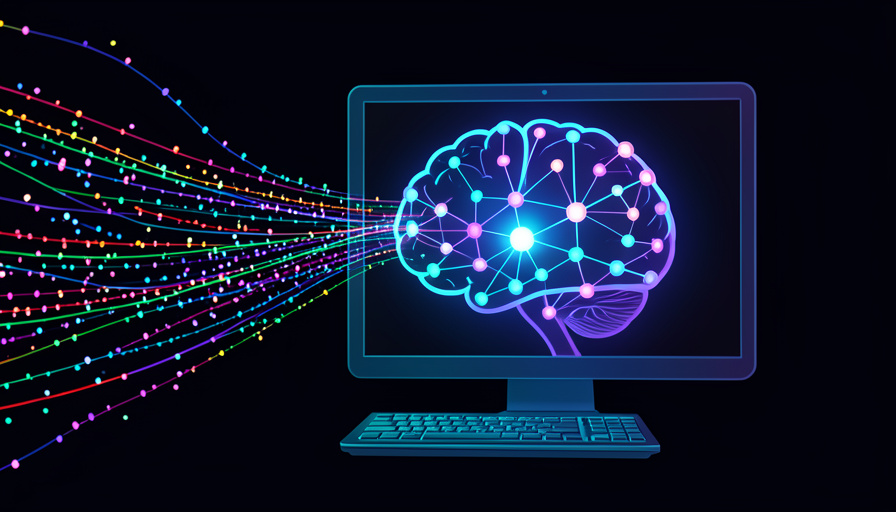
Machine learning is one of those phrases that gets used constantly and explained almost never. It sits behind the spam filter that cleans your inbox, the app that recommends your next show, and the chatbots that have taken over the headlines. Yet ask what it actually is, and most answers dissolve into buzzwords. The real idea is surprisingly graspable, and it changes how you see the technology around you.
At its heart, machine learning is a different way of getting a computer to do something. Instead of a human writing out every rule, the machine studies examples and works out the rules for itself. That single shift is what powers most of what people now loosely call artificial intelligence. Here is how it works.
Bottom line first
Machine learning is a branch of artificial intelligence in which computers learn from data instead of following rules a programmer wrote by hand. You feed a system many examples, and it finds the patterns that connect them, building a model it can then use to make predictions or decisions about new information. It comes in a few main styles, and it is the technology behind recommendations, image recognition, fraud detection, and the large language models behind modern chatbots.
What machine learning actually is
To see what makes machine learning special, compare it with ordinary programming. In traditional software, a human writes explicit rules: if this happens, do that. That works well when the rules are clear, but it falls apart for messy problems, like telling a cat from a dog in a photo, where nobody can write down every rule.
Machine learning flips the approach. As IBM describes it, machine learning gives computers the ability to learn patterns from data and make inferences about new data without being explicitly programmed with those rules. You show the system thousands of labeled cat and dog photos, and it works out for itself what separates them. The rules emerge from the examples rather than from a human. For more on the tools shaping technology, browse SciExaminer’s Technology section.
How a model learns
The learning happens in a stage called training. The system is fed a large set of examples and makes guesses about them. Each time it is wrong, it nudges its internal settings a little to do better next time, repeating this across the data again and again until its guesses are reliably accurate. The finished result is called a model, a compressed version of the patterns it found.

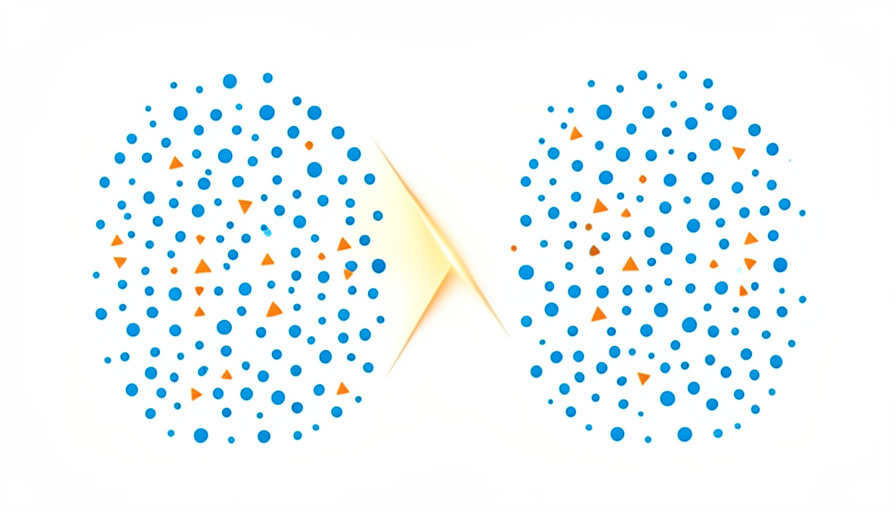
Once trained, the model is put to work in a stage called inference, where it applies what it learned to fresh data it has never seen. A spam model trained on millions of emails, for instance, then judges each new message that arrives. This split between learning from past data and predicting on new data is the core rhythm of machine learning, and it is why the quality of the training data matters so much. Feed a model biased or sloppy examples, and it will faithfully learn the wrong lessons.
The three main types
Not all machine learning works the same way. There are three broad styles, distinguished mainly by what kind of data the model learns from.
- Supervised learning uses labeled data, where each example comes with the right answer attached. The model learns to map inputs to those answers, like learning to label photos as dog or not-dog after seeing many labeled ones.
- Unsupervised learning uses unlabeled data and hunts for patterns on its own, such as grouping customers into natural clusters without being told the groups in advance.
- Reinforcement learning lets a model learn by trial and error, taking actions in an environment and receiving rewards or penalties, the approach behind many game-playing and robotics systems.
As Coursera notes, these three families cover most real applications, and many modern systems blend them together at different stages.
How it fits with AI and deep learning
The terms artificial intelligence, machine learning, and deep learning get used almost interchangeably, but they nest inside one another. Artificial intelligence is the broad goal of making machines act intelligently. Machine learning is one route to that goal, the one based on learning from data. And deep learning is a powerful branch of machine learning that uses many-layered networks loosely inspired by the brain.
Deep learning is what cracked hard problems like image and speech recognition, and it is the foundation of the large language models behind today’s chatbots. As MIT Sloan explains, a machine learning system can be descriptive, explaining what happened, predictive, forecasting what will happen, or prescriptive, suggesting what to do. Most of the tools people call AI today are, underneath, machine learning models doing one of those jobs.
Where you already meet it
Machine learning stopped being futuristic a long time ago. It is woven quietly through the apps and services you use every day, usually without any label announcing it.
Your email provider filters spam with it. Streaming services and shops recommend what to watch or buy by learning your tastes. Translation apps, voice assistants, and predictive text all lean on it, as do bank systems that flag unusual transactions as possible fraud and medical tools that help spot patterns in scans. Each of these is a model that learned from a mountain of past examples and now applies that learning to you. Once you know the pattern, you start to notice machine learning everywhere, doing the invisible work of guessing what comes next.
Main takeaways
- Machine learning is a branch of AI where computers learn patterns from data instead of hand-written rules.
- A model is trained on many examples, then used to make predictions on new data.
- The three main types are supervised, unsupervised, and reinforcement learning.
- Deep learning is a powerful form of machine learning behind image recognition and chatbots.
- It already powers spam filters, recommendations, translation, fraud detection, and more.
Frequently asked questions
What is machine learning in simple terms?
It is a way of getting computers to learn from examples rather than being told exactly what to do. You give a system lots of data, it finds the patterns in that data, and it builds a model it can use to make predictions or decisions about new information.
What is the difference between AI and machine learning?
Artificial intelligence is the broad idea of machines behaving intelligently. Machine learning is one approach to achieving it, based on learning from data. So machine learning is a subset of AI, and deep learning is in turn a subset of machine learning.
What are the main types of machine learning?
The three main types are supervised learning, which uses labeled data, unsupervised learning, which finds patterns in unlabeled data, and reinforcement learning, in which a system learns by trial and error through rewards and penalties. Many real systems combine these.
Does machine learning need a lot of data?
Generally, yes. Models learn by finding patterns across many examples, so more good-quality data usually leads to better performance. The quality matters as much as the quantity, since a model trained on biased or flawed data will learn those flaws.
Where is machine learning used in daily life?
It powers spam filters, recommendation systems on streaming and shopping sites, translation apps, voice assistants, predictive text, fraud detection in banking, and medical image analysis, among many other everyday tools you may not realize rely on it.
Closing thoughts
Machine learning marks a genuine change in how we tell computers what to do. For decades, software did exactly what a programmer spelled out. Now, for a growing set of problems, we hand the machine a pile of examples and let it work out the pattern, which is why it can do things no one knew how to write rules for. Seeing that shift clearly takes the mystery out of the technology in the headlines, and reveals the simple, powerful idea underneath: learning from data. For more on the science behind modern tools, the Science section digs deeper.