


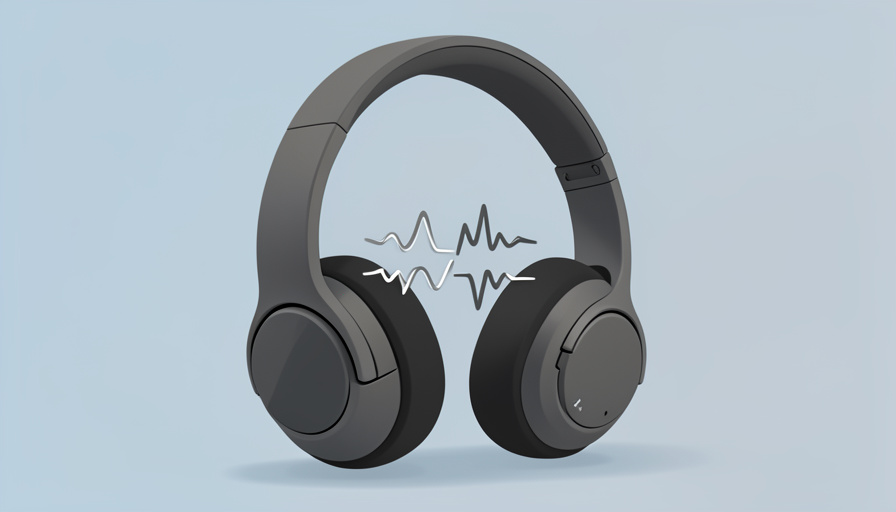
Noise-cancelling headphones fight sound with sound. Here is the trick, in plain English, and why it flattens a jet engine but shrugs at the person talking next to you.
Flip on the noise cancelling in a decent pair of headphones mid-flight and the change is almost startling. The steady roar of the engines drops away in a fraction of a second, and the cabin feels like someone turned a dial. No music has to be playing for it to happen. That gap between “loud plane” and “quiet plane” is the whole product, and the way it gets made is stranger than most people assume.
In brief
Noise-cancelling headphones use tiny microphones to listen to the noise around you, then play a second sound wave that is the exact mirror image of that noise. The two waves collide and mostly flatten each other out, a physics effect called destructive interference. It works beautifully on steady, low-pitched sounds like engine drone and works poorly on sudden, high-pitched ones like a voice or a slammed door.
The core trick: a mirror-image sound wave
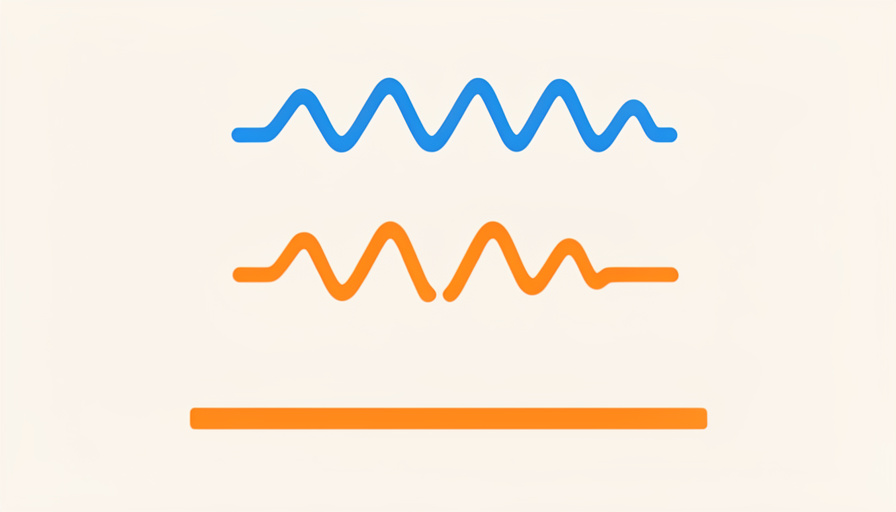
Sound is a pressure wave, a pattern of air pushing and pulling on your eardrum. If you play a second wave that pushes exactly when the first one pulls, and pulls exactly when the first one pushes, the two cancel. Engineers call this an anti-phase or 180-degree-inverted wave, and the cancellation is destructive interference.
That is the entire idea. The headphones are not muffling the noise or drowning it out with something louder. They generate an equal and opposite “anti-noise” that meets the real noise inside the earcup, and the sum of the two is close to silence. Get the timing slightly wrong and you get less cancellation, or in the worst case a louder, uglier sound.
What is happening inside the earcup
The magic is really speed. A small microphone samples the incoming noise, a dedicated chip works out the inverse wave, and the driver plays that anti-noise back, all in well under a millisecond. If the response lagged even slightly, the noise would already have passed your eardrum before the correction arrived.

Where designs differ is in where they put the microphones. That choice decides how much they can cancel and how stable they are.
| Type | Mic placement | Strength and catch |
|---|---|---|
| Feedforward | Outside the earcup, facing the world | Hears noise before it reaches your ear; strong on steady low tones below about 1 kHz, but can amplify wind noise |
| Feedback | Inside the earcup, near the driver | Corrects based on what your ear actually hears, so it adapts to a poor seal; wider range, but prone to instability |
| Hybrid | Both, inside and out | Combines the two for the widest coverage; standard on premium models, at the cost of more power and complexity |
Most flagship headphones today run hybrid systems, which is why their marketing leans on the microphone count. More mics genuinely help here, up to a point, because the feedback mic inside catches whatever the feedforward mic outside missed.
Why it beats a plane but loses to a café
Active cancellation is fantastic at constant, low-pitched noise and weak at sudden, high-pitched noise, and the reason is physics. Low frequencies have long, lazy wavelengths, so the chip has time to predict the next wave and line up its mirror. A jet engine, an air conditioner, a train rumble: all steady, all low, all easy targets. Real-world systems knock these down by roughly 20 to 30 decibels, and a 20-decibel cut sounds like about a quarter of the original loudness.
High frequencies are the opposite. A voice, a clattering keyboard, a barista steaming milk, these have short wavelengths that change direction thousands of times a second, and by the time the headphones compute an inverse wave, the sound has moved on. That is why the coworker two desks over still cuts through your expensive headphones while the office AC vanishes. The cancellation is not broken. Speech simply lives in a range that ANC cannot chase fast enough. According to SoundGuys’ breakdown of ANC types, this low-frequency bias is baked into how the technology works, not a flaw in any one brand.
ANC is only half the job
The other half is passive isolation, and it does the work ANC cannot. Passive isolation is just physical blocking: the earcup seal, the foam, the tight fit of an in-ear tip. That physical barrier is what actually handles high-pitched sound, exactly where active cancellation gives up.
Good noise-cancelling headphones are really two systems stacked together. The seal muffles the treble, the electronics erase the bass rumble, and the combination is what makes a plane cabin feel genuinely quiet. If a pair fits poorly and breaks the seal, even strong ANC will disappoint, because half the defense is gone. For related coverage, browse SciExaminer’s Technology section.
What to check before you buy
ANC quality varies wildly between models, and the spec sheet rarely tells you what daily use will feel like. A few things are worth weighing before you spend:
- Fit and seal first. A loose fit sabotages both the passive blocking and the cancellation, so comfort is not a side issue.
- The pressure feeling. Strong ANC can create a faint sensation of blocked ears, like a shift in cabin pressure. Some people barely notice it, others find it tiring on long trips.
- Self-noise hiss. Cheaper systems add a low background hiss when ANC is on. In a quiet room it can be more annoying than the noise it replaced.
- Transparency mode. A good ambient or transparency setting pipes the outside world back in so you can hear an announcement without pulling the headphones off.
- Battery drain. Cancellation runs constantly and eats into playtime, so check the ANC-on battery figure, not the headline number.
The honest takeaway on shopping: do not buy on decibel claims alone. Two headphones quoting similar numbers can feel very different once a real engine, a real office, and your own ears are involved. For the science behind everyday tech, the Science section is worth a look.
At a glance
- ANC plays a mirror-image “anti-noise” wave that cancels incoming sound through destructive interference.
- It shines on steady low-frequency noise (engines, AC) and struggles with speech and sudden sounds.
- Feedforward, feedback, and hybrid designs differ by where the mics sit; hybrid covers the widest range.
- Passive isolation from a good seal handles the high frequencies ANC cannot, so fit matters as much as electronics.
Frequently asked questions
How do noise-cancelling headphones actually cancel sound?
A microphone samples the surrounding noise, a chip generates a sound wave that is its exact inverse, and the driver plays that anti-noise. The original wave and the inverted wave meet and largely cancel out, a physics effect called destructive interference.
Why can I still hear people talking with ANC on?
Speech sits in higher frequencies with short, fast-changing wavelengths. The headphones cannot compute and play an accurate inverse wave quickly enough to cancel them, so voices slip through while steady low rumble gets erased.
What is the difference between feedforward and feedback ANC?
Feedforward uses a microphone on the outside of the earcup to catch noise before it reaches your ear. Feedback uses a microphone inside near the driver to correct based on what you actually hear. Hybrid systems use both for wider coverage.
Is active noise cancellation the same as noise isolation?
No. Isolation is passive physical blocking from the earcup seal and foam, which handles high-pitched sound. Active cancellation is the electronic anti-noise, which handles low-pitched sound. The best headphones use both together.
Can noise cancelling be bad for your ears?
The cancellation itself does not harm hearing. Some people feel a mild pressure sensation, and there can be a faint hiss on cheaper models, but neither is dangerous. If anything, ANC can protect your ears by letting you listen at lower volumes in loud places.
What this means
Noise cancelling is not magic and not marketing fluff, it is a genuine bit of applied physics running a few hundred times a second inside each earcup. Once you know it targets steady low noise and leans on a good seal for everything else, the strengths and the limits both make sense. Pick a pair that fits well, judge it on a real commute rather than a spec sheet, and treat the quiet plane cabin as the benchmark it was built for.