


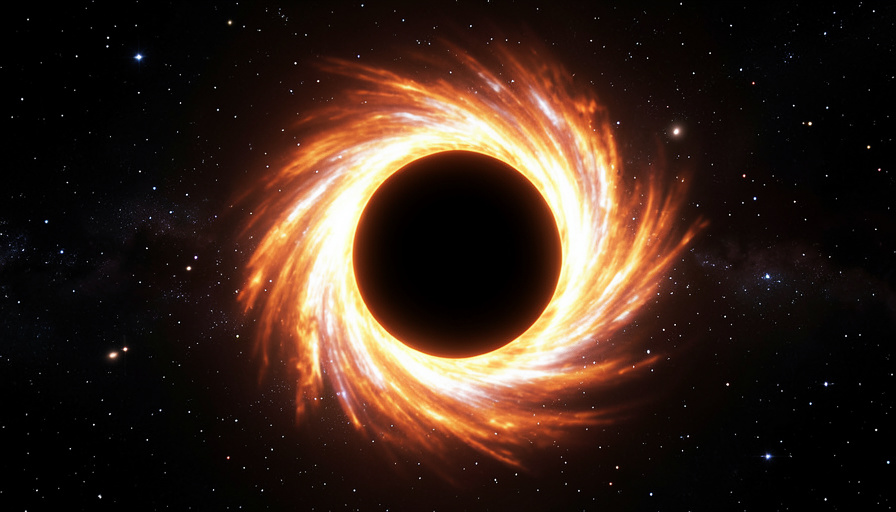
Somewhere out in space, gravity has won so completely that it has folded a piece of the universe shut. Light falls in and never comes back out. We call it a black hole, and it is one of the strangest, most misunderstood objects in physics.
Black holes have a reputation as cosmic monsters that roam the galaxy swallowing everything in sight. The reality is stranger and more precise than the myth. They are not vacuum cleaners, they do not chase you down, and the most interesting question about them, what lies inside, has an answer that even physicists cannot fully give.
The short version
A black hole is a region of space where gravity is so strong that nothing, not even light, can escape once it crosses a boundary called the event horizon. They form when massive stars collapse, and giant ones sit at the centers of galaxies. What lies at the very center is thought to be a singularity, a point where our current physics stops working, and we cannot see past the event horizon to know for sure.
What a black hole actually is
A black hole is a region where matter has been squeezed into such a tiny space that its gravity becomes overwhelming. Get close enough and the pull is so strong that escaping would require moving faster than light, which nothing can do. That is why it is black. No light gets out to reach your eyes.
The edge of this trap is the event horizon, the point of no return. It is not a wall or a surface you could touch, just an invisible boundary in space. Outside it, you could still fire your engines and fly away. Cross it, and no engine, no signal, nothing at all can climb back out. As NASA describes it, the event horizon is where the escape speed finally exceeds the speed of light. For more from beyond our planet, browse SciExaminer’s Space section.
How black holes form
Most black holes are the corpses of giant stars. A star spends its life balancing two forces, the outward push of the nuclear fire in its core against the inward pull of its own gravity. When a very massive star, far heavier than our Sun, finally burns through its fuel, the fire goes out and gravity wins in an instant. The core collapses, and if the star was heavy enough, nothing can stop the collapse from crushing it into a black hole, often in a brilliant supernova explosion.
That accounts for the smaller black holes. The giants are a different story. Supermassive black holes, millions or billions of times the mass of the Sun, sit at the hearts of galaxies, including our own. Exactly how they grew so enormous, so early in the history of the universe, is one of the open puzzles in astronomy.
The different kinds
Black holes come in a few broad classes, sorted mostly by mass. Stellar-mass black holes, the collapsed stars, run from a few to a few dozen times the Sun’s mass. Supermassive black holes are the galactic giants. In between sits a rarer, harder-to-find class called intermediate-mass black holes.
Our own galaxy’s central giant is a good reference point. Named Sagittarius A star, it sits about 27,000 light-years away and weighs around four million Suns, according to Space.com. Despite that staggering mass, it is a calm neighbor, and it poses no threat to Earth from across the galaxy.
What happens near one, and what’s inside
Approach a black hole and reality starts to bend. The difference in gravity between your head and your feet grows so extreme that you would be stretched into a thin stream, an effect astronomers have nicknamed spaghettification. Time itself would appear to slow near the horizon, a genuine prediction of Einstein’s relativity.

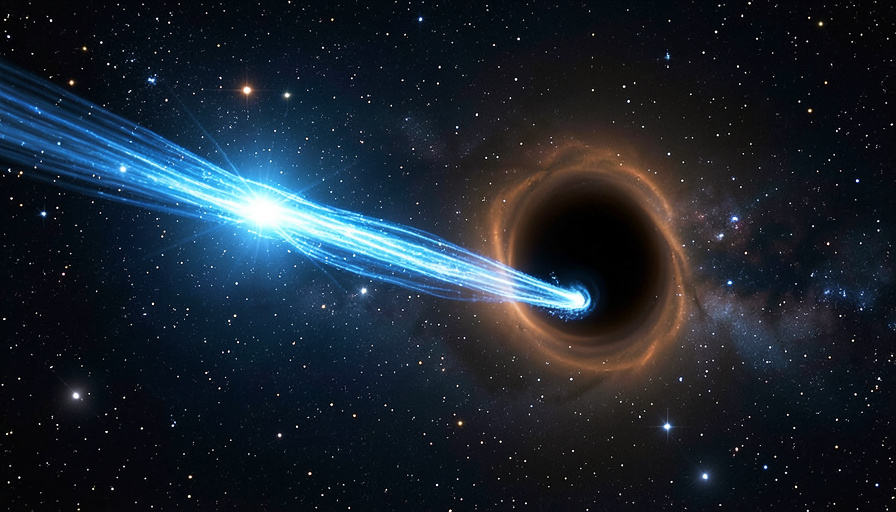
As for what waits at the center, here honesty matters more than confidence. Our best theory, general relativity, predicts a singularity, a point of infinite density where the equations break down and stop giving sensible answers. That is a sign the theory is incomplete, not a description we trust. To know what truly happens inside, physicists would need a theory that unites gravity with quantum mechanics, and no one has one yet. The event horizon hides the answer, since no information can travel back out to tell us. In a real sense, the inside of a black hole is the edge of what science currently knows.
How we know they exist
If black holes emit no light, it is fair to ask how we are so sure they are real. The trick is that we watch what they do to their surroundings. Astronomers have tracked stars whipping around an invisible, incredibly massive point at the center of our galaxy, a discovery that earned a Nobel Prize. Gas falling toward a black hole heats up and blazes in X-rays before it disappears.
We have even taken pictures. The Event Horizon Telescope, a network of observatories linked across the planet, captured the first image of a black hole’s shadow in the galaxy M87 in 2019, then imaged Sagittarius A star in 2022. Both show the same haunting sight, a dark circle ringed by glowing gas, exactly the silhouette theory predicted.
At a glance
- A black hole is a region where gravity is so strong that not even light can escape.
- The event horizon is the point of no return, an invisible boundary rather than a surface.
- Most form when massive stars collapse, and supermassive ones anchor galaxy centers.
- Theory predicts a singularity inside, but our physics breaks down there and cannot describe it.
- We detect them by their effect on nearby stars and gas, and have now imaged two.
Frequently asked questions
What is a black hole in simple terms?
It is a region of space where matter is packed so densely that its gravity lets nothing escape, not even light. The boundary around it, the event horizon, marks the point beyond which nothing can get back out.
What is inside a black hole?
Our best theory predicts a singularity at the center, a point of infinite density where the known laws of physics stop working. Because nothing can escape the event horizon to tell us, we cannot actually observe or confirm what is inside.
How do black holes form?
Most form when a very massive star runs out of fuel and its core collapses under its own gravity, often in a supernova. Supermassive black holes at galaxy centers formed through processes that scientists are still working to fully explain.
Could a black hole swallow Earth?
Not from a distance. Black holes only capture matter that comes very close to them. The nearest known black holes are far away, and if the Sun were somehow replaced by a black hole of the same mass, Earth’s orbit would not change.
Have we ever seen a black hole?
We have imaged the shadows of two. In 2019 the Event Horizon Telescope released the first image of the black hole in galaxy M87, and in 2022 it imaged Sagittarius A star at the center of our own galaxy.
Final word
A black hole is where the universe keeps its best secret. We can describe how they form, weigh them by the tug they put on nearby stars, and even photograph their silhouettes, and still the region past the event horizon stays sealed off from everything we know how to measure. That is what makes them so compelling. They are not cosmic villains but a standing challenge, marking the exact spot where our finest theories run out of road. For more on the science of the cosmos, the Science section digs deeper.