


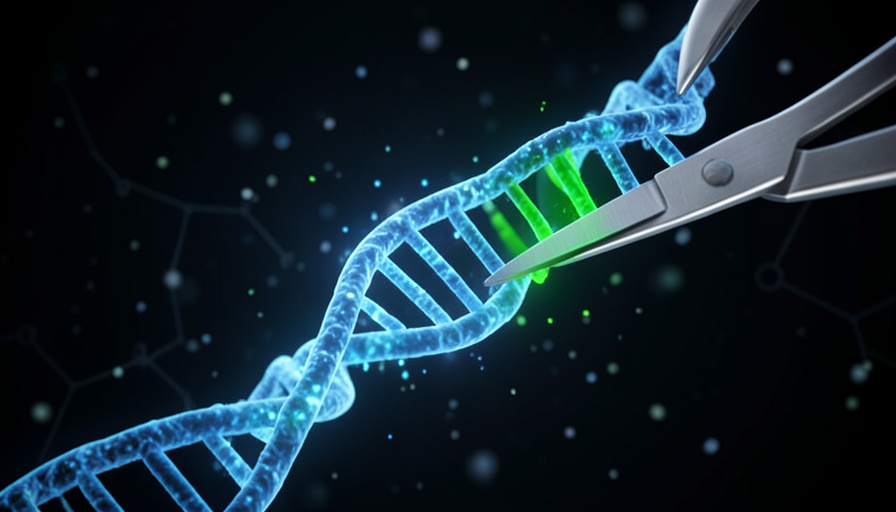
For the first time in history, humans can go into a living cell and rewrite a specific line of its genetic code. The tool that made this possible was borrowed from the immune system of bacteria, and in just over a decade it has gone from a lab curiosity to a cure for a real disease. Its name is CRISPR.
CRISPR gets described as everything from a miracle to a menace, which makes it hard to know what to actually think. Underneath the hype is a genuinely revolutionary technology with clear strengths, real limits, and some serious ethical questions. Here is what it is and how it works, in plain terms.
Short answer
CRISPR is a gene-editing tool that lets scientists cut DNA at a precise location and change it. It uses a protein called Cas9 as molecular scissors, guided to the right spot by a matching piece of RNA. Adapted from a natural defense system in bacteria, it is faster, cheaper, and more precise than earlier methods, and it has already produced the first approved cure for a genetic disease.
What CRISPR actually is
CRISPR stands for a mouthful, Clustered Regularly Interspaced Short Palindromic Repeats, but the idea behind it is elegant. It is a defense system that bacteria evolved to fight off viruses. When a virus attacks, the bacterium saves a small snippet of the invader’s DNA as a kind of mugshot, so it can recognize and chop up that virus if it ever returns. Scientists realized this natural cut-and-recognize system could be turned into a programmable editing tool.
The breakthrough came in 2012, when Jennifer Doudna and Emmanuelle Charpentier showed they could redirect the system to cut any DNA sequence they chose. The work was so significant that the pair won the 2020 Nobel Prize in Chemistry for developing what the committee called genetic scissors. For more on the science of life, browse SciExaminer’s Science section.
How gene editing works
The most common version is called CRISPR-Cas9, and it has two key parts. The first is Cas9, a protein that acts as the molecular scissors, able to cut through the double strand of DNA. The second is a short piece of guide RNA, a strand of genetic code that matches the exact spot in the genome you want to edit.

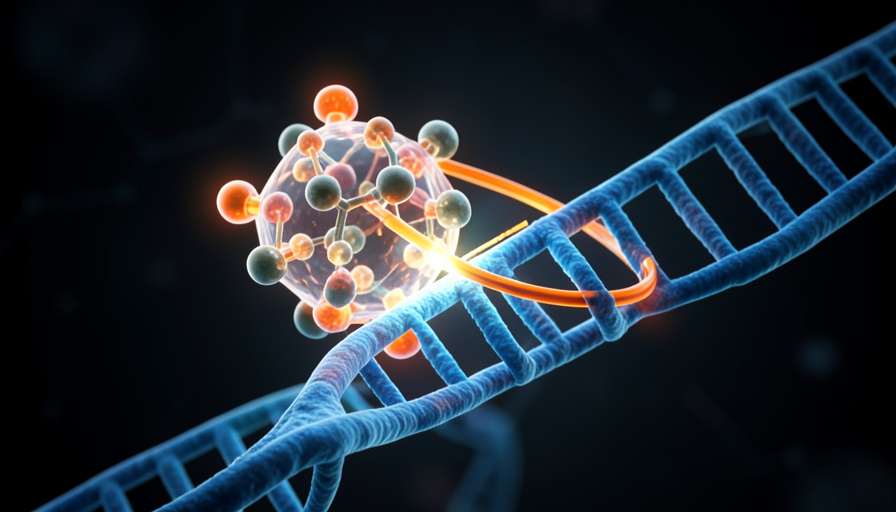
As yourgenome from Wellcome Connecting Science explains, the guide RNA leads Cas9 to the matching location in the DNA, and Cas9 makes a cut across both strands. The cell then notices the break and rushes to repair it. Scientists use that repair moment to their advantage. They can let the cell patch the cut in a way that disables a faulty gene, or they can supply a new piece of DNA as a template, so the cell stitches in a corrected sequence. Cut, then repair, is the whole trick.
What CRISPR is being used for
CRISPR is already at work across several fields. In research, it lets scientists switch genes on and off to learn what each one does, speeding up discovery enormously. In agriculture, it is used to develop crops that resist disease, tolerate drought, or last longer, often without adding any foreign DNA.
The most dramatic progress is in medicine. In late 2023, a CRISPR-based therapy called Casgevy became the first gene-editing medicine approved to treat a genetic disease. As the US Food and Drug Administration has detailed, it treats sickle cell disease by editing a patient’s own blood stem cells to produce a healthy form of hemoglobin, easing the debilitating pain attacks the disease causes. It was a landmark moment, the first time a CRISPR cure moved from promise to approved treatment.
The ethical lines
With the power to rewrite DNA come hard questions, and the biggest one is which cells you edit. Editing the cells of a living patient to treat a disease, known as somatic editing, changes only that person and is where nearly all medical work happens. Editing an embryo, sperm, or egg, called germline editing, changes every cell of the resulting person and passes the change to their children.
That heritable line is where the alarm bells ring. In 2018, a scientist in China announced he had edited the genes of twin babies, an experiment widely condemned as reckless and unethical, and he was later imprisoned. Most countries now ban or tightly restrict germline editing. Even in accepted medical uses, scientists work carefully to avoid off-target edits, unintended cuts elsewhere in the genome, which remain a real technical concern.
Where it is headed
CRISPR is still improving quickly. Newer techniques called base editing and prime editing can change DNA letters more precisely, sometimes without cutting both strands at all, which reduces the risk of errors. Researchers are testing CRISPR therapies for a growing list of conditions, from inherited blindness to high cholesterol.
The trajectory is clear even if the destination is not. A tool that started as a quirk of bacterial biology is becoming a general-purpose way to read and rewrite the code of living things. The science is racing ahead, and the harder work now is making sure the ethics, safety, and access keep pace with it.
Key takeaways
- CRISPR is a gene-editing tool adapted from a bacterial defense system against viruses.
- CRISPR-Cas9 uses guide RNA to steer a cutting protein to a precise spot in the DNA.
- The cell repairs the cut, which scientists use to disable a gene or insert a new sequence.
- It is used in research, agriculture, and medicine, including the first approved cure for sickle cell disease.
- Editing embryos to create heritable changes is banned or restricted in most countries.
This article is general information, not medical advice. Gene-editing therapies are new and specialized, so consult a qualified healthcare professional about any genetic condition or treatment.
Frequently asked questions
What is CRISPR in simple terms?
CRISPR is a tool that lets scientists edit DNA by cutting it at a precise spot and changing it. It borrows a system that bacteria use to fight viruses, using a guide molecule to find the target and a protein to make the cut.
How does CRISPR gene editing work?
A short piece of guide RNA is designed to match a target DNA sequence. It leads the Cas9 protein to that spot, and Cas9 cuts both strands of the DNA. The cell then repairs the break, and scientists use that step to disable a gene or insert a corrected one.
What is CRISPR used for?
It is used in research to study genes, in agriculture to improve crops, and in medicine to treat genetic diseases. In 2023, a CRISPR therapy called Casgevy became the first approved gene-editing treatment, curing the symptoms of sickle cell disease.
Is CRISPR safe?
Medical uses that edit a patient’s own body cells have shown strong results and are heavily tested, though off-target edits remain a concern scientists work to avoid. Editing embryos to create heritable changes is considered unsafe and unethical and is banned in most countries.
Who invented CRISPR?
The gene-editing method was developed by Jennifer Doudna and Emmanuelle Charpentier, who demonstrated it in 2012 and shared the 2020 Nobel Prize in Chemistry for the work. The underlying system was discovered earlier in bacteria.
The bottom line
CRISPR is one of those rare technologies that lives up to a good part of the excitement around it. In a little over a decade it has moved from a discovery about bacteria to an approved cure for a devastating disease, which is a staggering pace for biology. The promise is enormous, and so is the responsibility, because a tool that can rewrite genes can be used wisely or recklessly. Understanding how it works is the first step to being part of that conversation rather than a bystander to it. For more on health and the body, the Health section digs deeper.