


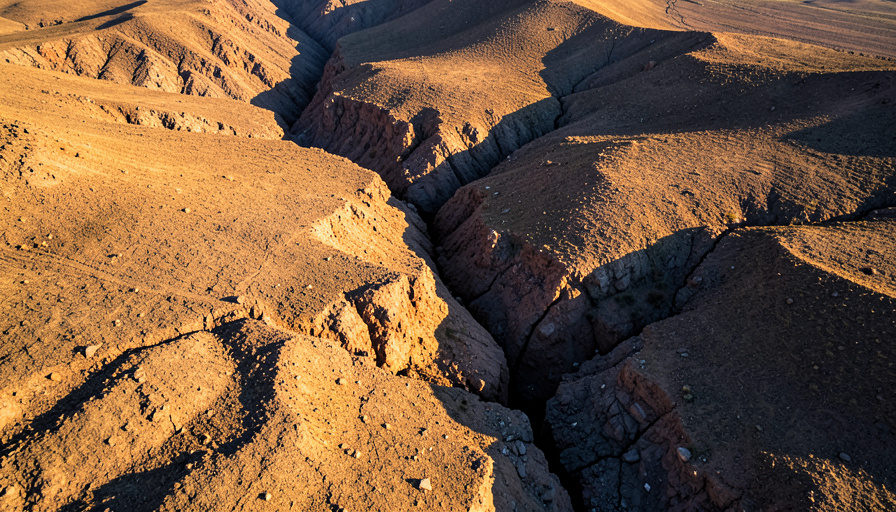
The ground is the one thing we trust to hold still. Then one day it lurches, and for a few seconds the most solid thing you know behaves like the deck of a boat. What causes that, and could anyone have warned you it was coming?
Earthquakes feel like chaos, but they are the release of a pressure that has been building quietly for years or centuries. The physics behind them is well understood. The part people most want, a warning before the shaking starts, is the part science still cannot deliver, and the reason why is worth understanding.
The short version
An earthquake happens when two blocks of the Earth’s crust that have been stuck together suddenly slip along a fault, releasing built-up energy as waves that shake the ground. Most quakes occur where tectonic plates meet, which is why they cluster around places like the Pacific Ring of Fire. Scientists can forecast the long-term odds for a region, but no one can predict the exact time, place, and size of a specific earthquake.
What actually happens in an earthquake
The Earth’s outer shell is broken into enormous slabs called tectonic plates, and they are always creeping, a few centimeters a year, about as fast as your fingernails grow. Where two plates meet, friction can lock their edges in place even as the rest of each plate keeps moving. Stress builds along that stuck seam like tension in a bent stick.
Eventually the stress overcomes the friction, the rock gives way, and the two sides lurch past each other in seconds. According to the US Geological Survey, that sudden slip on a fault is the earthquake, and the energy it releases radiates outward as seismic waves that shake everything they pass through. More than 90 percent of the world’s earthquakes are tectonic, caused by exactly this kind of plate movement.
Why earthquakes cluster where they do
Earthquakes are not scattered evenly across the planet. They trace the seams between plates, which is why a world map of quake epicenters looks like a cracked eggshell, with the breaks marking plate boundaries. Live somewhere in the middle of a plate, like most of the central United States, and large quakes are rare. Live on a boundary, like California or Japan, and they are a fact of life.
The most active zone is the Pacific Ring of Fire, a roughly 25,000-mile belt of faults and volcanoes tracing the edges of the Pacific Ocean. As National Geographic notes, around 90 percent of the world’s earthquakes happen along this ring, where several plates grind against the vast Pacific Plate. For more on the planet beneath our feet, browse SciExaminer’s Environment section.
How we measure their size
You have probably heard a quake described by a single number, like a magnitude 6.2. That number comes from the moment magnitude scale, which measures the total energy an earthquake releases. It has largely replaced the old Richter scale, especially for large events.
The scale is deceptive because it is not linear. Each step up represents a huge jump in energy, so a magnitude 7 releases dramatically more energy than a magnitude 6, and a magnitude 8 dwarfs a 7. That is why the difference between a 6 and a 7 is the difference between broken windows and collapsed buildings. Magnitude measures the quake at its source, while the shaking you actually feel also depends on how close you are and what kind of ground you are standing on.
Can we predict earthquakes?
Here is the blunt answer people rarely want to hear: no. Neither the USGS nor any scientist anywhere has ever predicted a major earthquake, meaning named its exact time, location, and magnitude in advance, and there is no expectation of doing so in the foreseeable future.

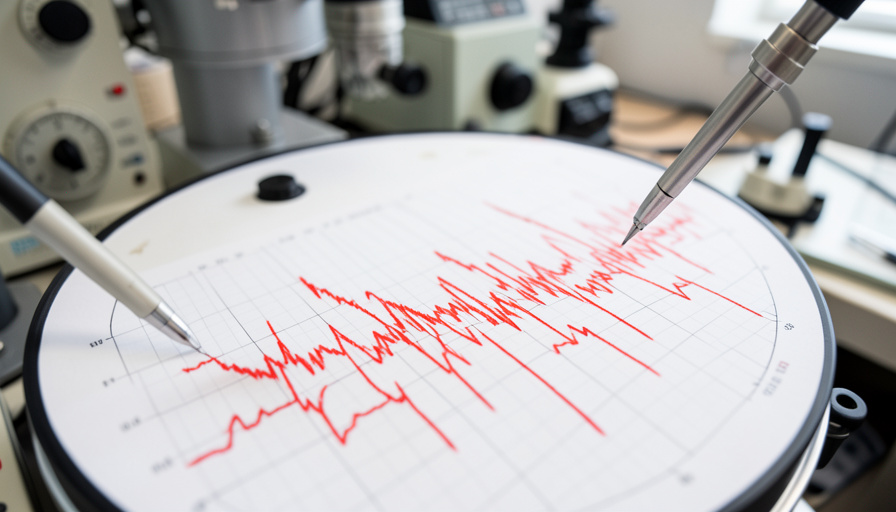
What scientists can do is forecast. Using the history of a fault and how fast strain is building, they estimate the probability that a damaging quake will hit a region within a span of decades. It is a statement of odds, closer to a climate outlook than a weather forecast for tomorrow. As Scientific American has reported, the long search for reliable warning signs, from animal behavior to radon gas, has not produced anything that works consistently. Those forecasts still matter, because they tell engineers where to build strong and how strong to build.
The next best thing: early warning
If prediction is off the table, detection is not. Earthquake early warning systems, such as ShakeAlert on the US West Coast, do something clever. They do not foresee a quake, they catch it in the act. A quake sends out a fast, weak wave ahead of the slower, destructive shaking, and sensors near the source pick up that first wave and fire an alert.
That buys seconds to tens of seconds before the strong shaking arrives, which sounds trivial until you consider what a few seconds allows:
- People can drop, cover, and hold on before they are knocked off their feet.
- Trains can automatically brake to avoid derailing.
- Surgeries can pause and workers can step back from hazards.
- Automatic systems can shut valves and open firehouse doors.
It is a reminder that living with earthquakes is less about foretelling them and more about being ready. In quake-prone regions, that means bolting bookshelves to walls, keeping supplies on hand, and knowing that when the ground moves, the right move is down and under cover.
Main takeaways
- An earthquake is a sudden slip on a fault that releases built-up energy as seismic waves.
- More than 90 percent of quakes are tectonic, and most cluster along plate boundaries.
- The Pacific Ring of Fire hosts about 90 percent of the world’s earthquakes.
- Magnitude measures energy on a scale where each step is a large jump.
- No one can predict a specific earthquake, but early warning can give seconds of notice.
Frequently asked questions
What causes an earthquake?
An earthquake is caused by a sudden slip on a fault. Tectonic plates move slowly but get stuck at their edges from friction. When built-up stress overcomes that friction, the rock slips and releases energy as seismic waves that shake the ground.
Can scientists predict earthquakes?
No. No one has ever predicted the exact time, place, and size of a major earthquake, and that is not expected to change soon. Scientists can only forecast the probability that a damaging quake will strike a region over a span of years.
Where do most earthquakes happen?
Most occur along the boundaries between tectonic plates. The most active zone is the Pacific Ring of Fire, a belt around the Pacific Ocean where roughly 90 percent of the world’s earthquakes take place.
What is the difference between prediction and early warning?
Prediction would mean forecasting a quake before it starts, which is not possible. Early warning systems like ShakeAlert detect a quake that has already begun and send an alert seconds before the strong shaking reaches you.
What should I do when an earthquake starts?
Drop to the ground, take cover under sturdy furniture, and hold on until the shaking stops. Stay away from windows and heavy objects that could fall, and do not run outside during the shaking, when falling debris is a major risk.
Final word
An earthquake is not the ground breaking so much as the ground finally letting go of a strain it held for a very long time. We understand that process well, we can map where it is most likely, and we can now catch a quake in its first seconds and shout a warning down the wire. What we cannot do, and may never do, is circle a date on the calendar. That gap is exactly why preparation beats prophecy. For more on how our planet works, the Science section digs deeper.