


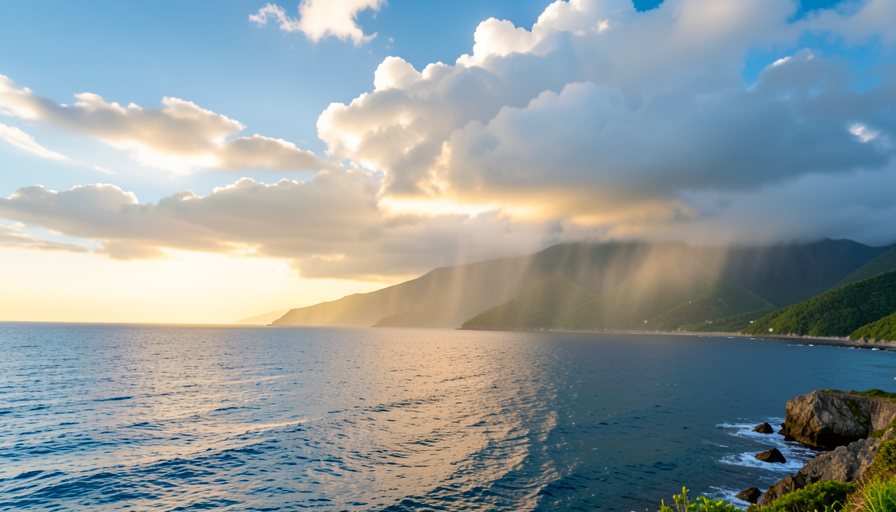
Pour yourself a glass of water and you are holding something ancient. The same water molecules have evaporated from prehistoric seas, floated in clouds over vanished continents, and fallen as rain on dinosaurs. Earth never makes new water and never loses it. Instead, a single supply keeps moving in an endless loop between the oceans, the sky, and the land, driven by the sun. That loop is the water cycle, and it shapes weather, climate, and life itself.
Most of us learned the words evaporation and precipitation in school, but the water cycle is easy to forget and worth understanding. It explains where rain comes from, why rivers keep flowing, and how the water you use today has been around for billions of years. Here is a clear guide to how it works.
Short answer
The water cycle is the continuous movement of water between the Earth’s surface and the atmosphere, powered by the sun. Water evaporates from oceans and land into the air, cools and condenses into clouds, falls back down as precipitation like rain or snow, and then collects in oceans, rivers, and underground before evaporating again. The total amount of water on Earth stays essentially the same; the cycle just keeps moving it around and recycling it, over and over.
What the water cycle is
The water cycle, also called the hydrologic cycle, is the journey water takes as it circulates from the land to the sky and back again. It has no beginning and no end, because it is a loop rather than a line. What keeps it turning is energy from the sun, which heats water at the surface and lifts it into the air, and gravity, which eventually pulls it back down.
As NASA describes it, the water cycle is a gigantic system powered by energy from the sun, a continuous exchange of moisture between the oceans, the atmosphere, and the land. That constant exchange is why the same water can be a wave, a cloud, and a raindrop within a matter of days. For more on the planet’s systems, browse SciExaminer’s Environment section.
Evaporation and transpiration
The cycle begins when water at the surface turns into vapor and rises into the atmosphere. The main driver is evaporation, the process by which the sun’s heat changes liquid water into an invisible gas. This happens across the whole planet, but the oceans do most of the work, since they cover the majority of the surface.

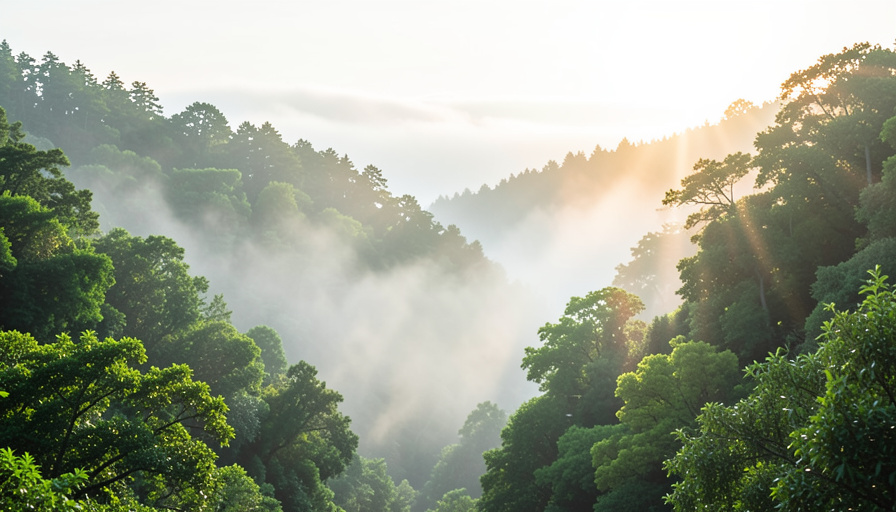
According to NASA, evaporation from oceans, seas, and other bodies of water supplies nearly 90 percent of the moisture in the atmosphere. Most of the rest comes from plants through a process called transpiration, in which plants draw water up through their roots and release it as vapor from tiny pores in their leaves. Together, evaporation and transpiration, sometimes grouped as evapotranspiration, load the sky with the water that will later fall back to Earth.
Condensation and clouds
As water vapor rises, it enters cooler layers of the atmosphere, and cooler air cannot hold as much moisture. This is where condensation takes over. Condensation is the reverse of evaporation: water vapor changes back into tiny liquid droplets, clinging to specks of dust and other particles floating in the air.
As the National Geographic Society explains, condensation is what forms clouds, along with dew and fog near the ground. A cloud is essentially a vast collection of these condensed droplets or ice crystals. When enough of them gather and grow heavy, the stage is set for water to return to the surface, which is why condensation is the crucial middle step that connects rising vapor to falling rain.
Precipitation and collection
When cloud droplets combine until they are too heavy for the air to hold, they fall as precipitation. As the US Geological Survey notes, precipitation is any liquid or frozen water that forms in the atmosphere and falls to Earth, and it is the main way water returns from the sky to the surface. Depending on the temperature, it arrives as rain, snow, sleet, or hail.
Once it lands, the water enters the collection stage. Some of it flows downhill as runoff, gathering into streams and rivers that eventually carry it back to the oceans. Some pools in lakes, and some is taken up again by plants. From every one of these surfaces, the sun can begin lifting water back into the air, and the loop starts over. On a global scale, the amount that evaporates roughly balances the amount that falls as precipitation.
Groundwater and the endless loop
Not all precipitation runs across the surface. A large share soaks into the ground in a process called infiltration, trickling down through soil and rock. This water can be stored underground in aquifers as groundwater, which feeds wells and springs and slowly seeps back toward rivers and the sea. Groundwater is a hidden but enormous part of the cycle, and much of the fresh water people rely on comes from it.
What makes the whole system remarkable is that it never stops and never runs down. Because Earth’s water is finite, the cycle is really a recycling machine that has been running for billions of years on the same supply. The water that falls on your city this week has completed this journey countless times before. Understanding that loop is the key to understanding weather, rivers, droughts, and the freshwater that every living thing depends on.
At a glance
- The water cycle is the continuous, sun-powered movement of water between the surface and the atmosphere.
- Evaporation lifts water into the air, with oceans supplying most of the atmosphere’s moisture and plants adding more through transpiration.
- Condensation turns that vapor back into droplets, forming clouds, dew, and fog.
- Precipitation returns water to the surface as rain, snow, sleet, or hail.
- Collected water runs off, soaks into groundwater, and evaporates again, recycling a fixed supply over and over.
Frequently asked questions
What is the water cycle in simple terms?
The water cycle is the way water constantly moves between the Earth’s surface and the sky. Water evaporates into the air, condenses into clouds, falls as rain or snow, and collects in oceans, rivers, and the ground, then evaporates again. It is a continuous loop powered by the sun.
What are the main stages of the water cycle?
The core stages are evaporation, when water turns to vapor and rises; condensation, when vapor forms clouds; precipitation, when water falls back as rain or snow; and collection, when it gathers in oceans, rivers, and underground before the cycle repeats. Transpiration from plants also adds moisture.
What powers the water cycle?
Energy from the sun powers the water cycle. Sunlight heats water at the surface, causing it to evaporate and rise into the atmosphere. Gravity then pulls condensed water back down as precipitation. Without the sun’s energy, the constant movement of water would stop.
What is the difference between evaporation and transpiration?
Evaporation is water turning to vapor directly from oceans, lakes, and other surfaces due to the sun’s heat. Transpiration is water released as vapor by plants, which draw it up through their roots and let it out through their leaves. Both add moisture to the atmosphere.
Does Earth ever run out of water?
The total amount of water on Earth stays essentially constant. The water cycle does not create or destroy water; it recycles the same supply endlessly. The same water has cycled for billions of years, though how much clean, accessible fresh water is available in a given place can change.
Closing thoughts
The water cycle is one of nature’s most elegant systems: a fixed amount of water, kept in perpetual motion by sunlight, endlessly evaporating, condensing, falling, and collecting. It is the reason clouds gather, rivers run, and rain returns season after season. Seeing the world through the water cycle turns an ordinary rainy day into a glimpse of a planet-sized machine at work, moving the same ancient water it has always moved. The next glass you pour is a small piece of that endless loop. For more on the forces that shape our planet, the Science section digs deeper.