


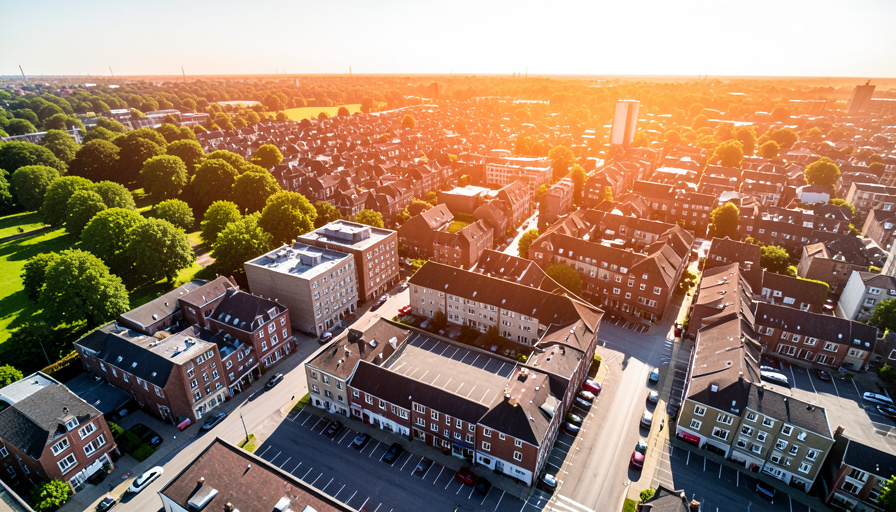
Walk out of a shaded park and onto a downtown sidewalk on the same summer afternoon, and the city hits you like an open oven door. You are not imagining it. Cities really are hotter than the land around them, and the reason has a name.
The temperature on the evening news is measured at the airport, out past the edge of town. The number where you actually live, in a dense grid of asphalt and rooftops, can run several degrees higher. On a heat-wave day, those extra degrees stop being a curiosity and start being a health risk. Understanding why cities cook themselves is the first step to cooling them.
In brief
The urban heat island effect is the tendency for cities to be warmer than nearby rural areas, because dark roofs, roads, and pavement soak up sunlight and release it as heat, while there are fewer trees and less soil to cool the air. In the US, cities run about 1 to 7 degrees Fahrenheit warmer than surrounding areas by day and stay warmer at night. That gap raises energy bills and, during heat waves, raises the risk of illness and death.
What an urban heat island is
An urban heat island is a built-up area that stays hotter than the countryside around it. Picture a temperature map of a region on a July afternoon as a sea of green and blue over the fields and forests, with a stubborn red blot sitting right over the city center. That red blot is the island, and the “sea” is the cooler rural land it rises out of.
The effect shows up most sharply after sunset. Fields shed their heat quickly once the sun goes down, but a city made of concrete and brick keeps radiating warmth it stored all day, so the gap between town and country is often widest late at night. That is why a heat wave in a city can feel relentless. There is little relief even after dark.
Why cities trap so much heat
Three things turn a city into a heat trap, and none of them are complicated. The first is the surfaces. Dark roofs, roads, and parking lots absorb far more sunlight than grass or tree cover, then re-emit it as heat for hours. The second is the missing greenery. Plants cool the air by releasing water vapor, a kind of natural air conditioning, and a city that paved over its trees and soil lost that cooling.
The third is the shape of the place itself. Tall buildings packed along narrow streets form what scientists call urban canyons, which trap warm air and block the breeze that would otherwise carry heat away. Add the waste heat pouring off cars, factories, and every air conditioner working overtime, and the warming compounds. According to the US Environmental Protection Agency, the effect is strongest in large, dense cities and in humid regions, and it grows at night. For more on the forces shaping our climate, browse SciExaminer’s Environment section.
Why a few degrees matters
A handful of degrees sounds trivial until a heat wave arrives. Heat is quietly one of the deadliest weather hazards on the planet. The World Health Organization estimates that roughly 489,000 heat-related deaths occurred each year between 2000 and 2019, and hotter cities push their residents closer to that edge.
The danger is not spread evenly across a population. Older adults, young children, people with heart, lung, or kidney conditions, and outdoor workers feel it first and hardest. When a city holds onto its heat overnight, the body never gets the cool-down it needs to recover, and that sustained stress is what turns a hot spell dangerous. The extra degrees an urban heat island adds are the difference between an uncomfortable day and a hospital visit.
Who gets the worst of it
Heat also lands unequally within a single city, block by block. Wealthier neighborhoods tend to have more parks, bigger trees, and more shade. Lower-income neighborhoods often have less tree cover, more pavement, and older housing with weaker cooling, which leaves them measurably hotter during the same heat wave.
The result is a map where the hottest streets frequently overlap with the streets that can least afford high cooling bills or a trip to the emergency room. This is one reason cities have started treating tree cover and shade as a matter of public health and fairness, not decoration. Where the trees go decides who gets relief.
What actually cools a city down
The encouraging part is that an urban heat island is a design problem, and design can be changed. The fixes tend to work in one of two ways: reflect more sunlight, or add more greenery.

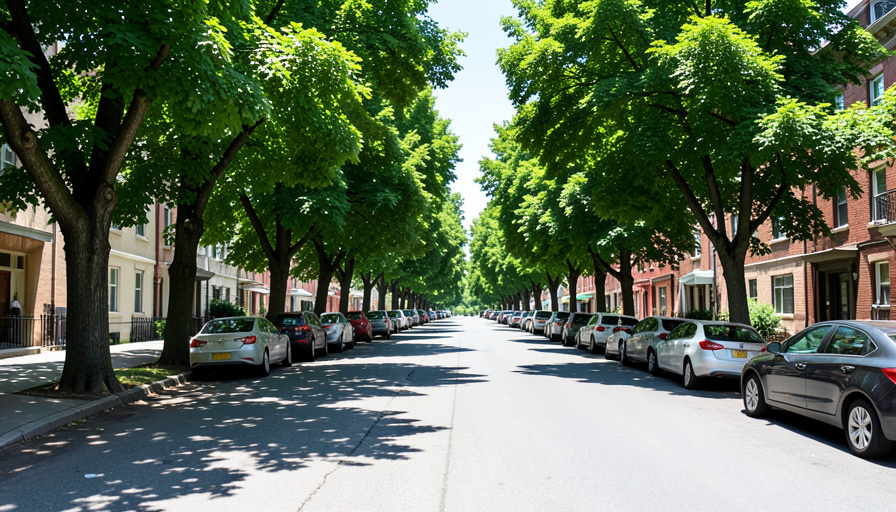
A handful of measures do most of the work:
- Plant and protect trees. A shaded street can run dramatically cooler than a bare one, and research in Scientific Reports found that street trees meaningfully lower the risk of high heat exposure.
- Install cool roofs. Light-colored or reflective roofing bounces sunlight away instead of soaking it up, lowering both roof and indoor temperatures.
- Use cool or permeable pavement. Lighter, more reflective surfaces stay cooler and, if they let water through, add a little evaporative cooling.
- Add green space. Parks, green roofs, and gardens cool the surrounding air and give residents somewhere to escape the worst of the heat.
Cities from New York to Ahmedabad have folded these steps into formal heat plans, and the payoff can be counted in lives and lower power bills. None of it requires a technological breakthrough. It requires deciding that a cooler city is worth planting for.
What matters most
- An urban heat island is a city that stays hotter than the rural land around it.
- US cities run roughly 1 to 7 degrees Fahrenheit warmer by day and hold heat overnight.
- Dark surfaces, missing greenery, and dense building shapes are the main causes.
- The heat is dangerous and falls hardest on the elderly, the sick, and lower-income neighborhoods.
- Trees, cool roofs, reflective pavement, and green space are proven fixes.
Frequently asked questions
What is the urban heat island effect in simple terms?
It is the tendency for a city to be warmer than the countryside nearby. Buildings, roads, and pavement absorb and store the sun’s heat, and with fewer trees to cool the air, the built-up area heats up and stays warm longer, especially at night.
How much hotter are cities because of it?
In the United States, daytime temperatures in cities run about 1 to 7 degrees Fahrenheit higher than surrounding areas, and nighttime temperatures about 2 to 5 degrees higher. Some large cities can be around 10 degrees warmer than the natural land nearby.
What causes urban heat islands?
Three main things: dark surfaces like roofs and asphalt that soak up heat, a lack of trees and vegetation that would otherwise cool the air, and dense clusters of tall buildings that trap warm air and block breezes. Waste heat from vehicles and air conditioning adds to it.
Why is the urban heat island effect a health problem?
Extra heat raises the risk of heat-related illness and death, particularly during heat waves. Older adults, young children, people with chronic illness, and outdoor workers are most vulnerable, and warm nights prevent the body from recovering.
How can cities reduce the urban heat island effect?
By reflecting more sunlight and adding more greenery. Cool roofs and reflective pavement bounce heat away, while street trees, parks, and green roofs cool the air through shade and evaporation. Many cities now include these in official heat-action plans.
The bottom line
The urban heat island effect is a reminder that a city is a physical object with a temperature, shaped by the materials we build with and the trees we choose to keep. The warming is real, it is measurable, and during a heat wave it is dangerous for the people least equipped to escape it. The good news is that the same choices that created the problem can undo a lot of it. A darker roof or a bare street is a decision, and so is a shadier, cooler one. For more science behind the world around you, the Science section digs deeper.